24.06.24
An Interview with Yuri Pustovit, Managing partner of a Leading Krasnodar Law Firm
Alexander Fedorov: What is ABY? How did the name come about? Why is it in English? How old is the bureau, and what is YUG?
Yuri Pustovit: ABY is an abbreviation of the bureaus English name "Advocates Bureau Yug". The name appeared in 2002 during the reorganization of Legal Consultation No. 14 of the Krasnodar Regional Bar Association. So, the Advocates Bureau Yug was formed. The bureau was initially created on November 29, 1995 (in the form of a consultation). Next year we will celebrate ABYs 30th anniversary. It is quite an impressive date for Russian business, although it is incorrect to call the bar activity a business. There is an opinion that clients associate the age of a law firm with the age of the consultant. When the age of a company, say, 5-7 years, then the client perceives such a firm as not very mature, whose advice is not worth listening to. In my opinion, this thesis is doubtful, since I know many successful Russian teams that were formed no more than 10 years ago. The main clients of our bureau were international companies that actively entered the Russian market and the Krasnodar Region in the late 90s and early 2000s. Hence the English logo - to make it more understandable to our clients, easy to read and remember. The entire staff of our bureau has been English-speaking since its inception, including the administrative staff. In the early 2000s, the abbreviation "Yug" was actively used in the names of companies in the Krasnodar Region, and we followed the same path. In 2003, we signed a partnership agreement with a large international law firm Salans (now Dentons), and had many joint projects. Lawyers and attorneys of our bureau underwent internships at the Moscow office of Salans and there were prerequisites that in the foreseeable future we would also become part of Salans, so no one bothered too much with the name of the bureau. However, years passed, and the merger never happened, but Advocates Bureau Yug became a recognizable brand on the Russian legal market far beyond the south of Russia, and we did not change anything in the name.
Alexander Fedorov: Where did the focus on working with big business come from? Where did you receive additional training to achieve your current position?
Yuri Pustovit: After graduating from university, I did an internship in Denver, USA, at a small law firm that specialized in immigration law. There I saw many interesting things from the inside about how a law firm works, how they communicate with clients, the work of billing systems, project management systems, and much more. All this in those years in the Russian regions was not yet. As a rule, lawyers practiced individually, and where there were small teams, the organization of processes was at a rather primitive level. We learned a lot from our colleagues and partners from Salans. David Meisters books played an important role in our development.
Alexander Fedorov: You are over 45 years old, yet you started in the 2000s. Now you know the entire Russian market. Tell me, are there many regional boutiques left or have they grown? So that the firms do not grow to huge sizes, and the check was at the level of leading Moscow firms.
Yuri Pustovit: My longstanding friend and mentor, Alexander Khvoshchinsky, played an instrumental role in my understanding of the legal market beyond the Moscow Ring Road (MKAD). Colleagues over the age of 45 are well aware of his name. He was a pioneer and a prominent figure among legal firm consultants. Alexander made significant contributions to streamlining internal management within legal firms, implementing partnership programs, managing finances, and much more. He actively encouraged the merger of legal firms, recognizing it as a growth strategy and an opportunity to compete with international law firms (ILFs) and leading Russian law firms (RULF). Perhaps Khvoshchinskys most significant contribution to the Russian legal market lies in bringing us all together. In the early 2000s, the Russian legal services market was even more closed off. There were no Russian rankings, and international rating agencies, such as Chambers and Partners, Best Lawyers, and Legal 500, exclusively surveyed their Moscow-based counterparts, seemingly oblivious to the legal landscape beyond the MKAD. As a result, Moscow-based colleagues had some knowledge of each other, but everything happening outside of Moscow remained an enigma for the legal community. Even for the most insignificant work in the regions of Russia, lawyers and advocates were dispatched from Moscow, which was not always justified in terms of the clients budget. Therefore, around the mid-2000s, Alexander began actively traveling to the Russian regions, introducing himself to regional lawyers, and subsequently became the main ideological inspiration for organizing regional legal forums, where he brought a large number of Moscow-based colleagues. Boutique-sized firms with a small number of lawyers are characteristic of the Russian regions. Having a large number of lawyers on staff and a wide range of practices is more the exception than the rule. I can name many outstanding boutique regional law firms, probably a few dozen, that can compete not only in terms of rates but also in terms of expertise with leading Moscow firms. However, I will not list their names so as not to offend those I do not mention. I would even go so far as to say that if a client invites such successful regional colleagues to work on a project, their opponents - representatives of law firms from Moscow or other regions of Russia - often find it extremely difficult to work with them. There is an opinion that despite minor regional or local differences in legislation where it falls under the purview of joint jurisdiction, we are all under Russian jurisdiction, which means equal effectiveness of colleagues, regardless of where they come from to work in the region. In practice, things are often different; there is always regional specificity, internal rules, politics, protectionism of local businesses, and the presence of political heavyweights who are sometimes the de facto beneficiaries of the business, which lawyers from other regions typically are unaware of.
Alexander Fedorov: For how long have you been participating in Russian and international ratings, and which ones? Have there been any special achievements or mentions? Why did you immediately believe in the need to apply for the RG (Rossiyskaya Gazeta) rating?
Yuri Pustovit: We have been participating in the Pravo.ru-300 rating since its inception in 2010, Chambers and Partners since 2014, when they first began researching Russian regions, Best Lawyers also around the same time, since 2014, Kommersant - since around 2019. For any firm, getting into such ratings is an achievement, let alone being included in the 1st group - which is our case - or the personal ratings of our lawyers.
It was not difficult to believe in the rating from Rossiyskaya Gazeta for two reasons. Firstly, it is a very serious publication, and secondly (not in terms of importance), the research was personally conducted by Alexander Moskovkin, a very profound professional and a veteran of the Russian legal market. Looking at what they did, I can say that they did a great job and most of their colleagues have quite deservedly taken their place in this rating.
Alexander Fedorov: A question about the team. How many employees are there now, how many were there at most, and how did you manage to make it so that key employees work for more than 10 years, which is a rarity for the regional market? A lawyer works, gains experience and clients, and creates his own practice. That is how it usually happens, right?!
Yuri Pustovit: There are four lawyers working in our bureau now. At most there were 12 in 2009, after which we reduced our subsidized practices and several colleagues went on their own. The main backbone of the firm has indeed been working for more than 12 years, which is a great rarity for the Russian market as a whole. I believe that interesting projects, high-profile cases, media coverage, comfortable working conditions, a good reputation of the bureau as an employer, high fees, and a common vision of the development and culture of the bureau can be the factors that keep colleagues in our team. Of course, opening an independent practice is the most common way for colleagues to leave law firms. Having gained some experience, having gained direct access to clients, and realizing that in order to become a partner in a firm, they will have to go a rather long way or they do not have partner qualities, colleagues create their own practices. Some of them are successful, while others we stop hearing about in the professional environment after such exits. Since the entry into the legal business is quite low, and in many practices legal education is not required, the appearance of such independent players will remain one of the trends of lawyers leaving law firms, although now there is an obvious opposite trend, the trend towards consolidation of firms, since large businesses make high demands on the qualifications and numbers of legal consultants. Therefore, I believe that now there may be a new wave of consolidation of firms and mergers in the legal market.
Alexander Fedorov: How often do you interact with other law firms? What works well, what dont you like about your colleagues, and how often are you approached by colleagues considering ABYs regional location?
Yuri Pustovit: We interact very frequently with our Moscow colleagues, as well as colleagues from other regions of Russia. Such contacts occur several times a week. Over a certain period of time, colleagues have become one of our key clients, referring clients to us both directly and on a subcontracting basis. These are mainly litigation projects, as well as legal expertise of real estate objects, where there is its own regulation and specifics, and some municipal regulatory acts are extremely difficult to find in the public domain. As you understand, we only say good things about our colleagues or nothing at all. But from what we dont like, often our Moscow colleagues come to our region with the idea that the cost of work will be low here, and they are disappointed when they realize that this is not the case, that the salaries of colleagues in the Krasnodar Region are often not inferior to those in Moscow.
Alexander Fedorov: You have extensive experience attending conferences. Tell us where you go yourself now, what cool events you remember from those that are no longer held, and about the role of the IBA in the development of the Russian legal market.
Yuri Pustovit: I really like what Pravo.ru is doing now, especially their conferences outside of Moscow. I am still under the impression of their forum in Tashkent. Denis Puchkov from LOYS, with his Kovalev Readings, is a must-attend event. It will be interesting even for those who do not practice criminal law. ANP Zenith together with Pravo.ru have made a wonderful platform in Kazan for two years in a row - Kazan Legal Week.
Of the forums that are no longer held, in my opinion, the brightest was the forum of the CIS countries, which was organized by Irina Paliashvili. It was a wandering forum that was held every year in a new CIS country. There was a special atmosphere and a rich business and cultural program.
There is also a lack of a conference on law firm management, which was held under the auspices of the IBA in Moscow. Undoubtedly, the IBA has played a significant role in improving international legislation, shaping the future of the legal profession in Russia, involving the Russian legal community in this work, and introducing international working standards in Russia. At almost any IBA conference in any country in the world, you can see bright representatives of the Russian legal community among the speakers and participants.
Alexander Fedorov: So, weve smoothly transitioned to the topic of the Southern Russia Legal Forum, which will be held in Sochi once again in early September. Who attends this forum, why do they attend, and are new participants needed?
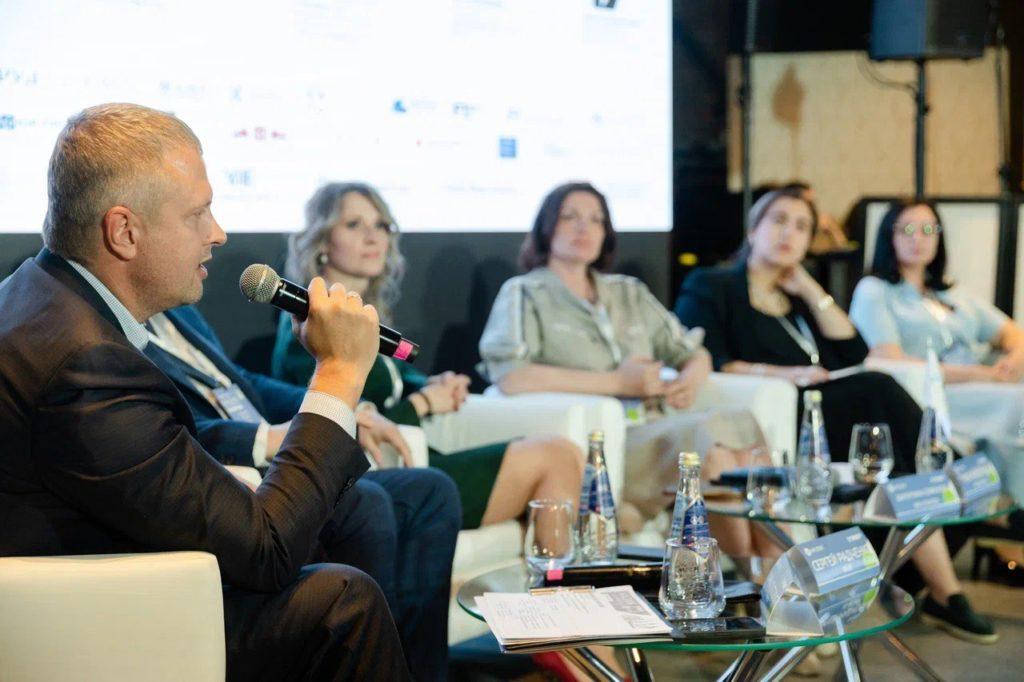
Yuri Pustovit: The annual Southern Russia Legal Forum, now in its 16th year, will take place in Sochi from September 5-7, 2024. We are immensely pleased to organize this forum in collaboration with our partners from Pravo.ru. The forum has taken on new significance and attracted new participants. The forums primary audience consists of managing partners and partners of leading Russian and international law firms, as well as legal department directors and vice presidents of legal affairs from major Russian and international companies in the real sector of the economy. Every year, we witness a growing interest from in-house counsel in the Southern Russia Legal Forum. At the same time, our colleagues from the real sector come not only to listen but also to actively participate in our forum, engaging in discussions and polemics, raising pressing legal issues and the nuances of relationships with consultants.
The forum traditionally features a packed business and cultural program. The sailing regatta, with its genuine judging and medal presentations, has become a tradition and a favorite among all our participants. The Southern Russia Legal Forum always fosters an open and friendly atmosphere where you can approach renowned participants, ask questions, and expect candid answers. Its a place to build long-lasting business relationships and friendships, an opportunity to unwind and recharge with like-minded individuals. The forum already has its established veterans who have never missed a single one of the forums held over the years. At the same time, new faces appear every year, having heard rave reviews from its participants for years but previously unable to fit it into their work schedules. We have noticed in recent years that many participants, upon leaving Sochi after the forum, have already booked their participation for the following year, and this inspires us to continue this tradition and come up with new activities for its participants.
Alexander Fedorov: You have been actively involved in the Krasnodar Regional Bar Association for over 10 years. What does this give you? What other public responsibilities do you have?
Yuri Pustovit: Indeed, for many years I have been a member of the Qualification Commission and the Council of the Krasnodar Regional Bar Association. Working in the corporate governance bodies allows me to better understand the problems that exist in the professional environment and to take direct part in their resolution. This is a great public duty, responsibility, and trust of colleagues who have cast their votes for you to do this work with dignity and in the interests of each member of the corporation. In addition to this work, I am a member of the State Examination Commission of the Department of Civil Law at the Kuban State University, a member of the Advisory Council on Foreign Investment under the Head of Administration (Governor) of the Krasnodar Region, Deputy Chairman of the Southern Committee of the Association of European Business in Russia, and a member of the editorial board of the business weekly YugTimes.
Alexander Fedorov: And Im going to conclude the interview with a traditional question - who is your hero?
Yuri Pustovit: My hero is a judge or law enforcement official who, despite unprecedented pressure on him, makes an exclusively lawful decision and takes lawful actions; these are lawyers and advocates who, having received an unfair decision, do not give up, do not leave the profession, but continue to protect their clients and achieve legality and justice for them; these are those who do business in our country, despite all these countless sanctions and difficulties within the country, all these people are my heroes and inspire me to new professional achievements.
Alexander Fedorov: Thank you for the interview.
Вернуться Назначить встречу!
Назначить встречу со специалистами АБ "Юг" - просто! Для этого в соответствующих полях Вам необходимо выбрать тему и две удобных для Вас даты с обязательным указанием времени начала встречи. Затем Вам необходимо указать свои контаткные данные, по которым мы сможем подтвердить одну из дат и согласовать нашу встречу!
Задать вопрос!
Прямое общение со специалистами АБ "Юг" по системе "Вопрос-ответ" - это хорошая возможность для наших потенциальных клиентов получить профессиональные разьяснения по интересующей правовой проблеме. Для этого необходимо заполнить все поля данной формы и мы обязательно Вам ответим!
Адвокатское бюро "Юг"