17.06.26
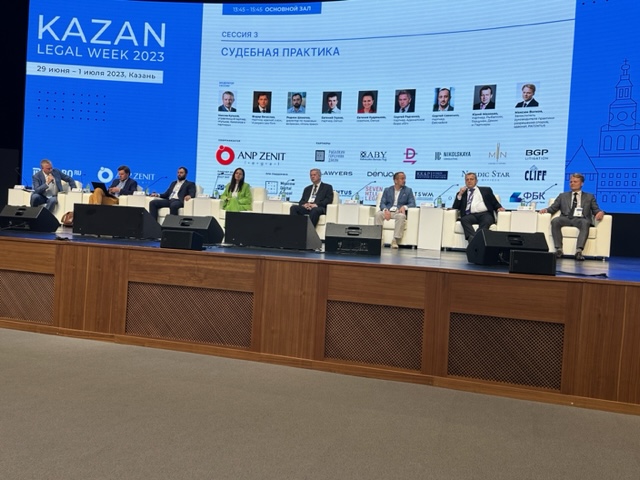
Advocates Bureau Yug (ABY) recently took center stage as a key partner and active participant at Kazan Legal Week 2026. Jointly curated by the team at A&P Zenit and the legal industry portal Pravo.ru, this high-profile forum in Kazan has become an essential summit, drawing top-tier legal minds, corporate executives from leading domestic and multinational enterprises, and senior partners from the countrys most influential law firms.
MoreThe forums dynamic business program was carefully calibrated to tackle the most pressing controversies in modern corporate law, offering attendees a rare collaborative space to exchange battle-tested strategies and decode the trends that are redefining the legal landscape.
The business portion of the forum, hosted within the striking architecture of the new Galiasgar Kamal Music Theatre, kicked off with an intimate and refreshing format: candid, unplugged monologues addressing serious legal challenges. From there, the program split into several highly anticipated parallel sessions. One track focused heavily on the macroeconomic climate, dissecting the friction of geopolitical instability, the quest for predictable tax policy, and the rapidly evolving regulatory framework of the cryptocurrency market. These topics hit close to home for ambitious enterprises looking to expand and capture new market frontiers.
Meanwhile, a packed audience at the parallel session, "Bankruptcy: Inevitable Collapse or Opportunity?", turned its attention to defensive corporate strategy. Panels explored the nuances of shielding executives from personal liability, navigating complex creditor dynamics, and orchestrating operational turnarounds for distressed businesses. The insights shared here offered a practical playbook for counselors guiding clients through high-stakes corporate restructuring.
Following a brief networking coffee break, the forum split into two distinct tracks. One group of practitioners took the microphone for a series of exceptionally candid, play-by-play breakdowns of their most significant courtroom precedents. Another gathered for a private roundtable focused on the management and stewardship of private wealth.
The afternoon sessions maintained this high-energy momentum. The third session, "The Role of Corporate Governance in Times of Crisis", focused on preemptive measures to defuse internal corporate warfare and manage relations with minority shareholders. Simultaneously, the roundtable "Risk Roadmap for 2026" served as a comprehensive audit of modern business hazards, covering everything from sanctions risk in investment portfolios to the role of IT architecture in legal risk mitigation, banking vulnerabilities, C-suite liability, and the common misconceptions that often derail business dispute resolutions.
A major highlight of the afternoon was an insightful presentation by Sergey Radchenko
, Partner at Advocates Bureau Yug, who pulled back the curtain on the regulatory landmines facing utility and power grid operators. Radchenko
dissected the ongoing state-mandated consolidation of the electrical grid—a reform aimed at phasing out inefficient territorial grid organizations (TGOs) by establishing a single, state-designated Single Territorial Grid Organization (STGO) in each region. Charged with acting as the regions provider of last resort, the STGO is intended to streamline technical policy, curb transmission losses, minimize infrastructure failures, and accelerate grid modernization.
Yet, as Radchenko
explained, while the reform is a fait accompli on paper, the practical implementation by regional administrations has introduced distinct friction. Local authorities have orchestrated their own style of consolidation, channeling profits directly into regional budgets as dividends, while the steep maintenance costs of the unified grid facilities ultimately drive up consumer tariffs. Because local tariff regulators operate within the political orbit of regional administrations, there is an inherent risk of a highly sympathetic regulatory bias toward the STGOs tariff applications. Highlighting this systemic tension, Sergey Radchenko shared a landmark case successfully litigated by Advocates Bureau Yug challenging a disputed privatization, where the courts consistently upheld the STGOs rightful claims to key infrastructure assets.
The academic portion of the day closed on a decidedly human note with an open, spirited debate: "How Not to Lose Your Mind in 2026." Panelists and audience members walked away with practical, clear-eyed advice on maintaining mental clarity amidst chaotic business pressures and building resilient partnerships—lessons that apply just as easily to personal life.
The day concluded with an elegant reception, allowing attendees to unwind over culinary delicacies while taking in panoramic views of a scenic, twilight Kazan.
30.05.26
On May 30, 2026, the Krasnodar Region Bar Association commemorated Russian Advocacy Day with a formal ceremony at the Catherine Hall in Krasnodar. The event, which convened approximately 500 legal professionals from across the region, served as a platform to recognize significant achievements and contributions within the legal community.
MoreDuring the proceedings, Yuri Pustovit, Managing Partner of Advocates Bureau Yug, was awarded the Order "For Service to the Advocacy." This high-level honor is bestowed in recognition of substantial contributions to the development of the Russian legal profession, the elevation of the prestige of the practice, and the successful execution of directives set forth by the Federal Chamber of Lawyers of the Russian Federation. The award also reflects Mr. Pustovit’s effective performance of his professional duties and his sustained excellence in the field of advocacy.
In addition to the order, Mr. Pustovit and Sergey Radchenko, Partner at Advocates Bureau Yug, were presented with Honorary Certificates from the Federal Chamber of Lawyers of the Russian Federation. This recognition marks their active collaboration with Advokatshaya Gazeta (Advocate’s Gazette) throughout the 2023–2025 period. The certificates honor their contributions to the analytical coverage of critical issues in legal practice and regulation, as well as their dedication to advancing professional development and legal education among practitioners.
16.03.26

In a landmark decision for foreign direct investment and land-use law, Advocates Bureau YUG has secured a critical victory for a prominent French canning manufacturer. The Krasnodar Regional Commercial Court ruled to exclude the clients industrial land from a restrictive registry of "high-value productive agricultural lands," clearing a legal hurdle that threatened the facilitys expansion.
MoreThe dispute dates back to 2003, when the French company entered into long-term lease agreements with the Krasnodar Department of Property Relations to construct a major production plant. While the facility was completed in 2004, a 2005 administrative decree retrospectively classified the leased parcels as protected agricultural land, effectively banning any new construction—including critical wastewater treatment infrastructure planned for 2024.
Advocates Bureau YUG initiated legal action after regional authorities ignored the clients request for reclassification, claiming that current statutes provided no mechanism for such an exclusion. The case faced stiff opposition, as the government relied on established North Caucasus District appellate precedents which held that leaseholders lacked the legal standing to challenge land-use designations. Furthermore, the authorities argued that the land size was disproportionate to the existing building footprints and that the client had failed to exhaust administrative remedies.
However, ABYs legal team successfully argued that the restrictive classification directly impaired the leaseholders rights and that the "proportionality" rule should not be used to stifle industrial development or necessary infrastructure upgrades. Crucially, the firm persuaded the court that prior negative precedents were inapplicable to the specific circumstances of this international industrial project.
The court found the arguments compelling and partially granted the claim, ordering the Department of Property Relations to prepare the necessary administrative decree for the lands exclusion from the protected registry.
The client was represented by ABYs Partner Sergey_Radchenko and attorney Alexey Demekhin.
04.03.26
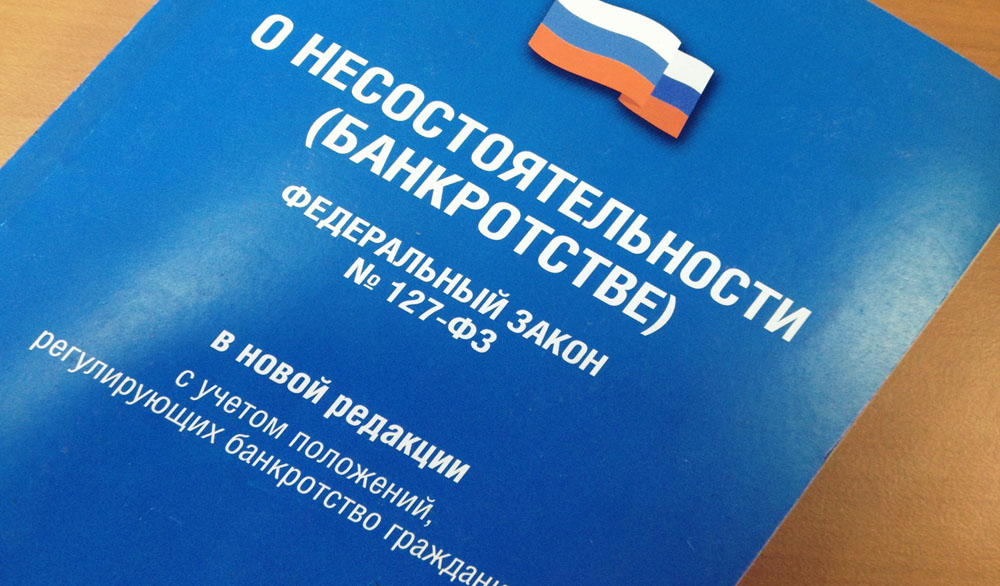
In a significant victory for international corporate governance and procedural fairness, the Advocates Bureau YUG has successfully defended the interests of a major agricultural enterprise of the Stavropol Region before the Commercial Court of the North Caucasus District. The ruling addresses the critical issue of protecting the rights of a sole shareholder within the complex framework of Russian bankruptcy litigation.
MoreThe case centered on a long-standing procedural barrier: for an extended period, the sole shareholder of the debtor—a British-based foreign entity—was effectively barred from participating in the bankruptcy proceedings. The courts of first and appellate instances had failed to take the necessary steps and properly notify the foreign stakeholder. Legal experts noted that this exclusion appeared to ignore the fundamental principle of "equality of arms" among parties involved in a legal dispute.
However, the North Caucasus District Commercial Court ultimately sided with the arguments presented by Advocates Bureau YUG. The appellate court ruled that a foreign company acting as the sole shareholder of a Russian legal entity maintains the same right to judicial protection as creditors or the debtor itself. Crucially, the court held that geographical distance from the jurisdiction of the lower courts cannot serve as a justification for disregarding the fundamental principles of the Russian judicial system: equality before the law, the right to a fair hearing, and the prohibition against denying judicial protection.
The appellate ruling specifically prohibits the imposition of "negative consequences" on the foreign firm resulting from the lack of proper notification regarding the initiation of the case. Such failure to notify had previously stripped the British entity of its ability to file timely objections, a situation further exacerbated by an underlying corporate conflict.
The client was represented in these proceedings by lawyer Ekaterina Fedenko.
25.02.26
The esteemed legal portal Pravo.ru has unveiled the results of its 2026 rankings of individual practitioners. Beyond its annual institutional assessment of law firms, Pravo.ru identifies and commemorates the preeminent practitioners whose professional acumen and specialized expertise serve as the cornerstone of superior legal counsel.
MoreFrom a rigorous selection pool of 8,691 applicants, 3,895 elite legal consultants were ultimately designated for inclusion. The methodology underpinning these individual rankings is based on an exhaustive analysis of firm submissions covering the period from September 2024 to September 2025. This evaluation spans 43 federal and 11 regional practice areas. Each year, the scope of these legal categories expands to reflect the evolving complexities of the jurisprudence. In the current iteration, the highest density of recommendations was observed in the Corporate Law, Arbitration Proceedings, Bankruptcy Litigation, Tax Consulting, Real Estate, and Construction Law.
For a nominee to be considered, the sponsoring firm was required to present three hallmark projects executed during the research period, alongside a comprehensive dossier detailing the candidate’s achievements, tenure, and professional accolades. Furthermore, nominees were eligible only if they contributed to projects that secured top-tier placement in the primary practice area rankings.
The final rankings categorize specialists into three tiers based on their seniority within the firm: Managing Partners, Partners & Practice Heads, and Associates. In its 2026 Regional Individual Rankings, Pravo.ru has formally recommended two distinguished members of Advocates Bureau Yug: Yuri_Pustovit, its Managing Partner, and Sergey_Radchenko, its Partner and Head of Litigation.
Both practitioners have been recognized for their excellence in Arbitration Proceedings (High Market Disputes) and Dispute Resolution within Courts of General Jurisdiction.
This prestigious recognition serves as a testament to the profound expertise inherent in Advocates Bureau Yug and its practitioners. They continue to make significant contributions toward the advancement of regional legal practice.
17.02.26
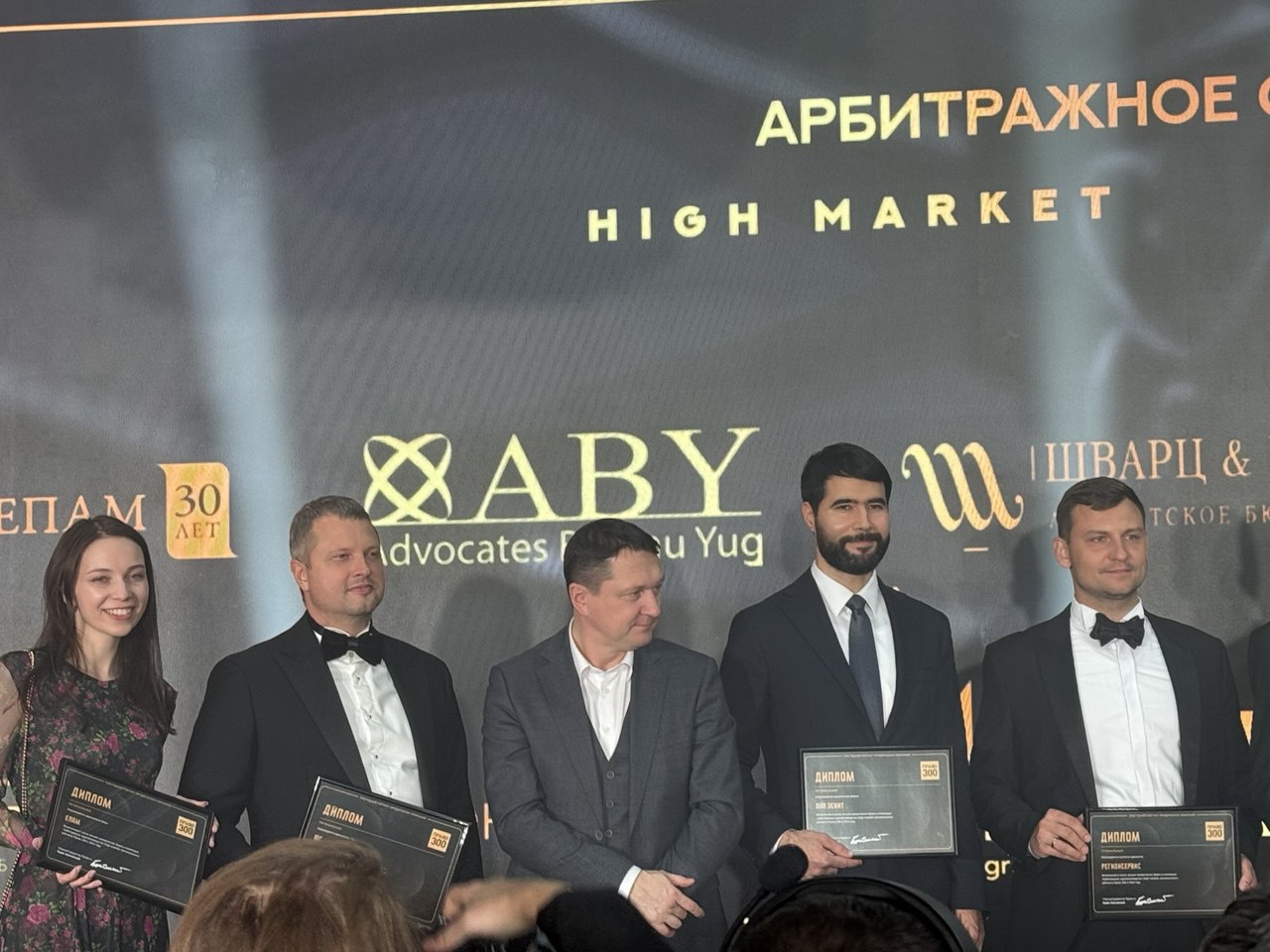
In a significant ruling for the commercial real estate sector, Advocates Bureau YUG has successfully defended a Moscow-based leasing and property management firm in a high-stakes dispute involving title registration and the integrity of the Unified State Register of Real Estate Rights (EGRP).
MoreThe litigation arose when the client was joined as an interested party in a lawsuit challenging the governments refusal to register ownership rights for a non-residential premises in Moscow. The plaintiff sought to overturn the regulatory denial and restore an ownership record in the EGRP. The core of the dispute involved a "duplication" of property records. The client, who held clear legal title to a similar premises, found its interests threatened when the plaintiff attempted to register rights to a property that overlapped with the clients existing holdings.
During the initial proceedings, evidence emerged that the Federal Service for State Registration, Cadastre and Cartography (Rosreestr) had suspended the plaintiffs registration specifically because of this duplication. Despite the plaintiffs failure to rectify the underlying issues identified by the regulator, the district court initially ruled in the plaintiffs favor, labeling the governments refusal as unlawful.
On appeal, Advocates Bureau YUG challenged the lower courts disregard for these procedural hurdles. The Krasnodar Regional Court ultimately sided with the defense, overturning the first-instance decision. The appellate court found that Rosreestr acted lawfully in denying the registration, noting that the plaintiffs claims essentially duplicated the physical characteristics and documentation of the clients non-residential premises.
The victory ensures the clients title remains unencumbered by duplicative or conflicting administrative claims. The client was represented throughout the proceedings by lawyer Ekaterina Fedenko.
11.12.25

On October 24, 2025, Yuri Pustovit, Managing Partner of the Advocates Bureau Yug, has been officially recognized by the Association of European Businesses (AEB) with the presentation of a Certificate of Honor.
MoreThe distinction was conferred by Tadzio Schilling, Director General of the AEB, during the annual conference of the AEB Southern Regional Committee on October 23, 2025.
In addition to the personal recognition for Mr. Pustovit, Mr. Schilling marked the firm’s 30th anniversary milestone by presenting a congratulatory letter to the Advocates Bureau Yug collective. The correspondence lauded the bureaus legal professionals for their exceptional commitment to the law, citing their deep industry knowledge, integrity, and high standards of professionalism.
Mr. Schilling further acknowledged the firms long-standing institutional impact, specifically recognizing the Advocates Bureau Yug significant contribution to the establishment of the AEB Southern Regional Committee in 2003.
10.12.25

On December 4, 2025, Moscow hosted the 16th award ceremony for the leaders of the Pravo.ru legal ranking—one of the professional law communitys most significant annual events. The gathering convened leading experts, law firm representatives, and media outlets to celebrate industry achievements and discuss prospects. The atmosphere in the hall was as nearly "Hollywood-esque," and an unexpected attendee, an M-generation legal neural network, welcomed there all the guests. Boris Boltyansky, Editor-in-Chief of Pravo.ru, delivered the welcoming address, emphasizing that "Many changes are coming, but disputes and international proceedings will unequivocally remain."
MoreThis year saw an even greater number of applicants seeking to validate their professional standing, and the submitted projects were more substantial. The total value of projects presented to the rankings expert council for review reached a record 662 trillion rubles (a 29% increase over 2024). This outcome underscores the intensifying competition in the legal market, the rising demand for professional expertise, and the broadening scope of legal challenges that require specialized guidance.
The most competitive category this year was Arbitration Litigation. The rankings are conventionally divided into federal and regional segments, each separated into four groups, with specific distinctions made between high-market and mid-market projects within the groups.
Advocates Bureau Yugachieved the leading Group 1, high market position in the Arbitration Litigation category. This distinction affirms the firms status as a top-tier player in commercial arbitration.
ABY secured the same position in the Dispute Resolution in Courts of General Jurisdiction category, showcasing the universality of its competencies and its ability to operate effectively across various judicial instances.
The Pravo.ru ranking serves several key functions: objectively assessing service quality, guiding the selection of reliable legal partners, stimulating professional growth, and reflecting shifts in demand for legal services.
The 16th Pravo.ru ceremony reaffirmed that the legal market remains dynamic, evolving under the influence of technology but preserving its core foundation: the human factor, expertise, and ethics. The future belongs to those who successfully combine traditional legal acumen with adaptability to new challenges.
The full results of the ranking and detailed analysis of the categories are available via the following link: here.
10.12.25

On December 4, 2025, the personal ranking established by the authoritative publication Rossiyskaya Gazeta (The Russian Gazette) announced the results of its 2025 survey evaluating leading lawyers and their respective firms. According to the organizers, this young research initiative—now in its third iteration—is rapidly gaining momentum, evidenced by a 60% year-over-year increase in applications submitted for consideration. Nevertheless, 20% of all submitted applications were ultimately disqualified for failing to meet the established requirements.
MoreMere mention of an attorney in this ranking indicates their high qualification and professional efficacy. The organizers carefully stratified participants across specialties and subsequently categorized them into five distinct performance groups:
-Group 1: Designated as the most exclusive, representing the top specialists in their corresponding practice areas.
-Group 2: Classified as excellent specialists who merit a strong recommendation.
-Group 3: Recognized as outstanding specialists.
-Group 4: Identified as good specialists who warrant particular attention.
-Group 5: Deemed worthy nominees whose project scale or scope prevented their inclusion in the higher-tiered groups.
The Advocates Bureau Yug saw two of its partners achieve high standing in the results:
-Yuri_Pustovit, Managing Partner, was recommended in Group 2 (Arbitration Litigation).
-Sergey_Radchenko, Partner, was recommended in Group 2 (Dispute Resolution in General Jurisdiction Courts).
To see the whole ranking, follow the official source link: https://rg.ru/articles/reyting-juristov-2025/ https://rg.ru/articles/reyting-juristov-2025/
15.09.25

This year, the picturesque Black Sea city of Sochi played host to a dual milestone: the 18th Legal Forum of Southern Russia and the 30th anniversary of Advocates Bureau Yug. More than just a conference, this preeminent event, meticulously organized by ABY in collaboration with legal portal Pravo.ru and YugTimes newspaper, brought together top legal minds from across the Russian Federation for three days of rigorous professional discourse and genuine camaraderie. From September 3rd to 5th, 2025, the Grand Karat Hotel served as the backdrop for a deep dive into the most pressing issues facing the legal and business worlds today.
MoreThe forum began with an exclusive cocktail reception, where participants could forge connections in a relaxed, welcoming atmosphere. The air buzzed with conversation as legal professionals exchanged ideas and shared insights over drinks. That evening, attendees showcased their intellectual prowess in a spirited, closed-door dinner featuring the sophisticated game, "What? Where? When?" The blend of informal networking and intellectual challenge set the perfect tone for the substantive sessions that were to follow.
The first session, "Pathways for Business Development in the Contemporary World," was a direct response to the turbulent global landscape. As Yuri Pustovit, Managing Director of Advocates Bureau Yug, explained in his opening remarks, "Unrelenting sanctions and the threat of secondary sanctions pose significant challenges to any enterprise with a global footprint. Given Russias integral role in the world economy, legal practitioners must find innovative solutions that ensure successful business functionality consistently." Distinguished speakers offered strategic insights into how enterprises could not only survive but thrive. Dmitry Sorokin of IPN Partners, for instance, championed a new approach to taxation, urging businesses to select jurisdictions based on their primary operational geography, pointing to destinations like Oman and Qatar for Persian Gulf-focused firms, and Hong Kong or Labuan for those working with Asian markets.
From the in-house perspective, Valeria Andreeva of OZON stressed the value of proactive legal engagement. She emphasized that bringing legal professionals into the fold during a companys creation phase can prevent future risks, save significant costs, and foster a culture of compliance from the ground up.
Building on this theme, Dmitry Bayandin of ELWI discussed the importance of protecting proprietary investments by accounting for geopolitical risks. He highlighted investment arbitration as a powerful, though often underutilized, tool for recovering damages from states that violate investor rights.
Nextons partner Roman Zaitsev concluded the session with a key observation: the era of evolving dispute resolution has arrived, with judicial authorities increasingly siding with the Russian budget in matters affecting state interests, underscoring the need for careful legal navigation.
The second session, "United Forever: Authentic Case Studies of Project Implementation with State Participation," shifted focus to the growing influence of government regulation and enforcement.
Sergey Radchenko of Advocates Bureau Yug provided a masterclass on land disputes and property expropriation, a common challenge in infrastructure development. He detailed the complexities of compensation, noting the nuances within the comparative, income-based, and cost-based methodologies, and highlighting frequent disagreements over calculation dates and the definition of lost profits.
Other professionals shared their experiences, from navigating rigid judicial templates in cases against government bodies to protecting coal enterprises during sanctions. An intriguing discussion also emerged around the feasibility of accurately assessing environmental damage, a critical and often contentious issue for natural resource-based companies.
In the third session, participants tackled seven of the most pressing legal issues in business today. Topics ranged from the cutting-edge (the rise of labor disputes over remote work and claims of "emotional burnout," a new trend according to Valeria Evseenko of Moscow Metro) to the ever-present (personal data breaches, discussed by Maria Kulieva of Avito). The panel also explored the application of artificial intelligence in legal practice, the rise of "consumer extremism," corruption risks in acquisitions, and the use of bankruptcy as a tool in corporate conflicts. This diverse agenda ensured there was something relevant for every legal professional in the room.
This set the stage for one of the forums most engaging events: an interactive competition pitting legal professionals against artificial intelligence. The multi-stage showdown involved analyzing judicial precedent, developing strategic positions, and even an "acute" improvisation round simulating courtroom proceedings. The winner was ultimately decided by a democratic audience vote, a testament to the communitys trust in human intellect and experience.
The forums final "aquarium" session was a deep-dive into the evolving role of legal departments. Based on collaborative research of Pravo.ru, Legal Management, PravoTech, and HeadHunter, the session explored transformation trends, contemporary Legal Tech solutions designed to streamline workflows, criteria for selecting external consultants for specialized tasks, and emerging trends in team development. The conversation provided a comprehensive roadmap for legal departments aiming to modernize and optimize their operations.
The capstone of the event was a celebratory cocktail reception honoring the 30-year legacy of Advocates Bureau Yug. Over three decades, the firm has grown from its institutional inception to a market leader, securing top positions in Russian and international rankings. With a team of highly effective practitioners, the Bureau has become the go-to partner for clients facing extraordinarily intricate legal matters, with a sterling reputation built on trust and results. Its advocates have been recognized by prestigious agencies including Chambers and Partners, Best Lawyers, Pravo-300, and Kommersant Publishing House.
Of course, no anniversary is complete without cake. A magnificent commemorative confection was served, ensuring all attendees shared in the joyous celebration.
On the final day, the hard-working legal minds were treated to the forums cherished tradition: a sailing regatta. For over a decade, this competitive event has captivated participants, proving that the ultimate victory lies not in the final standings, but in the invigorating sea spray, the camaraderie of colleagues, and the simple joy of navigating the open water. The regatta served as a perfect, invigorating conclusion to three days of intense professional concentration.
The Legal Forum of Southern Russia has evolved into something more significant than a professional gathering. Its a space for intellectual renewal, for forging lasting friendships, and for enriching ones professional expertise in a dynamic, ever-changing world. Its a testament to the enduring power of community and a forward-looking approach to the legal profession.


15.07.25

On 17th June, the Judicial Collegium for Civil Cases of the Supreme Court of the Russian Federation upheld the cassation appeals prepared by the lawyers of Advocates Bureau Yug on behalf of four clients, remitting the case for reconsideration to the court of first instance (Case No. 18-КГ25-156-К4).
MoreThis particular case is one of several where the Prosecutor General s Office of the Russian Federation has challenged the privatisation of land parcels located within specially protected natural territories in the Tuapse District of the Krasnodar region.
Our clients acquired these land parcels between 2019 and 2022. These parcels were delineated from a larger plot which, in 2008, the Administration of the Tuapse District sold to the Olginka Boarding House, in accordance with the then-operative Article 36 of the Land Code of the Russian Federation.
In 2023, the Prosecutor General s Office of the Russian Federation lodged a claim with the Tuapse District Court against the district administration and 14 ultimate purchasers of the parcels. The claim sought to invalidate all transactions involving these parcels and to recognise the ownership rights over them as belonging to the Krasnodar region.
While the lower three judicial instances had ruled in favour of the claim, the Supreme Court of the Russian Federation today acknowledged the merits of our firmcs arguments. Our argumentation posited the substantive legality of the contested transactions, the bona fide nature of the acquisition, the expiration of the limitation period, and significant breaches of procedural norms committed by the lower courts.
Specifically, the courts, without reasoned justification, dismissed our contention that all clients are legitimate owners of the disputed land parcels and unwarrantedly denied the clients requests for forensic examinations. The case will now undergo fresh consideration, albeit with due regard for the position articulated by the Supreme Court of the Russian Federation. We are currently awaiting the comprehensive text of the judicial determination.
The interests of the clients before the Supreme Court of the Russian Federation were represented by ABY s Managing Partner Yuri Pustovit and its Partner Sergey Radchenko.
14.07.25

Kazan, a burgeoning urban center, has rapidly emerged as one of Russia s most dynamic cities. It has once again reinforced its reputation as a critical hub for substantive discourse on contemporary legal issues. From June 26 to 28, 2025, this vibrant metropolis hosted a preeminent legal forum, meticulously organized by the digital legal platform Pravo.ru, in collaboration with the distinguished legal firm ANP Zenit. The Advocates Bureau Yug proudly participated as one of the event s esteemed partners, underscoring its commitment to fostering legal discourse and innovation.
MoreThe forum successfully convened a diverse assembly of leading experts, seasoned practitioners, and high-level governmental representatives. This gathering fostered an environment highly conducive to the invaluable exchange of expertise and the collaborative development of pragmatic solutions across various facets of law.
was
The forum s inaugural day was highlighted by an exclusive reception at one of Kazan s most fashionable culinary establishments. Attendees were treated to a delightful surprise: an unexpected encounter with a prominent celebrity guest. This intentionally informal setting proved instrumental in fostering organic networking opportunities among participants, effectively establishing a congenial and productive tone for the subsequent days of rigorous intellectual engagement.
The second day s agenda opened with an innovative, streamlined format, drawing inspiration from the renowned TED Talks. Characterized by its infusion of humor and an emotionally resonant delivery of inherently complex legal and business topics, this approach skillfully prepared participants for the prolonged and intensive sessions that followed, ensuring sustained engagement and comprehension. The morning s overarching theme centered on the critical imperatives of leadership and strategic methodologies for guiding professional teams toward decisive victory. The keynote address was delivered by Vladimir Alekno, the highly respected head coach of the Zenit-Saint Petersburg Volleyball Club and the Russian Men s National Volleyball Team. Mr. Alekno, celebrated for leading his team to an Olympic gold medal at the 2012 London Games, delivered a profoundly compelling presentation, serving as a powerful motivational impetus for all attendees.
The first substantive session, aptly titled "Investor Protection in the Post-Sanction Period," featured incisive contributions from managing partners of several prominent legal firms, alongside a director-level executive responsible for legal project and program structuring at a major Russian banking institution. The distinguished panel meticulously examined the prevailing conditions within Russia s private and public capital markets amidst ongoing international sanctions. Their deliberations encompassed a thorough assessment of the national legal system s readiness for a potential surge in investment activity and the prospective return of foreign enterprises. Furthermore, the discussion explored the intricate nuances of both financial and non-financial support mechanisms available to investors in 2025, addressing these and other critical challenges confronting contemporary investment markets.
A dedicated roundtable discussion ran concurrently with the first session, focusing intently on the critical subject of business bankruptcy risks. This specialized forum afforded attendees a valuable opportunity to delve into discussions on the intricacies of bankruptcy proceedings for foreign entities operating within Russia, the comprehensive assessment of bankruptcy-related risks inherent in business acquisitions, the complexities of subsidiary liability, and the various classifications of damages arising in bankruptcy cases. Moreover, participants engaged in a forward-looking analysis of the most recent trends and significant developments within this specialized branch of jurisprudence.
The second primary session was exclusively dedicated to an in-depth exploration of landmark judicial precedents, adopting an interactive "open-mic" format. This innovative structure empowered legal practitioners specializing in litigation to articulate and share profound insights derived from the most impactful and professionally significant cases of their careers, fostering a rich exchange of practical experience.
Concurrently, a separate roundtable, titled "Private Capital Management," addressed a comprehensive array of pertinent issues. These included an examination of emerging trends in the sophisticated structuring of private capital, the establishment and governance of family foundations, and the inherent risks associated with asset fragmentation upon a testator s demise, among other vital considerations for high-net-worth individuals and their advisors.
The third session revealed current and pressing matters within the dynamic mergers and acquisitions (M&A) market. Corporate law specialists from leading firms, alongside heads of departments from major business corporations, shared their nuanced practical expertise with professional colleagues. Discussions covered the strategic determination of each company s core business objective when selecting an optimal jurisdiction for holding company structuring, the complexities of transactions involving foreign participation and assets within this legal domain, and the deployment of sophisticated instruments designed to mitigate risks for all transactional parties. A particularly notable observation was the significant surge in M&A activity involving IT companies, with detailed insights provided into the specificities of structuring and asset valuation within this rapidly evolving sector, alongside other emergent challenges.
In parallel, a roundtable during the third session, titled "Legal Risks for Business in 2025: Minimization Strategies," offered an expansive and inclusive platform for legal professionals from diverse segments of the legal industry to present their expert perspectives. The assembled audience benefited from presentations covering the accelerating digitalization of jurisprudence, robust strategies for safeguarding corporate entities against unscrupulous partners, and proactive measures for protecting employees from instances of fraud. Further critical topics included an examination of the criminal law risks confronting top-tier executives and the authoritative positions articulated by the Supreme Court of the Russian Federation and the Central Bank of the Russian Federation regarding anti-money laundering legislation.
Sergei Radchenko, a distinguished partner at the Advocates Bureau Yug, delivered a particularly compelling address, focusing on the latest trends in the confiscation of private property into state ownership by the Prosecutor General s Office. He also highlighted the significant associated risks for businesses operating within this evolving legal landscape. Mr. Radchenko s insightful presentation notably ignited a lively and substantive discussion among both the esteemed speakers and the engaged session participants, underscoring the critical importance of this topic.
Following the formal conclusion of the business program, all participants were cordially invited to an elegant reception, graciously hosted on the expansive open terrace of the Galiasgar Kamal Tatar State Academic Theatre. This exquisite setting allowed attendees to savor the breathtaking sunset over the serene Lake Kaban and enjoy the magnificent panoramic vistas of Kazan, providing a perfect backdrop for informal networking.
The now-traditional ANP Zenit Cup Golf Tournament convened legal professionals on a picturesque golf course in the scenic suburbs of Kazan. For both novices and those eager to experience the game for the first time, patient and skilled instructors meticulously elucidated the rules and imparted fundamental golf skills. The tournament culminated in a formal and celebratory awards presentation, honoring the victors and marking a fitting close to the event s social calendar. Kazan Legal Week 2025 has unequivocally solidified its status as a pivotal and indispensable event within the broader legal community.
The comprehensive and insightful discussions of pertinent legal issues, the invaluable exchange of professional experiences, and the strategic establishment of new professional contacts are all poised to contribute to the continued advancement of legal scholarship and practice, thereby reinforcing the rule of law within the Russian Federation. Kazan Legal Week has definitively established itself as an exceptionally effective platform for fostering professional dialogue, collaboration, and continuous development within the legal profession.
29.05.25

In a significant assessment released by Pravo.ru in May 2025, Advocates Bureau Yug has been recognized as one of Russia s foremost litigation firms. Analysts at the prominent legal portal observed a discernible decrease in the volume of legal disputes, juxtaposed with a concurrent increase in their aggregate monetary value.
MoreThe comprehensive market analysis was segmented into federal and regional categories. Under the established methodology, the study encompassed all final rulings issued by Russian arbitration courts between January 1 and December 31, 2024.
Pravo.ru s ranking methodology criteria included the total value of claims managed by each firm, the overall caseload, the number of final instance decisions secured in 2024, and the ultimate outcomes of cases in court, among other nuanced performance indicators.
Advocates Bureau Yug distinguished itself by achieving a leading position, securing a place in Band 1 among regional litigation firms.
22.05.25

https://www.rbgmedia.ru/files/rbg-299.pdf In recent judicial proceedings, a prominent and widely debated issue has emerged concerning legal actions initiated by the Prosecutor General s Office seeking the reversion of privatized assets from private citizens and legal entities to state ownership.
MoreThis trend has elicited significant public attention and vigorous debate. Key questions arise: How can businesses safeguard themselves against this trend, widely known as "deprivatization"? What risks are associated with the state s recovery of privatized property, and what implications does this practice hold for the nation s investment climate? Yuri Pustovit, an attorney and the Managing Partner at Advocates Bureau Yug, offers insights on these critical matters.
– Mr. Pustovit, the business community expresses considerable concern regarding the issue widely referred to as "asset deprivatization." Given that this term lacks a specific legal definition, could you clarify what is generally understood by this concept?
– While not a formal legal term, "deprivatization," in the context of litigation pursued by the Prosecutor General s Office, typically pertains to challenges based on alleged irregularities or violations of protocols during the privatization process of assets previously held in state or municipal ownership. Crucially, the applicability of this concept is not limited to property acquired exclusively under specific privatization statutes; the decisive factor is simply that the property was at some prior point owned by the state. One can readily grasp the significant threat this poses, particularly considering that a substantial portion, if not virtually all, of the property within the country was historically under state control. Compounding this concern, lower courts are currently declining to apply statutes of limitation to these claims. Should this practice of disregarding time limits persist and this concerning trend continue unchecked, it is arguably only a matter of time before such actions could potentially impact a wide range of privately held assets.
– It is understood that a significant majority, reportedly 90%, of these legal challenges are initiated by the Prosecutor General s Office. Are we observing an acceleration of this trend? What inherent risks does this present, particularly considering the ostensibly positive effect on state revenue?
– Indeed, these claims are predominantly lodged by the Prosecutor General s Office. This fact inherently creates apprehension among defendants and the judges presiding over these cases. A judge receives a statement of claim bearing the signature of a high-ranking official such as the Deputy Prosecutor General of Russia; many judges, even those with extensive careers, have not previously encountered cases of this nature. While I do not have precise statistics on whether the frequency of these cases is increasing or decreasing, reports of new claims filed by the Prosecutor General s Office seeking the transfer of assets to state ownership surface on an almost monthly basis. You are correct that, when viewed superficially, satisfying these claims appears to replenish the state treasury, and to my knowledge, the cumulative value of these assets reclaimed by the state currently reaches several trillion rubles. However, this perspective overlooks the other side of the equation: the disruption of stability in civil commerce and the significant deterioration of Russia s investment climate. Few investors would be inclined to risk capital in assets that face the potential for uncompensated reversion to state control at any juncture.
The subsequent performance of these reclaimed assets under state stewardship remains an open question: it is unclear whether they maintain comparable levels of success and profitability, continue to produce goods of equivalent or superior quality, contribute equivalent tax revenues to various budgetary levels compared to their private ownership period, or benefit from continued investment in modernization. Furthermore, by ruling in favor of such claims, courts appear to contravene fundamental principles of civil law and procedure, as well as long-standing judicial precedent developed over a quarter century. Does this ultimately benefit Russia s economy and its citizens? I would contend that it does not.
– What are the salient characteristics of these lawsuits filed by the Prosecutor Generals Office? What arguments are typically employed to challenge previous privatization acts?
– The most striking characteristic of these lawsuits is the speed with which they are processed and frequently decided in favor of the plaintiff. It is important to note that I refer to processing rather than examination, as in none of the cases in which our firm has been involved have we observed, at the lower court level, a discernible willingness to thoroughly investigate the substance of these claims or the basis upon which they are founded. Decisions in these cases are rendered with remarkable swiftness, often within a timeframe ranging from a few days to approximately a month. This rapid process frequently implements stringent interim measures, such as seizing the assets at issue, and occasionally extends even further.
The core arguments typically converge on alleged procedural errors during privatization, specifically asserting that the property was managed by an incorrect level of government, for instance, by a municipality when it should have been handled by regional authorities, or by a region instead of federal governmental bodies. The plaintiff asserts that these discrepancies were purportedly discovered only recently during specific supervisory proceedings, the findings of which are frequently not even appended to the case materials.
– What has been the stance of the courts regarding this matter?
– To my profound regret, as previously noted, lower courts have largely acquiesced to and granted the demands of the Prosecutor General s Office, frequently without undertaking a substantive evaluation of the defendants counterarguments. This practice appears to contravene fundamental principles of civil procedure, particularly concerning adversarial proceedings and the equality of parties. Defendants are typically impeded from introducing evidence into the case, as courts often decline to admit such submissions; defendants are frequently limited to merely submitting a written response.
Numerous motions filed by defendants are routinely denied, while concurrently, whatever the Prosecutor General s Office requests is expeditiously satisfied by the court, again often without proper assessment of the defendants positions.
Thus far, it is primarily the Supreme Court that has, in many instances, provided a more objective and impartial evaluation of the Prosecutor General s arguments, leading to the overturning of lower court decisions and the remanding of such cases for new consideration.
Recent rulings from the Constitutional Court—specifically concerning anti-corruption lawsuits (Ruling No. 49-P of October 31, 2024) and deprivatization lawsuits (Ruling No. 3-P of January 29, 2025)—have introduced further complexities and raised additional questions regarding the adjudication of this category of cases. However, I will not elaborate on the specifics of these judicial acts at this time to remain within the scope of our interview.
– The Prosecutor s Office is reportedly challenging transactions dating back 20 or even 30 years. Given the lengthy timeframe, why does the statute of limitations seemingly not apply in these circumstances?
– The current stance regarding statutes of limitation in these cases is profoundly concerning. In response to defendants arguments citing the applicability of statutes of limitation, the Prosecutor General s Office advances three distinct, and arguably mutually exclusive, contentions: (i) that the statute of limitations has not expired, asserting that the prosecutor s office only recently became aware of the alleged violations through specific oversight activities; (ii) that while the statute of limitations may have expired, its application should be denied because the defendant is attempting to introduce illegally acquired property into civil circulation, which purportedly constitutes an abuse of rights; and (iii) that statutes of limitation are simply not applicable to the Prosecutor General s Office s claims because these actions are filed in defense of what are deemed intangible public interests, to which such limitations purportedly do not apply.
As I noted, lower courts are currently not applying statutes of limitation in cases brought by the Prosecutor General s Office.
The Constitutional Court, in its Ruling No. 49-P dated October 31, 2024, addressed anti-corruption lawsuits, indicating that statutes of limitation are neither applicable nor necessary in that context. This creates a rather paradoxical situation: a statute of limitations exists for criminal prosecution regarding corrupt acts, and according to both the legislature and the Constitutional Court, this limitation does not encourage the commission of such crimes. Yet, concerning civil lawsuits seeking the seizure of property acquired through corrupt means, no such restrictions apply. Conversely, according to the Prosecutor General s Office and the Constitutional Court, involving a statute of limitations in these civil cases would encourage corruption. Following this logic, such a civil claim could theoretically be successfully pursued a century later against the heirs of an individual alleged to have engaged in corrupt practices, rendering a defense virtually impossible. Document retention periods would long have expired, even for official archives, making any reconstruction of events from decades past utterly unfeasible. However, specifically regarding deprivatization lawsuits, the Constitutional Court s Ruling No. 3-P of January 29, 2025, did permit the application of statutes of limitation. It also outlined a mechanism for potentially providing an equivalent land plot or compensation for its value, including for legally constructed buildings. The ruling, however, proposed a highly complex approach to calculating the statute of limitations period and notably stipulated that these actions do not constitute expropriation for state needs, thereby negating the requirement for preliminary and equivalent compensation.
– Russia currently lacks a specific law governing nationalization. In your view, would the enactment of such legislation be beneficial or necessary to regulate this issue of "deprivatization"?
– In my estimation, any form of nationalization sends a detrimental signal to the market and constitutes a significant impediment to investment and economic growth in Russia. However, if I were to consider the choice between two undesirable outcomes, enacting such a law would arguably be preferable to the current, unregulated situation.
Article 35 of the Constitution of the Russian Federation stipulates that compulsory alienation of property for state requirements may only be effected subject to the condition of prior and equivalent compensation. Nevertheless, the state appears disinclined to provide compensation, preferring to seize assets without remuneration. Furthermore, it attributes violations ostensibly committed by the state itself to ultimate bona fide acquirers of the assets – individuals and entities who bear no responsibility for such transgressions.
– Which categories of assets and types of companies face the most significant risk under the current circumstances?
– It is challenging to identify a clear pattern in this trend. The legal actions initiated by the Prosecutor General s Office seeking the nullification of privatization over the past several years have targeted a diverse range of assets. These include, but are not limited to, stakes in agricultural enterprises, strategic defense companies, wineries, health resorts (sanatoriums), infrastructure facilities, as well as land parcels and private residences, even in instances where these properties served as the sole dwelling acquired by ordinary citizens through mortgage financing. This suggests that such claims are not exclusively directed at prominent figures or large corporations. They can also be brought against ordinary citizens, who find themselves similarly vulnerable and often lacking adequate defenses against the demands presented by the Prosecutor General s Office.
– What measures can be taken to mitigate the risk of losing property? What defense strategies, if any, might prove effective in the current environment?
– Regrettably, in the face of deprivatization lawsuits initiated by the Prosecutor General s Office, there appears to be no genuinely effective defense. As I noted previously, the customary legal mechanisms and guarantees afforded by law seem to cease functioning in these specific proceedings.
The available recourse is limited: one can prepare a comprehensive response, endeavor to introduce the maximum possible volume of evidence into the case file, file motions for the discovery of evidence and the commissioning of expert examinations (though these are typically denied), argue that the statute of limitations has expired, diligently appeal unfavorable lower court rulings, and prepare for potential consideration before the Supreme Court. It is at the Supreme Court level that these arguments might potentially receive a proper legal assessment, provided the case is subsequently accepted and transferred to the relevant judicial panel. Unfortunately, the current outlook for defendants regarding lower courts to consider these cases remains decidedly unfavorable. Moreover, it is crucial to understand that these cases proceed expeditedly. Therefore, it is imperative to secure and present all relevant evidence beforehand and commission pre-trial expert examinations, as one cannot anticipate any procedural assistance from the court. In the response to the lawsuit, one should describe in maximal detail the content of the evidence being presented and the findings of any pre-trial expert examinations, notwithstanding the extremely high probability that these may not ultimately be formally admitted into the case file by the court.
– Are there established legal mechanisms offering protection for the rights of bona fide purchasers in instances where assets were transferred in contravention of the law, yet the current owners acquired them in good faith?
Yes, the Constitutional Court, in its relevant rulings, has acknowledged that under specific circumstances, bona fide owners who were not involved in corrupt arrangements or irregularities in the privatization process may be permitted to retain the property or receive compensation for its value. However, the fundamental challenge lies precisely in the consistent assertion by the Prosecutor General s Office, and subsequently echoed by the courts, in virtually all cases where we have represented clients, that all defendants are acting in bad faith, alleging they knew or should have known about the purported violations, yet failing to provide substantive evidence to support these claims.
– Official government circles have reportedly denied that this issue represents a systemic problem. Nevertheless, the President has directed the Government of Russia to prepare legislative proposals by April 1, 2025, specifically addressing statutes of limitation pertinent to "deprivatization" proceedings. Could you comment on this?
– The Russian Union of Industrialists and Entrepreneurs has developed a draft law to clarify the methodology for calculating the ten-year statute of limitations applicable to "deprivatization" lawsuits. Their proposal suggests initiating this calculation from the date of state registration of the transfer of ownership rights for real estate in a privatization transaction, or the date documents confirming the transfer of other forms of property to the acquirer in such a transaction were signed. While I view these proposed changes as positive technical clarifications, they do not address the core issue that arises when the Prosecutor General s Office, and consequently lower courts, contend that the statute of limitations is inapplicable because claims are purportedly filed to protect intangible public interests, or when claims for the recognition of the absence of ownership rights are asserted without sufficient basis.
– In your view, what are the most effective solutions to this problem?
– I believe the Supreme Court should provide clarity through an appropriate plenary session ruling or a comprehensive review of judicial practice concerning "deprivatization" lawsuits. Furthermore, the practice of initiating such claims ought to be discontinued, as the negative repercussions in the medium and long term are poised to substantially outweigh the short-term budgetary gains derived from their successful prosecution. Naturally, this issue must not be ignored. We intend to address this topic at the upcoming Legal Forum of Southern Russia, an event that has become traditional and which we co-organize.
– Could you provide some details about this forum?
– Our Advocates Bureau Yug and the legal portal Pravo.ru have been co-organizers of the Legal Forum of Southern Russia for many years. The inaugural forum was held in 2008, and consistently over the years, we have observed sustained interest in the event from both participants and partners.
Recently, the forum has attracted growing interest from in-house counsel, including senior management from major corporations and state-owned enterprises. They participate not only as attendees but also frequently as speakers, often presenting perspectives that contrast with those of external consultants, thereby contributing to more substantive and incisive discussions. The forum consistently includes a well-organized cultural program that appeals not only to participants but also to accompanying guests. Furthermore, the sailing regatta has become a distinctive hallmark of the forum, featuring a competitive race with professional judging, complete with medal ceremonies and awards provided by the organizers and forum partners. The business agenda for the 2025 Legal Forum of Southern Russia is still being finalized as of the time of this writing. Nevertheless, the agenda will traditionally address the most pressing legal subjects currently impacting the business and professional communities. These will include the latest developments and trends in judicial practice, the implications of sanctions and their potential gradual easing, bankruptcy proceedings, matters related to law firm management, and, as is increasingly the case at contemporary forums, questions surrounding "deprivatization" driven by lawsuits from the Prosecutor General s Office.
– Mr. Pustovit, Advocates Bureau Yug is celebrating its 30th anniversary this year. Would you say that, like fine wine, a business, or perhaps a legal practice in this instance, only improves with age?
– Achieving 30 years represents a significant milestone, particularly within the context of the Russian business landscape, although it s worth noting that legal practices are not strictly defined as businesses in the conventional sense. Over this period, our firm has navigated a considerable trajectory: from its establishment, engaging in highly complex legal projects, achieving initial recognition in both Russian and international legal rankings, developing key practice areas, and generating substantial revenue. We have cultivated an effective team of legal professionals to whom our clients entrust the resolution of exceptionally intricate legal issues. Attorneys within our bureau have received recognition from numerous prominent Russian and international ranking organizations, including Chambers and Partners, Best Lawyers, Pravo-300, Rossiyskaya Gazeta, and Kommersant Publishing House, among others. The legal sector is exceptionally competitive, and placements in rankings offer valuable insight into one s standing relative to peers, identifying areas of strength and where further strategic effort is warranted.
Upon our establishment, the bureau s primary clientele consisted of international corporations actively entering the Russian market, particularly within the Krasnodar region. Currently, we continue to provide legal counsel to international enterprises that have established manufacturing facilities in Russia over recent years and, notwithstanding current events, remain committed to operating within the Russian market. For the most part, these companies are presently reticent to publicize their presence, concerned about attracting unwelcome scrutiny from their respective regulators or risking inclusion on sanctions lists. Nevertheless, their strategic focus remains on preserving their position in the Russian market and pursuing future growth within the country.
Domestic national and regional Russian companies now operate at a highly respectable level and, in specific sectors, demonstrate the capacity to compete effectively with international counterparts. Our client base spans a diverse range of sectors, including agriculture, banking, electric power, industry, tourism, transportation, media, and numerous others. A cornerstone of our practice involves the resolution of highly complex judicial and arbitration disputes, which represents a primary reason clients seek our expertise.
30.04.25

On April 24, 2025, the findings of the "Leaders of the Legal Services Market – 2025" study, conducted by the esteemed Kommersant Publishing House, were formally released. In this current iteration of the rankings, Advocates Bureau Yug has once again reaffirmed its prominent standing, thereby underscoring its sustained leadership within the firm s core practice domains.
MoreBest Legal Practices (Regional Ranking):
Best Lawyers (Regional Ranking):
Resolution of Commercial Disputes, Band 1;
Resolution of Disputes in Courts of General Jurisdiction, Band 1.
Resolution of Commercial Disputes, Band 1;
Resolution of Disputes in Courts of General Jurisdiction, Band 1.
Advocates Bureau Yug congratulates its dedicated team on these outstanding achievements and deserved recognition.
Please, follow the link to access the complete version of the rankings: https://www.kommersant.ru/doc/7675245
14.03.25

On March 12, 2025, the results of the individual lawyer ranking, which supplements the Pravo.ru 300 ranking conducted by the legal portal Pravo.ru, were announced.
MoreThe study surveyed 3,355 lawyers across a wide range of legal sectors. For the first time, separate nominations were introduced for consultants specializing in land law, energy, and natural resources.
According to the established methodology, the ranking is divided into federal and regional categories. Within each legal sector, the leading figures of law firms, including partners and practice heads, are separately identified.
Advocates Bureau Yug s distinguished lawyers, it s managing partner Yuri Pustovit and it s partner and Head of Litigation and Arbitration Practice Sergey Radchenko, were recommended in the following areas:
To see all recommended lawyers, please, follow the link: https://300.pravo.ru.
27.02.25
.jpg)
This prestigious event, hosted by the Criminal Law Department of the Ural State Law University, has evolved since its inception in 2004 from a primarily academic forum to a prominent platform convening a diverse cohort of legal professionals.
MoreAttendees included esteemed professors and law students, alongside influential prosecutors, investigators, judges, and representatives from leading international and Russian law firms and corporations.
The conference commenced with a roundtable discussion on "Conflicts of Interest and Specifics of Arbitration Decisions." Participants, representing the perspectives of legal counsel, arbitrators, and arbitration institutions, delved into the complex ramifications of conflicts of interest. Discussions encompassed the intricacies of public policy contradictions within the contemporary geopolitical landscape, the burgeoning field of hybrid arbitration procedures, and the potential for establishing a unified electronic document management platform to streamline cases from inception to resolution.
The "Kovalev Readings" partnered with the Sverdlovsk State Children s Philharmonic, the esteemed cultural patron of the legal platform. Conference delegates got the exclusive opportunity to attend a performance of the captivating art show, "41st Graduation."
The second day of the conference, convened at the Hyatt Regency Hotel, commenced with formal welcome addresses and a significant symbolic gesture: the signing of a cooperation agreement between the V.F. Yakovlev Ural State Law University and the Ekaterinburg Diocese of the Russian Orthodox Church.
The plenary session, entitled "Goals of Criminal Law: Past, Present, Future. I.Y. Kozachenko s Legacy," provided a comprehensive examination of the distinctive characteristics of the Ural legal school. Discussions highlighted the school s significant contributions to diverse branches of jurisprudence and the enduring traditions cultivated throughout various historical epochs.
The increasing importance of personal digital security in our technologically advanced era was a focal point of the parallel session on "Protection of Personal Information and Legal Space as a Goal of Criminal Legislation." Attendees explored multifaceted aspects of personal data protection, including criminal liability for cyberbullying, the complexities of digital reputation management, and potential avenues for legislative reform to bolster personal information security.
The parallel session dedicated to "Teaching Activities and Development of Academic Personnel" provided a platform for discussions surrounding the critical role of nurturing and cultivating the next generation of legal scholars.
With Russia poised to enact federal legislation aimed at strengthening the legal profession and professionalizing court representation, the session on "Professionalization of Court Representation: International Experience" offered a timely opportunity for collaboration. Representatives from bar associations in Armenia, Belarus, Russia, Kyrgyzstan, and Uzbekistan shared their respective experiences and perspectives on the evolution of the legal market, addressing both the challenges and opportunities confronting the legal community.
The parallel session exploring the "Correlation between Law and Morality in Criminal Law" reached a consensus on the imperative for criminal law to not only safeguard public interests but also adhere to fundamental moral principles. This alignment, participants argued, is essential for fostering and maintaining public trust in the legal system and its institutions.
Notwithstanding the prevailing global political and economic climate, the Russian Federation still plays a vital role on the world stage. The session on "Foreign Economic Activity in Russia: Status, Liability, Punishment, and Prospects" provided a forum for examining critical issues, including the current state of foreign economic activity within Russia, the influence of the Eurasian Economic Union (EAEU), and the legal ramifications of violations of foreign trade legislation.
Conference attendees also had the opportunity to engage in discussions on the evolving landscape of arbitration during the parallel session "Ural Division 2.0 The Idea of Arbitration." Furthermore, recognizing the demanding nature of the legal profession, a session on "Legal Networking as a Burnout Prevention Tool" explored strategies for maintaining lawyers psychological well-being.
The Advocates Bureau Yug was represented by its partner Sergey Radchenko, who contributed his expertise to the parallel session on "Intersection of Criminal and Civil Law Norms." Mr. Radchenko s presentation focused on Constitutional Court Resolution No. 49-P, dated October 31, 2024, which addresses the question of whether a statute of limitations applies to prosecutorial claims filed under Article 17(1) of the Federal Law "On Monitoring the Correspondence of Expenses of Persons Holding Public Office to Their Income." Specifically, Mr. Radchenko examined the resolution s implications for the forfeiture of property to the Russian Federation when public officials failed to substantiate legitimate income for its acquisition. He concluded that the resolution s arguments were flawed from both a dogmatic and a legal-political standpoint.
The parallel session dedicated to "On Studying the Effectiveness of Criminal Punishment" brought together academics and practicing lawyers to explore the multifaceted nature of punishment effectiveness. Discussions encompassed the efficacy of punishment as a deterrent, the influence of public opinion on the perception of punishment, the viability of alternative penalties, and the complexities of recidivism.
The "Kovalev Readings" conference is renowned for its engaging cultural program, which often features performances by prominent artists. The second day of the conference culminated in a performance by Sergey Bobunets, the lead singer of the popular Russian rock band "Smyslovye Gallyutsinatsii."
The third day of the forum featured a condensed program, highlighted by a discussion on "Criminal Liability of Legal Entities: Future in Russian Law." Participants in this session included representatives from the Ural State Law University (USLU), the Investigative Committee of the Russian Federation, and the Institute of Legislation and Comparative Law under the Government of the Russian Federation.
To ensure attendees departed with lasting memories of the conference and its host city, a sightseeing tour of Ekaterinburg was organized, featuring visits to Verkhnyaya Pyshma and the UMMC Museum Complex.
24.02.25

The Winter Legal Week, the preeminent winter legal forum, convened from February 6th to 8th, 2025, at the Radisson Hotel within the esteemed Rosa Khutor ski resort. This highly anticipated event was a collaborative endeavor between the Advocates Bureau Yug and Pravo.ru, Russia s most authoritative legal portal.
MoreThis distinguished gathering attracted leading legal practitioners from prominent domestic and international law firms, alongside in-house counsel and department heads representing major corporations.
The event commenced with a convivial welcome reception held at a charming restaurant boasting breathtaking mountain vistas. Attendees not only savored the picturesque setting but also engaged in stimulating intellectual discourse, participating in a music-themed quiz and enjoying anecdotal narratives shared by Maxim Izvekov, in-house counsel and esteemed member of the Pravo-300 expert council.
The formal program commenced on February 7th with a welcome address delivered by Yuri Pustovit, forum co-founder and managing partner of Advocates Bureau Yug, who also moderated the inaugural session, "Discussion: Trend or Hype." This session served as a platform to critically assess the enduring relevance of topics frequently addressed in legal forums nationwide.
Alan Gandelman, managing partner of the Brazilian law firm Sefer Investimentos, ignited a compelling discussion regarding potential business expansion within the BRICS economic alliance, focusing on the complex issue of financial system unification among member nations. Mr. Gandelman noted that while the concept of financial integration has been under consideration for six years, tangible progress remains elusive. He posited that the primary impediment is not technical feasibility, but rather a lack of political will, despite ongoing efforts. Mr. Gandelman suggested that even if a full-scale Eurozone-style financial system integration proves unattainable, BRICS nations could establish a unified digital currency and a shared commodity exchange. He further asserted that the impetus for such mechanisms will only intensify in the near future, driven by both internal BRICS interests and external geopolitical factors.
Marina Ilyicheva, head of the corporate department at INVITRO Holding Company, illuminated the audience on the resurgence of interest in management option programs and their intricate structuring.
Furthermore, the forum addressed critical issues such as the impact of sanctions on legal practice, evolving bankruptcy legislation, the potential utilization of cross-border bankruptcy as a vehicle for venture investment, and the nuances of corporate transaction taxation.
Following a brief interlude for refreshments, the second session, a PECHA KUCHA presentation titled "Main Trends in Judicial Practice," commenced under the moderation of Roman Zaitsev, partner at Nextons. Mr. Zaitsev highlighted the Supreme Court of the Russian Federations novel approach to pre-trial case preparation. Yuri Umrikhin of "Nikolaev and Partners" expounded on the Supreme Court s innovations in challenging large transactions.
Valeria Evseenko, First Deputy Director for Legal Affairs and Intellectual Property Management at the Moscow Metro, addressed attendees at the Winter Legal Week forum, elucidating emerging trends in labor dispute resolution. A key development, Ms. Evseenko emphasized, is the increasingly rigorous evidentiary burden placed upon employers, who are now frequently required to furnish substantiation for negative factual assertions.
Sergey Radchenko, a partner at the Advocates Bureau Yug, provided a comprehensive analysis of the Constitutional Court s recent pronouncements concerning the reclamation of land within specially protected natural areas. The Court s late January decision, stemming from consolidated appeals filed by individuals whose vacation properties in Sochi National Park were subject to state seizure, affirmed the constitutionality of land nationalization in such zones. The Court s rationale rested on the inherent characteristic of these lands, deemed essential for federal ownership and precluded from private tenure. However, the ruling does not preclude individuals from seeking compensation for land acquired through legitimate means. Mr. Radchenko cautioned that this precedent could have far-reaching implications for landowners in other federal resort areas, citing Anapa and Gelendzhik as potential examples.
The aforementioned session also encompassed discussions on the anti-suit injunction within the framework of the Lugovoy Law, the legal nature of representations and warranties, and post-conviction procedures, demonstrating the breadth of legal discourse at the forum.
The “Circles in Legal Fields” session featured three parallel tracks. “Prospects for Business Development in the International Arena,” moderated by Igor Sotnikov, a partner at ELWI, served as a platform for participants to exchange insights on investment-friendly jurisdictions, identify challenges in foreign economic activity, analyze opportunities arising from the redistribution of assets from departing companies, and, more broadly, explore avenues for the advancement of Russian business interests.
A second parallel session, “Personal Data in 2025,” delved into the intricacies of effective privacy risk management, the inherent risks associated with cloud service utilization and their mitigation, and proactive strategies for preventing personal data breaches.
The third parallel session focused on the complexities of taxation within the context of international transactions, digital assets and cryptocurrency transactions, and recent legislative innovations in this dynamic legal domain.
Following the formal program, attendees enjoyed a cocktail reception, complete with karaoke entertainment.
The forum culminated in a day of athletic competition in the mountains, featuring slalom ski, and snowboard races. Legal professionals traded their legal briefs for athletic gear, showcasing their sporting prowess to the enthusiastic cheers of colleagues gathered on the terrace of the “Berloga” cafe, where a DJ, traditional plov, and mulled wine enhanced the convivial atmosphere.
The Winter Legal Week forum continues to serve as a valuable platform for both professional enrichment and networking, as evidenced by the influx of new participants.
12.12.24

Compliance with sanctions, maintaining supply chains and payment capabilities with counterparties from unfriendly countries, and re-domiciliation are just some challenges lawyers are helping businesses navigate today.
MoreLawyers celebrated their professional day on December 3rd of this week. Established by a special decree in 2008, this day commemorates the adoption of a series of judicial statutes and legislative acts in Imperial Russia on December 3, 1864 (November 20, according to the Old Style calendar), which formed the basis of judicial reform. The legal landscape has evolved significantly since then, and today, the profession is undergoing another period of transformation.
Yuri Pustovit, Managing Partner of Advocates Bureau Yug discusses the latest trends shaping the legal profession and the challenges and opportunities facing lawyers today.
Yuri, has the massive personnel shortage in Russia affected law firms? And how do law firms intend to address this problem?
The shortage of qualified personnel in the legal profession has always been acute. However, it has worsened recently as a significant number of highly qualified lawyers left the country due to the announced mobilization and the departure of international law firms from Russia. Everyone is solving this problem in their own way, for example, by working with leading law schools and inviting successful students in their final years of university for internships, by openly poaching good specialists from competitors, by merging law firms, by attracting teams of specialists from competing firms, or by entering into temporary partnership agreements with friendly competitors for the duration of projects when there is a shortage of their specialists and deadlines are pressing.
Recruitment agencies report that the new generation entering the workforce has different expectations. They prioritize work-life balance, travel, and personal development over traditional career paths. Does this observation align with your experience in the legal field? And does this present a challenge for law firms, given the demanding nature of legal work?
Indeed, younger professionals today have a different perspective. They have had to navigate their careers during unprecedented times, such as the pandemic. Many of these individuals have adapted to remote work and may be hesitant to return to a traditional office setting. While the legal profession is inherently personal and requires face-to-face interactions, law firms are increasingly adopting remote work models. Achieving a work-life balance is a perennial goal for professionals of all ages. However, the younger generation may be more inclined to prioritize personal fulfillment, which can lead to higher turnover rates.
Early in their careers, young lawyers often work long hours and perform tasks that may not be intellectually stimulating. This can be a challenging period as they develop the necessary skills and experience. Additionally, the realities of working in a law firm, such as hierarchical structures and imperfect legal systems, can sometimes clash with idealistic expectations. These factors can lead to disillusionment and a desire to pursue other career paths.
The evolving economic landscape in our country has created a demand for new types of legal services. What are businesses seeking most urgently today? And how are these demands reshaping the way law firms train their employees?
Businesses, as always, crave clear and stable regulatory environments. While these rules may not always be ideal, they provide a necessary framework. Unfortunately, the frequency of regulatory changes has increased significantly in recent years, resulting in shorter planning horizons and hindering business growth. The high refinancing rate has further compounded these challenges.
Current high-demand legal services include sanctions compliance, supply chain maintenance, facilitating payments with counterparties in unfriendly jurisdictions, business re-domiciliation, and foreign law advice. International arbitration has shifted from Western centers to hubs like Dubai and Singapore, increasing the demand for specialists in these areas. There is also a growing need for professionals skilled in getting licenses to unblock assets frozen in unfriendly states. Moreover, obtaining government approvals for transactions has become increasingly sought-after.
Criminal law risks for businesses remain prevalent, often necessitating the involvement of criminal defense attorneys in structuring civil law transactions or corporate procedures. The risk of asset nationalization has become particularly acute. When conducting legal due diligence on transactions, we now go beyond examining statutory limitations periods and delve into the entire history of the asset, a process often complicated by the absence of necessary documentation. Transactions involving assets previously owned by government officials or individuals subject to anti-corruption laws require special attention, given the recent Constitutional Court ruling dd. 31.10/2024 extends the statute of limitations for challenging such transactions indefinitely.
Regarding talent development, the shift in business focus towards the South and East has increased the demand for specialists in these jurisdictions and their respective international arbitration centers.
What new forms of work have had to be mastered in recent times? Are lawyers keeping up with the emerging needs of businesses today?
One significant change has been the increased use of virtual court proceedings. While in-person attendance is still preferred, remote hearings have provided numerous advantages. Russian legislation has been at the forefront of ensuring efficient and accessible remote litigation. As businesses still face new challenges and restrictions, lawyers must remain adaptable. We are constantly learning and evolving to meet the needs of our clients.
Is a risk assessment truly the most in-demand legal service for businesses? What does this kind of work require from a lawyer?
While there has been a slight increase in demand for legal risk assessments, it is not the most sought-after service. Risk assessments are more commonly associated with investment activities, and we have observed a slowdown in investment in Russia. Current transactions often involve asset acquisition from Western companies, and there is a trend towards market consolidation among key players. When preparing a legal risk assessment, lawyers must meticulously analyze the entire history of an asset, regardless of statutory limitations periods. They must also exercise caution in their conclusions to avoid exposing themselves and their firms to liability.
Has the departure of foreign companies and their network offices made it easier for regional law firms to compete? Has the market expanded for them? And to what extent were such companies represented in the region?
The exit of international law firms from Russia has had little impact on regional firms, as the former were primarily concentrated in Moscow and St. Petersburg. Moreover, many of these firms have rebranded, maintaining their presence in Russia under a new name and continuing to serve existing and new clients.
In many sectors, not just the legal one, the presence of foreign players has been a catalyst for quality improvement. How are domestic law firms maintaining high standards today?
Youre right that international law firms introduced higher standards to the Russian market. Since the early 1990s, Russian lawyers who worked for these firms gained invaluable experience in international practices. Subsequently, these professionals started their own firms or joined Russian law firms, creating international practices. This has made Russian firms more competitive both domestically and internationally. It s also worth noting that not all international law firms have completely left Russia. Many have rebranded and severed formal ties with their parent companies, giving rise to a new category of firms known as New Law Firms. They have expanded their practice areas and now serve Russian clients they couldn t work with as international firms. This has intensified competition between Russian and New Law Firms, ultimately driving up the quality of services.
The period since the beginning of the special military operation has been a watershed moment for the legal services market. How would you describe the current stage of development and the challenges facing regional firms?
Since the collapse of the Soviet Union, Russian businesses and lawyers have become deeply integrated into the international legal system. This has resulted in a significant Russian business presence in key offshore jurisdictions, numerous international agreements, and a substantial influence of international law on Russian domestic law. Russian businesses have been actively acquiring assets in Western Europe. However, the imposition of thousands of sanctions and the subsequent reluctance of Western lawyers to work with Russian companies have created significant challenges.
Russian lawyers now face the daunting task of protecting their clients rights in hostile jurisdictions where most lawyers refuse to work with them. It is difficult for Russian companies to even pay state fees for filing lawsuits in Western European courts. One of the key challenges for the legal community is maintaining communication channels and cooperation with lawyers in unfriendly countries. Everyone understands that this situation is temporary and that burning bridges is not in anyone s best interest.
From an outsider s perspective, lawyers seem to be the most legally protected individuals since defending clients in court is their profession. However, we often hear news of lawyers being convicted. Does professional knowledge not offer sufficient protection, or are unexpected interpretations of the law always a possibility?
Unfortunately, I must admit that the legal profession has become one of the most high-risk occupations in our country. Sometimes, perfectly legal actions by lawyers are presented by law enforcement agencies as criminal offenses. The logic of these accusations and the evidence presented are often shockingly flawed. This harmful practice must be stopped, or we risk losing highly qualified professionals from the field. In complex legal projects, clients may struggle to find lawyers, or lawyers may avoid categorical legal opinions, using numerous disclaimers to protect themselves from liability but offering little help to their clients.
How does the legal community interact with the state today? What does it need from the government?
The legal community interacts with the state in various ways, from participating in expert and advisory councils to engaging in lawmaking and assessing the regulatory impact on businesses. I want to highlight the recent increase in cases of obstruction of a lawyers professional activities, which is unacceptable. We need to introduce criminal liability for such actions by amending the criminal code to protect lawyers who are conscientiously defending their clients rights. The Ministry of Justice of Russia developed such amendments and proposed them for discussion back in 2020. Subsequently, in October 2024, the Federal Bar Association of Russia designed a bill on criminal liability for violating the right to qualified legal assistance. However, these changes to the criminal code have not yet been made. Additionally, the state should continue to guarantee the independence of lawyers and protect attorney-client privilege. Ultimately, government officials themselves often become our clients and can personally experience the consequences of these illegal actions by the state.
With economic ties shifting towards Asia, how do legal systems in these countries differ from those in the West? What adaptations are necessary? How is this affecting the structure of law firms? For instance, given the increased focus on Asia, are lawyers now considering learning languages like Chinese, Arabic, or Farsi?
As a Russian lawyer, I can t speak in detail about Asian legal systems. However, based on my experience working with Asian clients compared to European and Russian clients, I can say that there are significant cultural differences in business styles, decision-making processes, and adherence to agreements. Many of my colleagues have established practice areas focused on specific Asian countries and have translated their corporate websites into languages like Chinese, Farsi, and others. While these developments are promising, they are not yet widespread.
Are there international legal forums accessible to Russian lawyers? Are there any such forums held within Russia? What geographic regions do these forums cover?
Russian lawyers can still attend most international legal forums. We continue to be actively invited to these events, including as speakers, and maintain memberships in international organizations like the IBA and AIJA. However, anti-Russian sentiment is often present at these events, which can be discouraging. This, combined with visa issues, payment challenges, and the lack of direct flights, makes participation difficult.
Within Russia, international legal forums have become less common since the special military operation began. Although we occasionally encounter colleagues from unfriendly countries at Russian legal forums, these instances are rare. Before 2022, colleagues who had stopped visiting Russia after 2014 used to gather at an international legal forum in Belarus, but that practice has also ceased.
12.12.24

On December 5, 2024, a grand gala was held at the Carlton Moscow to celebrate the Pravo-300 awards ceremony. This was the 15th edition of the ranking, coinciding with the 35th anniversary of the legal business in Russia, which began its journey after the fall of the Iron Curtain. The event was unprecedented in terms of attendance
MoreEach year, many law firms seek to participate in the ranking to benchmark their capabilities and competencies. In addition to the growing number of participants—this year, 573 firms made the list—new categories are also introduced. This year s ranking, comprising 53 categories, was expanded to include a new category Land Law, and four new special categories: Art Law, International Development, Asset Unfreezing, and GR. The total value of projects included in the ranking amounted to a staggering 513 trillion rubles, with 24,188 projects submitted for evaluation.
Advocates Bureau Yug has participated in every Pravo-300 s ranking since its inception. According to the ranking methodology, participants are divided into federal and regional categories based on their geographic location, and these are further subdivided into groups based on the law firms project experience, interviews with legal market representatives, and client feedback on service quality and the value for money of legal services.
Advocates Bureau Yug demonstrated exceptional results in the categories of Arbitration Proceedings (Large Disputes) and Dispute Resolution in Courts of General Jurisdiction, securing a place in Group 1 of the regional ranking and ranking third out of twenty in the regional "Top Firms by Revenue" category.
To see all the results of the ranking, please follow the link: https://300.pravo.ru
12.12.24

This burgeoning legal market analysis, conducted by the government-affiliated publication Rossiyskaya Gazeta, has rapidly gained prominence. The number of participants has increased significantly, with a 90% rise in applications compared to the previous year. However, due to factors such as incomplete information or insufficient expertise, not all applicants could qualify for the ranking.
MoreUnlike traditional legal rankings, this assessment is not limited by geographic location. Instead, it evaluates legal practitioners on a federal level, categorizing them by practice area and expertise level.
Advocates Bureau Yug is proud to have two representatives in the second edition of Rossiyskaya Gazeta s legal ranking: Yuri Pustovit, Managing Partner, in the field of Arbitration Proceedings (Group 2), and Sergey Radchenko, Partner, in the field of Dispute Resolution (General Jurisdiction) (Group 2).
According to the ranking s criteria, lawyers in Group 2 are considered exceptional legal minds, deserving of high commendation.
To view the complete ranking, please visit https://rg.ru/articles/reyting-juristov-2024/legal.
29.10.24

The legal portal Pravo.ru has highlighted in a separate rating such a vast area of law as litigation.
MoreTraditionally, the ranking separates Moscow companies with branches and additional offices throughout Russia and regional companies. The geography of the regional litigators rating has expanded significantly. Last year, it only included legal teams from six constituent entities of the Russian Federation. Now, law firms from 20 Russian cities — from Kaliningrad to Vladivostok — are present.
Compared to 2022, the number of leading litigators in the regional market has almost halved. However, Advocates Bureau Yug entered Band 1 of the regional rating and showed one of the best results regarding the average amount of claims.
To see more information, please follow: https://research.pravo.ru/research/255259/
21.09.24
.jpg)
From September 5 to 7, 2024, the Grand Karat Hotel in Sochi hosted the Southern Russia Legal Forum. The event has a history of over 15 years, and this was the 17th time that lawyers from across the country gathered on the Black Sea coast to discuss pressing industry issues with their colleagues. Over the years, the forum has established itself as a platform for discussing the latest trends in legal practice with expert professionals. For several years now Advocates Bureau Yug has successfully organized the forum in partnership with Russias leading legal portal Pravo.ru. The attendees included lawyers from various legal practices, heads of legal and marketing departments of large Russian and international businesses, and government officials. To facilitate and accelerate participants acquaintance with each other, the first day of the forum was held in the best locations by the sea, accompanied by champagne and music. The highlight of the evening this year was the intellectual game "What? Where? When?"
MoreThe second day of the forus business program opened with the first session "What Businesses Need Today." The moderator of the session, Yuri Pustovits , Managing partner of Advocates Bureau Yug, highlighted seven trends in the rapidly changing market dictating its rules of development: a complex economic situation, a high key rate making loans inaccessible, import substitution, the growth of online trade (delivery services and marketplaces), the state regulation, labor shortages, and the introduction of artificial intelligence into business processes. The speakers focused on these issues in more detail, using examples from their practical experience. The attendees discussed the relocation and re-domiciliation of businesses, the transformation of the payment industry in the context of sanctions and ways to establish correspondent relationships with banks from friendly countries, new mechanisms for protecting Russian businesses from unscrupulous foreign counterparties, and the prospects of disputes arising from foreign trade contracts, risk management, opportunities of mutual investment funds in modern times, temporary residence permits and citizenship for investment available to Russians in 2024, and several other issues. The speakers were representatives of the banking sector, investment, and legal companies.
The second session, "Judicial Bulletin: Key Positions of Courts," was moderated by Sergei Kovalev, Managing partner of "Kovalev, Tugushi and Partners." The speakers informed the forum participants about the specialities of judicial practice, in particular: the current practice of notifying foreign persons by Russian courts, determining the amount of court costs and their collection, and disputes related to claims of the Prosecutor Generals Office.Sergey Radchenko, a Partner at Advocates Bureau Yug, presented a report on the study of the calculation of the statute of limitations when challenging transactions in bankruptcy cases and presented to the audience an analysis of a practical case. In 2021, the financial manager, as part of the bankruptcy case, filed a lawsuit with a request to recognize the purchase and sale agreement of the apartment from the year 2001 as fictitious and concluded to conceal property from creditors, apply the consequences of invalidity, namely, recognize the right of ownership of the apartment for the debtor (a relative of the husband of the sole owner) and include the property in the bankruptcy estate. The speakers also mentioned the topic of challenging transactions harmful to creditors, the procedure for repaying claims secured by collateral in bankruptcy, liability for tax errors of the company, and the influence of arbitration court decisions on the criminal risks of top management of the company.
The third session was held in the roundtable format "Real Estate and Construction: Regions vs. Center" and moderated by Anna Zholobova, Managing partner of RegionService. It discussed issues of land expropriation and the peculiarities of calculating losses upon their expropriation, considered cases on land disputes in construction, and the legal status of real estate in bankruptcy.
The fourth session "Changing Business Ownership and Management Structures in 2024" presented to participants the main trends and opportunities in the Russian M&A market, counteracting sanctions and the impact of this counteraction on transactions, the problems of economically significant organizations and their exclusion from the ownership structure of foreign holdings. The speakers talked about forced "deoffshorization", as well as discussed tax compliance and some other corporate law issues.
The fifth session was conducted in the beloved aquarium format by Boris Boltyansky, Chief Editor of the legal portal Pravo.ru, and its commercial director Alexei Otradnov. It was entirely devoted to legal business management. How to maintain management standards and business building when foreign management leaves, where to find new partners and counterparties, why it is important to build a dialogue with the state, how to create internal relationships with partners and competitors, how to determine employee motivation in new conditions, and who the employer is looking for in the legal market today. The participants of the final session of the Southern Russia Legal Forum 2024 tried to find answers to these and other questions.
"Someone who works well rests well". Preferably, in active mode. This proverb always finds a response among the participants of the Southern Forum, as the regatta has become a traditional way to end the event and summarize its results in an informal setting. We hope the time spent together at the forum gave the participants the necessary charge and inspiration for work and development. Advocates Bureau Yug and Pravo.ru are happy to meet with all those present and new participants of this unforgettable legal event again next year.
21.09.24
.jpg)
From September 6 to 8, 2024, the Business Law Forum took place in Sochi, Krasnaya Polyana. The event was organized by LegalConf with the support of the St. Petersburg Bar Association RAPSI and several other legal firms.
MoreThe forum is designed for practicing lawyers, both in-house and external, as well as for marketing professionals in law firms and legal business managers. The forums topics cover such areas of law as family, civil, land, criminal, and tax law, as well as some issues related to marketing and law firm management.
Advocates Bureau Yug was represented at the Business Law Forum by its partner Sergey Radchenko. In his speech, he discussed the issue of unauthorized construction, a particularly acute problem for the Krasnodar Territory due to its geographical location, the presence of resorts, and strict construction restrictions. Sergey Radchenko presented the forum participants with several typical scenarios of circumstance development in cases of unauthorized construction and the factors influencing the decision to demolish an unauthorized structure.
21.09.24

Sergei Radchenko, an attorney of the Krasnodar Region Bar Association and a partner at the Advocates Bureau Yug, discusses the differences in approaches taken by the Arbitration Procedural Code (APC) and the Civil Procedural Code (CPC) to this issue and the ambiguous position of the Supreme Court.
MoreUntil recently, it was generally accepted in judicial practice that only those first-instance court orders that impede the progress of the case or do not impede it, but whose appeal is provided for by the CPC, could be appealed in appellate and then cassation proceedings. Certain first-instance court orders, in cases provided for by the CPC (e.g., part 11 of Article 153.10, part 5 of Article 422, and part 5 of Article 427), can only be appealed "over the top," i.e., directly to cassation, bypassing the appellate court.
If a party to the case files a private complaint against a first-instance court order that is not subject to appeal, the appellate court terminates proceedings on the complaint (paragraph 59 of the Resolution of the Plenum of the Supreme Court of the Russian Federation of June 22, 2021 No. 16 "On the Application by Courts of the Norms of Civil Procedural Legislation Regulating Proceedings in the Appellate Court"). If a cassation complaint is filed against an order terminating proceedings on a private complaint, it upholds the appellate courts order.
With the adoption by the Supreme Court of the Decision of the Judicial Collegium for Civil Cases of April 9, 2024, in Case No. 5-KG24-7-K2, the situation has changed. The Supreme Court recognized the possibility of appealing in cassation a first-instance court order leaving a claim without consideration, which was previously unanimously recognized as not subject to appeal.
The Supreme Courts position is as follows: the absence of the possibility to appeal a court order in appellate proceedings does not mean that the legality of this judicial decision cannot be reviewed in cassation proceedings. Unlike the appellate procedure for reviewing non-entered-into-force judicial decisions, the method for reviewing entered-into-force judicial decisions in cassation proceedings is regulated by other rules provided for in Chapter 41 of the CPC. Following part 1 of Article 376 of the CPC, entered-into-force judicial decisions specified in part 2 of Article 377 of the CPC can be appealed in the procedure established by paragraph 1 of Chapter 41 of the CPC, to the general jurisdiction cassation court. Under paragraph 1 of part 2 of Article 377 of the CPC, a cassation complaint is filed against entered-into-force decisions of district courts and world judges to the general jurisdiction cassation court. Thus, in cassation proceedings, entered-into-force judicial decisions adopted by courts of first and appellate instances can be appealed to determine the correctness of the application and interpretation of substantive and procedural law norms by the judicial instances in the course of the previous consideration of the case. At the same time, the CPC does not establish restrictions on the protection of rights in cassation proceedings and does not indicate the impossibility of cassation appeal of any decisions listed in part 2 of Article 377 of the CPC.
Thus, as follows from the judicial act of the Supreme Court, any entered-into-force first-instance court order can be appealed in cassation proceedings.
In my opinion, this position seems controversial. As indicated in part 1 of Article 331 of the CPC, first-instance court orders can be appealed to the appellate court separately from the courts decision by the parties and other persons participating in the case (private complaint), as well as the prosecutor can submit a representation, if:
such a possibility is provided for by the Code;
the courts decision precludes the possibility of further progress on the case.
This norm is included in Chapter 39 "On Proceedings in the Appellate Court" of the CPC, while it seems appropriate to place it in Chapter 20 "On Court Order" of the same Code, without indicating the appellate court. This is exactly how it is provided for in the APC, according to part 1 of Article 188 of which only those first-instance court orders that either impede the progress of the case or are directly indicated in the APC as subject to appeal are appealed in both appellate and any other instance. Along the line of general jurisdiction courts, part 1 of Article 331 of the CPC was thus interpreted, and such interpretation seems correct. However, in the commented decision, the Supreme Court interpreted part 1 of Article 331 of the CPC literally, thereby calling into question the established practice of appealing first-instance court orders.
The reason for the difference in approaches between the APC and the CPC, in my opinion, lies in the fact that the CPC norms are a historical tradition that originated at a time when the domestic judicial system provided for only one higher instance, where the case was transferred upon the complaint of a party participating in the case. These were regional, local, and other similar courts, which were called cassation in the Soviet Union, not appeal, as they are now.
The CPC of the RSFSR of 1964 contained Chapter 20 "On Court Orders," which, like the one in the current CPC, did not provide for rules on appealing court orders. However, there was Chapter 35 "On Appealing and Protesting Court Orders," Article 315 of which contained rules on appealing similar to the current part 1 of Article 331 of the CPC, namely: "First-instance court orders can be appealed separately from the courts decision by the parties and other persons participating in the case to the cassation instance (as the current appeal was called at that time): 1) in cases provided for by this Code; 2) in cases where the courts decision prevents further progress of the case. Private complaints are not filed against other first-instance court orders, but objections to these orders can be included in the cassation complaint."
The CPC of the Russian Federation of February 1, 2003, which replaced the CPC of the RSFSR, fully adopted this norm. At that time, the modern appellate and cassation courts did not yet exist in the system of general jurisdiction courts, so the application of this norm did not raise any questions.
Meanwhile, the system of arbitration courts functioned differently. In the Soviet Union, there was no Arbitration Procedural Code. Part 1 of Article 188 of the APC on the procedure for appealing court orders has been in force since the original version of the Code, which entered into force on September 1, 2002. At this time, the current system of arbitration courts was being developed, providing - unlike the general jurisdiction courts - two instances where the case is transferred upon the complaint of a party participating in the case: appeal (appellate courts) and cassation (arbitration courts of districts). This required a clear delineation of powers between these instances, and in part 1 of Article 188 of the APC, this delineation was correctly carried out.
A similar reform of the general jurisdiction court system was carried out only in 2019. The previously existing cassation was divided into appeal (regional and regional courts) and proper cassation (cassation courts of general jurisdiction). However, unlike the APC, in the CPC, the rule on appealing court orders applicable to the new court system remained unchanged It ultimately led to a conflict of norms that served as a reason for the appearance of the commented decision.
The conclusions outlined in the decision give rise to two problems: legal and practical.
The first lies in the fact that to appeal a first-instance court order in cassation proceedings, it is necessary to know exactly the date of its entry into force. One of the differences between appellate and cassation appeals of a first-instance court order is that the deadline for filing a private complaint is calculated from the date the order is issued (Article 332 of the CPC), while the deadline for filing a cassation complaint is from the date the order enters into force (part 1 of Article 376.1 of the CPC). However, the CPC does not provide for the procedure for entry into force of first-instance court orders. There is only one norm - part 3 of Article 33, which determines the date of entry into force of a first-instance court order on transferring the case to another court. There are no such provisions regarding other orders.
The practical problem lies in the fact that the possibility of appealing any first-instance court order allows a party participating in the case to "drag out" the case by cassation appeals of all first-instance court orders issued. Meanwhile, it should not be so. During a case under consideration in the first instance, the court issues many orders that do not impede the progress of the case and for which there is no indication in the CPC regarding the possibility of their appeal (for example, an order to initiate proceedings, to prepare the case for judicial proceedings, to summon witnesses, to include evidence in the case, to adjourn judicial proceedings, etc.). All these orders have two common features:
they do not interfere with the achievements of civil proceedings: the issuance of a lawful and justified decision (Article 2 of the CPC);
they are manifested as the courts discretionary powers, its freedom to act at its discretion.
These qualities render the appeal of such judicial acts pointless, as any verification of their legality by a cassation court would amount to merely confirming once again that the appealed action is provided for by the CPC, which grants the court the discretion to make decisions on this or that issue. For this reason, such orders should not be appealed. However, with the Supreme Courts issuance of the commented decision, such a possibility has emerged.
It should be noted that the position outlined in the decision has not yet been adopted by the courts. As of the date of publication of this note, I have not found any references to this decision in the judicial practice posted in the public domain, at least at the level of cassation courts of the districts. Nor have I been able to find examples of how cassation courts, based on the commented decision, consider on the merits cassation complaints against first-instance court orders that were previously considered not subject to appeal.
Nevertheless, if the position from the Supreme Courts decision becomes part of the practice, it seems necessary to establish rules for its application at the legislative or law enforcement level. For example, if the CPC provides for the possibility of appealing a first-instance court order, then such an order enters into force after 15 days, i.e., upon expiration of the appeal period. If the possibility of appeal is not provided for, the order enters into force immediately, and from the moment of its issuance, the three-month period for cassation appeal begins to be calculated. An appeal of an order in cassation proceedings should not be grounds for either suspending the proceedings or postponing the trial in the first-instance court. In the cassation court, complaints about such orders are considered only by a judge individually and always without holding a hearing (part 10 of Article 379.5 of the CPC). If the cassation court has considered a cassation complaint about an order after the decision was rendered by the first-instance court and found the order to be unlawful, then the position of the cassation court is taken into account by the appellate court when assessing the sufficiency of the procedural violations committed by the first instance for canceling the decision on the appellate complaint of a party participating in the case.
The above rules will make it possible to establish legal certainty while applying the commented position of the Supreme Court and prevent possible procedural abuses.
24.06.24
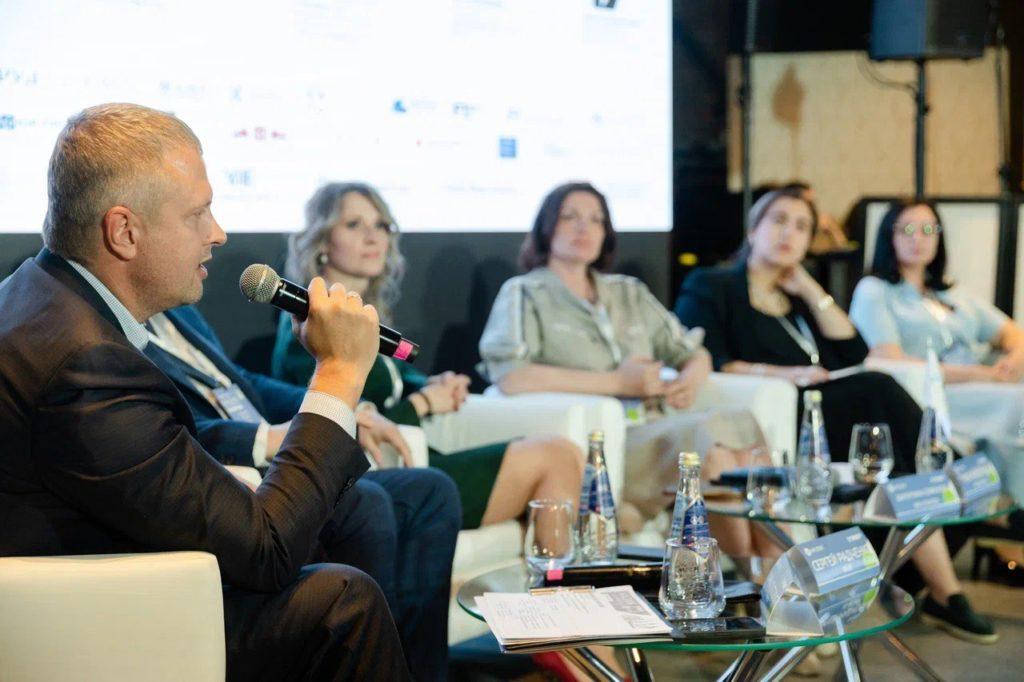
An Interview with Yuri Pustovit, Managing partner of a Leading Krasnodar Law Firm
MoreAlexander Fedorov: What is ABY? How did the name come about? Why is it in English? How old is the bureau, and what is YUG?
Yuri Pustovit: ABY is an abbreviation of the bureaus English name "Advocates Bureau Yug". The name appeared in 2002 during the reorganization of Legal Consultation No. 14 of the Krasnodar Regional Bar Association. So, the Advocates Bureau Yug was formed. The bureau was initially created on November 29, 1995 (in the form of a consultation). Next year we will celebrate ABYs 30th anniversary. It is quite an impressive date for Russian business, although it is incorrect to call the bar activity a business. There is an opinion that clients associate the age of a law firm with the age of the consultant. When the age of a company, say, 5-7 years, then the client perceives such a firm as not very mature, whose advice is not worth listening to. In my opinion, this thesis is doubtful, since I know many successful Russian teams that were formed no more than 10 years ago. The main clients of our bureau were international companies that actively entered the Russian market and the Krasnodar Region in the late 90s and early 2000s. Hence the English logo - to make it more understandable to our clients, easy to read and remember. The entire staff of our bureau has been English-speaking since its inception, including the administrative staff. In the early 2000s, the abbreviation "Yug" was actively used in the names of companies in the Krasnodar Region, and we followed the same path. In 2003, we signed a partnership agreement with a large international law firm Salans (now Dentons), and had many joint projects. Lawyers and attorneys of our bureau underwent internships at the Moscow office of Salans and there were prerequisites that in the foreseeable future we would also become part of Salans, so no one bothered too much with the name of the bureau. However, years passed, and the merger never happened, but Advocates Bureau Yug became a recognizable brand on the Russian legal market far beyond the south of Russia, and we did not change anything in the name.
Alexander Fedorov: Where did the focus on working with big business come from? Where did you receive additional training to achieve your current position?
Yuri Pustovit: After graduating from university, I did an internship in Denver, USA, at a small law firm that specialized in immigration law. There I saw many interesting things from the inside about how a law firm works, how they communicate with clients, the work of billing systems, project management systems, and much more. All this in those years in the Russian regions was not yet. As a rule, lawyers practiced individually, and where there were small teams, the organization of processes was at a rather primitive level. We learned a lot from our colleagues and partners from Salans. David Meisters books played an important role in our development.
Alexander Fedorov: You are over 45 years old, yet you started in the 2000s. Now you know the entire Russian market. Tell me, are there many regional boutiques left or have they grown? So that the firms do not grow to huge sizes, and the check was at the level of leading Moscow firms.
Yuri Pustovit: My longstanding friend and mentor, Alexander Khvoshchinsky, played an instrumental role in my understanding of the legal market beyond the Moscow Ring Road (MKAD). Colleagues over the age of 45 are well aware of his name. He was a pioneer and a prominent figure among legal firm consultants. Alexander made significant contributions to streamlining internal management within legal firms, implementing partnership programs, managing finances, and much more. He actively encouraged the merger of legal firms, recognizing it as a growth strategy and an opportunity to compete with international law firms (ILFs) and leading Russian law firms (RULF). Perhaps Khvoshchinskys most significant contribution to the Russian legal market lies in bringing us all together. In the early 2000s, the Russian legal services market was even more closed off. There were no Russian rankings, and international rating agencies, such as Chambers and Partners, Best Lawyers, and Legal 500, exclusively surveyed their Moscow-based counterparts, seemingly oblivious to the legal landscape beyond the MKAD. As a result, Moscow-based colleagues had some knowledge of each other, but everything happening outside of Moscow remained an enigma for the legal community. Even for the most insignificant work in the regions of Russia, lawyers and advocates were dispatched from Moscow, which was not always justified in terms of the clients budget. Therefore, around the mid-2000s, Alexander began actively traveling to the Russian regions, introducing himself to regional lawyers, and subsequently became the main ideological inspiration for organizing regional legal forums, where he brought a large number of Moscow-based colleagues. Boutique-sized firms with a small number of lawyers are characteristic of the Russian regions. Having a large number of lawyers on staff and a wide range of practices is more the exception than the rule. I can name many outstanding boutique regional law firms, probably a few dozen, that can compete not only in terms of rates but also in terms of expertise with leading Moscow firms. However, I will not list their names so as not to offend those I do not mention. I would even go so far as to say that if a client invites such successful regional colleagues to work on a project, their opponents - representatives of law firms from Moscow or other regions of Russia - often find it extremely difficult to work with them. There is an opinion that despite minor regional or local differences in legislation where it falls under the purview of joint jurisdiction, we are all under Russian jurisdiction, which means equal effectiveness of colleagues, regardless of where they come from to work in the region. In practice, things are often different; there is always regional specificity, internal rules, politics, protectionism of local businesses, and the presence of political heavyweights who are sometimes the de facto beneficiaries of the business, which lawyers from other regions typically are unaware of.
Alexander Fedorov: For how long have you been participating in Russian and international ratings, and which ones? Have there been any special achievements or mentions? Why did you immediately believe in the need to apply for the RG (Rossiyskaya Gazeta) rating?
Yuri Pustovit: We have been participating in the Pravo.ru-300 rating since its inception in 2010, Chambers and Partners since 2014, when they first began researching Russian regions, Best Lawyers also around the same time, since 2014, Kommersant - since around 2019. For any firm, getting into such ratings is an achievement, let alone being included in the 1st group - which is our case - or the personal ratings of our lawyers.
It was not difficult to believe in the rating from Rossiyskaya Gazeta for two reasons. Firstly, it is a very serious publication, and secondly (not in terms of importance), the research was personally conducted by Alexander Moskovkin, a very profound professional and a veteran of the Russian legal market. Looking at what they did, I can say that they did a great job and most of their colleagues have quite deservedly taken their place in this rating.
Alexander Fedorov: A question about the team. How many employees are there now, how many were there at most, and how did you manage to make it so that key employees work for more than 10 years, which is a rarity for the regional market? A lawyer works, gains experience and clients, and creates his own practice. That is how it usually happens, right?!
Yuri Pustovit: There are four lawyers working in our bureau now. At most there were 12 in 2009, after which we reduced our subsidized practices and several colleagues went on their own. The main backbone of the firm has indeed been working for more than 12 years, which is a great rarity for the Russian market as a whole. I believe that interesting projects, high-profile cases, media coverage, comfortable working conditions, a good reputation of the bureau as an employer, high fees, and a common vision of the development and culture of the bureau can be the factors that keep colleagues in our team. Of course, opening an independent practice is the most common way for colleagues to leave law firms. Having gained some experience, having gained direct access to clients, and realizing that in order to become a partner in a firm, they will have to go a rather long way or they do not have partner qualities, colleagues create their own practices. Some of them are successful, while others we stop hearing about in the professional environment after such exits. Since the entry into the legal business is quite low, and in many practices legal education is not required, the appearance of such independent players will remain one of the trends of lawyers leaving law firms, although now there is an obvious opposite trend, the trend towards consolidation of firms, since large businesses make high demands on the qualifications and numbers of legal consultants. Therefore, I believe that now there may be a new wave of consolidation of firms and mergers in the legal market.
Alexander Fedorov: How often do you interact with other law firms? What works well, what dont you like about your colleagues, and how often are you approached by colleagues considering ABYs regional location?
Yuri Pustovit: We interact very frequently with our Moscow colleagues, as well as colleagues from other regions of Russia. Such contacts occur several times a week. Over a certain period of time, colleagues have become one of our key clients, referring clients to us both directly and on a subcontracting basis. These are mainly litigation projects, as well as legal expertise of real estate objects, where there is its own regulation and specifics, and some municipal regulatory acts are extremely difficult to find in the public domain. As you understand, we only say good things about our colleagues or nothing at all. But from what we dont like, often our Moscow colleagues come to our region with the idea that the cost of work will be low here, and they are disappointed when they realize that this is not the case, that the salaries of colleagues in the Krasnodar Region are often not inferior to those in Moscow.
Alexander Fedorov: You have extensive experience attending conferences. Tell us where you go yourself now, what cool events you remember from those that are no longer held, and about the role of the IBA in the development of the Russian legal market.
Yuri Pustovit: I really like what Pravo.ru is doing now, especially their conferences outside of Moscow. I am still under the impression of their forum in Tashkent. Denis Puchkov from LOYS, with his Kovalev Readings, is a must-attend event. It will be interesting even for those who do not practice criminal law. ANP Zenith together with Pravo.ru have made a wonderful platform in Kazan for two years in a row - Kazan Legal Week.
Of the forums that are no longer held, in my opinion, the brightest was the forum of the CIS countries, which was organized by Irina Paliashvili. It was a wandering forum that was held every year in a new CIS country. There was a special atmosphere and a rich business and cultural program.
There is also a lack of a conference on law firm management, which was held under the auspices of the IBA in Moscow. Undoubtedly, the IBA has played a significant role in improving international legislation, shaping the future of the legal profession in Russia, involving the Russian legal community in this work, and introducing international working standards in Russia. At almost any IBA conference in any country in the world, you can see bright representatives of the Russian legal community among the speakers and participants.
Alexander Fedorov: So, weve smoothly transitioned to the topic of the Southern Russia Legal Forum, which will be held in Sochi once again in early September. Who attends this forum, why do they attend, and are new participants needed?
Yuri Pustovit: The annual Southern Russia Legal Forum, now in its 16th year, will take place in Sochi from September 5-7, 2024. We are immensely pleased to organize this forum in collaboration with our partners from Pravo.ru. The forum has taken on new significance and attracted new participants. The forums primary audience consists of managing partners and partners of leading Russian and international law firms, as well as legal department directors and vice presidents of legal affairs from major Russian and international companies in the real sector of the economy. Every year, we witness a growing interest from in-house counsel in the Southern Russia Legal Forum. At the same time, our colleagues from the real sector come not only to listen but also to actively participate in our forum, engaging in discussions and polemics, raising pressing legal issues and the nuances of relationships with consultants.
The forum traditionally features a packed business and cultural program. The sailing regatta, with its genuine judging and medal presentations, has become a tradition and a favorite among all our participants. The Southern Russia Legal Forum always fosters an open and friendly atmosphere where you can approach renowned participants, ask questions, and expect candid answers. Its a place to build long-lasting business relationships and friendships, an opportunity to unwind and recharge with like-minded individuals. The forum already has its established veterans who have never missed a single one of the forums held over the years. At the same time, new faces appear every year, having heard rave reviews from its participants for years but previously unable to fit it into their work schedules. We have noticed in recent years that many participants, upon leaving Sochi after the forum, have already booked their participation for the following year, and this inspires us to continue this tradition and come up with new activities for its participants.
Alexander Fedorov: You have been actively involved in the Krasnodar Regional Bar Association for over 10 years. What does this give you? What other public responsibilities do you have?
Yuri Pustovit: Indeed, for many years I have been a member of the Qualification Commission and the Council of the Krasnodar Regional Bar Association. Working in the corporate governance bodies allows me to better understand the problems that exist in the professional environment and to take direct part in their resolution. This is a great public duty, responsibility, and trust of colleagues who have cast their votes for you to do this work with dignity and in the interests of each member of the corporation. In addition to this work, I am a member of the State Examination Commission of the Department of Civil Law at the Kuban State University, a member of the Advisory Council on Foreign Investment under the Head of Administration (Governor) of the Krasnodar Region, Deputy Chairman of the Southern Committee of the Association of European Business in Russia, and a member of the editorial board of the business weekly YugTimes.
Alexander Fedorov: And Im going to conclude the interview with a traditional question - who is your hero?
Yuri Pustovit: My hero is a judge or law enforcement official who, despite unprecedented pressure on him, makes an exclusively lawful decision and takes lawful actions; these are lawyers and advocates who, having received an unfair decision, do not give up, do not leave the profession, but continue to protect their clients and achieve legality and justice for them; these are those who do business in our country, despite all these countless sanctions and difficulties within the country, all these people are my heroes and inspire me to new professional achievements.
Alexander Fedorov: Thank you for the interview.
11.06.24
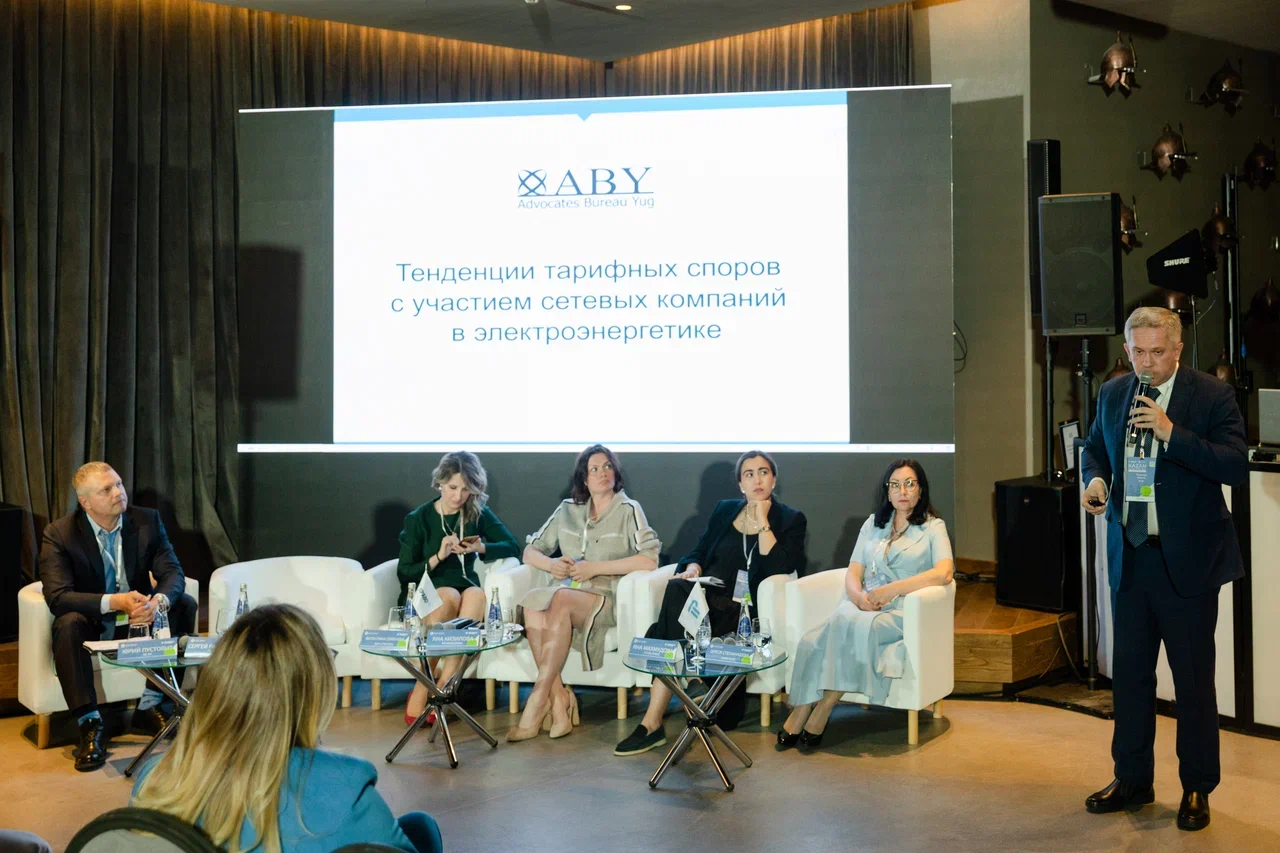
On May 22, 2024, the vibrant city of Kazan played host to the much-anticipated Kazan Legal Week 2024, a forum meticulously organized by Pravo.ru and ANP Zenith. This esteemed gathering brought together a diverse array of legal luminaries, astute business leaders, and esteemed partners from prominent law firms, all united by a shared passion for navigating the intricacies of legal business management. The events timing couldnt have been more perfect, as the captivating city of Kazan, adorned in its springtime splendor, provided a breathtaking backdrop for thought-provoking discussions and meaningful connections.
MoreThe forums official commencement was marked by a warm and welcoming evening reception, carefully orchestrated to foster camaraderie and networking among the esteemed participants. The captivating performance of renowned singer Avraham Russo infused the air with an infectious energy, setting the tone for an unforgettable event.
The following day, May 23, marked the official start of the forum. Serving as the captivating backdrop for Kazan Legal Week 2024, the Tasigo Kazan Palace seamlessly intertwines the grandeur of a bygone era with the sophistication of modern hospitality.
The plenary session titled "Trends in Corporate and Business Communications in 2024" brought together a panel of highly respected legal experts from leading companies such as SIBUR, C5 retail Group, Avito, and others. Under the astute guidance of Dmitry Shchugorev, Editor-in-Chief of the TV channel "Moscow 24," the session offered a thought-provoking exploration of the ever-evolving landscape of corporate communications and leadership practices. Esteemed panelists shared their insights on crafting effective communication strategies, navigating the information deluge, addressing employee burnout, and fostering harmonious leader-team relationships.
Following a refreshing coffee break, the Kazan Legal Week 2024 program expanded into a series of parallel sessions and roundtables. Among these, the roundtables organized by the Russian State University of Justice (RSUJ) held particular significance, delving into the intricacies of "Trends in Judicial Practice in the Sphere of Public and Private Legal Relations."
Session 1 titled "Business Development Prospects in 2024" brought together a distinguished panel of legal experts (Kesarev, S&K Vertical, Seven Hills Legal) and business leaders (Aeroflot, ALROSA, Russian Agricultural Bank). Moderated by Fedor Belykh, Partner at Elwi, the session provided a comprehensive discussion of the business landscape and economic outlook for Russia in 2024, amidst the backdrop of external pressures and sanctions. Panelists delved into strategies for circumventing sanctions while adhering to compliance requirements. A particular focus was placed on safeguarding bank transfers in the face of asset freezes stemming from sanctions. Additionally, the session highlighted the emerging trend of cross-border bankruptcies.
Parallel Session 1.1, titled "Private Equity Risks: Inheritance, Divorce, Bankruptcy, Corporate, and Sanctions," brought together a panel of legal experts from law firms together with a judge from the Chelyabinsk Region Commercial Court and the Director of Personal Funds Sales at Alfa Capital. The session was moderated by Viktoria Dergunova of the Monastyrsky, Zyuba, Stepanov & Partners Bar Association.
The panelists delved into a comprehensive discussion, encompassing blocked assets, jurisdiction selection for structuring, the growing appeal of personal funds for private equity structuring, the interpretation of prenuptial agreements in court, corporate disputes initiated by ex-spouses, and strategies for minimizing risks associated with subsidiary liability.
Session 2 "Topical Issues in Legal Regulation" brought together a panel of legal experts under the moderation of Damir Nizamov, a representative of the forums organizers, ANP Zenith. The panelists engaged in a stimulating discussion encompassing a wide range of legal issues, including:
Concurrent to the other sessions, Parallel Session 2.1, titled "Legal Issues in the Energy Sector in 2024," convened under the moderation of Yuri Pustovit, Managing Partner of Advocates Bureau Yug. The session brought together representatives from law firms and the energy industry, including Ugol-Trans JSC.
Sergey Radchenko, Partner at Advocates Bureau Yug, shared insights with the participants on the latest trends in tariff disputes involving electricity grid companies. He explained that a tariff dispute is an administrative claim filed by a grid company against the tariff service to invalidate a decision by the service that sets the necessary gross revenue, boiler, and individual tariffs for the grid company for the next year or even a five-year period within the framework of the period.
In addition to the standard tariff disputes, there exists a specific type of case where a grid company files a claim against the tariff service to recover losses caused by a regulatory act that has been declared invalid or by the failure to adopt a replacement act, resulting in a loss of tariff revenue. However, these cases are relatively rare.
One of the most common expenses that triggers disputes regarding its inclusion in the necessary gross revenue is interest on bank loans. Recent court practice has adopted a very strict approach to including such expenses in the necessary gross revenue (NGR). The court requires the grid company to prove that it has incurred losses, a cash deficit, and cash gaps, primarily due to non-payment by consumers.
In court, the tariff service defends its position by arguing that including the claimed expense in the NGR would lead to tariff increases and potentially collapse the regional economy. They further argue that the grid company should collect debts from non-paying consumers rather than taking out loans. The grid companys objections, which emphasize that focusing solely on consumer interests could lead to the companys demise, thus ultimately harming consumers, and that the company is willing to collect debts but only if consumers can tolerate 1-1.5 years without electricity until the debt is recovered, are typically disregarded by the court, both during hearings and in judicial acts.
In the realm of tariff disputes involving grid companies, an alternative to pursuing litigation in court is to seek resolution through the Federal Antimonopoly Service of the Russian Federation. This mechanism allows grid companies to present their grievances and seek a fair resolution before resorting to court proceedings.
The session on energy law delved into additional critical issues facing the industry beyond tariff disputes. These included:
Following a brief coffee break, forum participants reconvened for the third session, ironically titled "Hit Parade of Court Positions 2023-2024." Moderated by Sergey Kovalev, Managing Partner of Kovalev, Tugushi, and Partners, the session encompassed a wide range of legal topics, delving into a surge in cross-border disputes arising from the application of articles within the Arbitration Procedure Code of the Russian Federation (APC RF) regarding the exclusive jurisdiction of Russian courts in cases involving foreign parties. Panelists explored new developments in the realm of foreign company bankruptcy and the recognition of Russian court judgments abroad in the post-2022 landscape. Furthermore, the session addressed the evolving landscape of customs disputes in 2023-2024, including an evaluation of the effectiveness of astreint as a judicial tool. Discussions also encompassed the recovery of lost profits, the complexities of class action lawsuits within the securities market, and the pressing issues surrounding subsidiary liability in bankruptcy proceedings during 2024.
As the world embraces the transformative power of digitalization and information technology, the need for effective legal and regulatory frameworks becomes increasingly crucial. In this regard, Parallel Session 3.1, aptly titled "Digital Reality: The Truth," moderated by Ramis Abyanov, Partner at ANP Zenith, provided a thought-provoking exploration of the legal and regulatory challenges and opportunities arising in the digital realm. Panelists delved into the complex landscape of cryptocurrency regulation and e-commerce and addressed the intricacies of software disputes and the IT tax benefits. They explored strategies for effectively managing intangible assets in the digital environment and discussed the potential for digitalizing the legal function within companies.
As the formal business program drew to a close, the forums participants were treated to a delightful fusion of culinary delights and musical entertainment at the closing banquet.
The final day of the forum bore a special title that perfectly captured its essence: Kazan Legal Week Golf Day. This unique event transformed the picturesque grounds of the Sviyazhskie Holmy Golf Club into a hub for sporting camaraderie and networking opportunities. The golf tournament was designed to be inclusive and welcoming, catering to players of all skill levels. The emphasis was not on fierce competition but rather on savoring the beauty of the surroundings, the warmth of the sun, the lush greenery, and the lively music, all while engaging in stimulating conversations and forging new connections. However, the competitive spirit was not entirely absent, and an award ceremony was held to recognize and celebrate the winners in various categories.
The forums participants departed not only enriched with new insights and friendships but also carrying the lingering warmth of a truly enriching experience.
11.06.24
As noted by Pravo.ru, the number of leaders among regional teams has nearly halved compared to 2022. Only five law firms made it into the first group: Krasnodar-based Advocates Bureau Yug, ANP ZENIT from Kazan, Novosibirsks AB Grebneva and Partners, YUKEY (Perm), and St. Petersburg-based RAUD.
MoreAdvocates Bureau Yug: A Leader Among Litigators in Russias Regions According to Pravo.rus Eighth Litigation Study
As noted by Pravo.ru, the number of leaders among regional teams has nearly halved compared to 2022. Only five law firms made it into the first group: Krasnodar-based Advocates Bureau Yug, ANP ZENIT from Kazan, Novosibirsks AB Grebneva and Partners, YUKEY (Perm), and St. Petersburg-based RAUD.
Pravo.ru analysts examined approximately 10,000 court decisions issued by arbitration courts in 2023. The study results were traditionally divided into federal and regional ratings and presented in tables consisting of four groups. The selection process took into account several criteria:
The study results highlight a trend of increased interest in participating in the ratings among federal companies and an expansion of the geography of regional litigators. Last year, it included legal teams from six constituent entities of the Russian Federation. Now, law firms from 20 Russian cities, from Kaliningrad to Vladivostok, are present.
To view the full study results, please follow the link: https://pravo.ru/news/253385/
11.06.24

On April 10, 2024, Kommersant Publishing House released the results of its 2023 legal ranking and forecasted the potential development of the legal business in the current year.
MoreOne of the main trends was not only stability but also the growth of a large number of practices. Corporate practice became one of the most sought-after in 2023, while litigation, bankruptcy, sanctions, and criminal and economic practices maintained their high positions. In general, all respondents interviewed within the framework of the ranking noted an increase in financial indicators and appeals.
Summing up the year, Kommersant asked lawyers about the impending changes in Russian legislation, including the amendments to the law on the bar. They are currently being considered by the State Duma.
According to the ranking results, Advocates Bureau Yug topped the following regional legal practices: arbitration proceedings: High-End Commercial Dispute Resolution (Band 1), and Dispute Resolution in Courts of General Jurisdiction (Band 1).
Individual rankings were also conducted, with Managing Partner Yuri Pustovit taking place in Commercial Dispute Resolution (Band 1) practice. Meanwhile, ABYs Partner Sergey Radchenko took place in a practice "Dispute Resolution in Courts of General Jurisdiction" (Band 1).
To get more information on the Kommersants Ranking, please follow the link https://www.kommersant.ru/doc/6634816
06.06.24
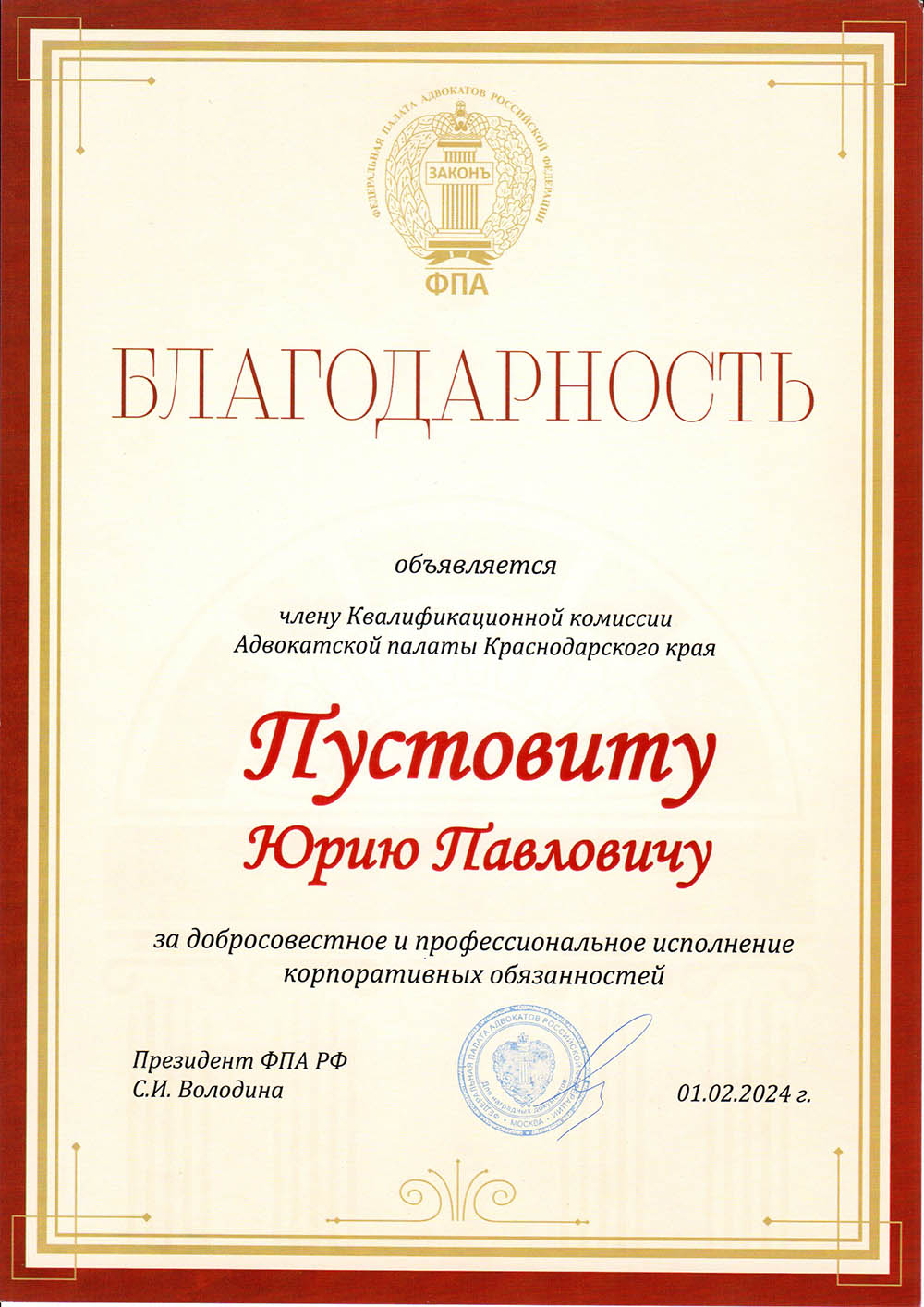
On May 31, 2024, on the Russian Bar Day, ABY s Managing Partner was awarded by Svetlana Igorevna Volodina, the President of the Federal Chamber of Lawyers, for fair and professional performance of his corporate duties as a member of the Qualification Commission of the Krasnodar Bar Association.
More28.05.24

A former beneficiary of the clients company filed to the commercial court to include a debt owed by a clients subsidiaries undergoing bankruptcy proceedings into the list of creditors claims.
MoreThe debtor company and the client objected to including this debt in the list of creditors claims, arguing that the former beneficiarys actions constituted an abuse of legal process. They claimed that the former beneficiary had no valid claim against the debtor company at the time of filing, as the debt had been duly discharged through the offset of mutual claims. Additionally, they pointed to the specific nature of the loan obligations and the complex structure of relationships within the group of companies and their beneficiaries.
The commercial court of first instance upheld the clients arguments. It ruled against the former beneficiarys inclusion in the list of creditors claims, finding that his actions constituted an abuse of rights.
ABYs lawyer Ekaterina Fedenko represented interest of the clients interests in this case.
08.04.24

Advocates Bureau Yug acted as legal counsel for a prominent grid company in a legal matter concerning the mandatory relocation of overhead and high-voltage power lines, along with their supporting towers, from a third-partys land parcel. A prior court order mandated the Client to execute this relocation.
MoreThe enforcement officer lodged a formal motion to terminate the enforcement proceedings due to impracticability, which stemmed from the Clients inability to relocate the electrical grid facilities as it contravened urban planning regulations and regulations governing the operation of electrical installations. Moreover, It was impossible to establish new land plots for the placement of the support towers in accordance with land management and urban planning regulations.
The courts previously rejected the termination motion filed by the enforcement officer.
During this appeal, Advocates Bureau Yug meticulously argued the presence of exceptional circumstances within the case materials that demonstrably impeded the Clients ability to comply with the initial court decision. ABYs legal team demonstrated that the designated relocation route traversed a densely populated area with a residential sector and a complex network of existing subterranean and above-ground utilities. Any attempt to reconstruct the overhead line in this location would inevitably lead to violating relevant regulatory statutes.
Finally, the Fourth Cassation Court of General Jurisdiction issued a ruling on January 19, 2024, which overturned the previous appellate court decision and remanded the case for a fresh appellate review.
Given the prevalence of similar legal disputes, the establishment of favorable case law on this matter holds significant economic importance for the Client.
The Clients legal interests were ably represented by attorney Alexander I. Demikhin throughout these proceedings.
28.03.24

The Pravo-300 Ranking, a well-established guide for choosing legal partners, announced its list of top individual lawyers on March 19, 2024 This recognition goes beyond law firms and highlights outstanding legal professionals.
MoreThe ranking is divided into federal and regional categories for a more detailed evaluation. It also considers lawyers practice areas and their positions within their firms. To be included, lawyers submitted information about their accomplishments, which included details of significant projects they worked on during the evaluation period, descriptions of their achievements and legal experience, and any professional awards they received.
The Pravo-300 individual ranking is growing in popularity, attracting more nominees each year. In 2023, 1,812 lawyers were selected from 5,204 applicants. This year, 2,640 lawyers were chosen from a pool of 6,443. This increase shows the rankings importance, especially since other directories are unavailable due to the current political situation.
The Advocates Bureau Yug (ABY) is proud to be recognized in the 2024 ranking in two categories: Arbitration Litigation -Large Disputes (High Market) and Dispute Resolution in Courts of General Jurisdiction. ABYs two lawyers were also ranked this year: Yuri Pustovit, its Managing Partner, and Sergey Radchenko, its Partner and Head of Litigation and Arbitration Practice.
03.03.24
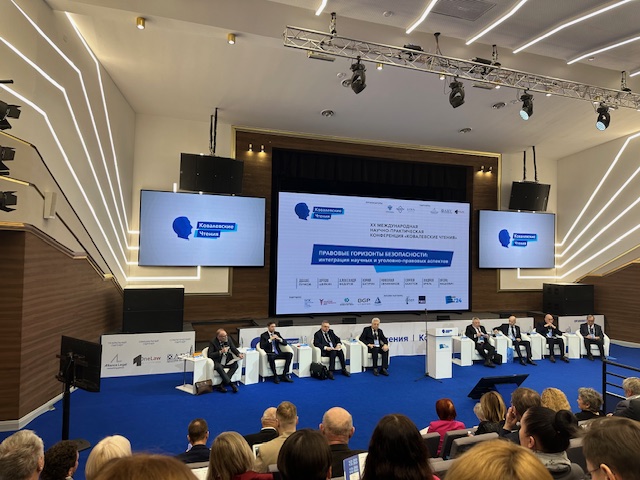
Since its inception in 2004, the Scientific and Practical Conference "Kovalev Readings" has been meticulously orchestrated by the Department of Criminal Law of the Ural State Law University (USLU) in concert with the esteemed law firm LOYS. Over the years, this prestigious event has attracted an impressive array of more than 750 speakers and 4,500 participants from 35 countries. Among these luminaries have been esteemed scholars and professors of law, criminologists, judges, investigators, prosecutors, advocates, human rights activists, employees of the penal system, journalists, politicians, and undergraduate, graduate, and postgraduate students. This momentous event not only commemorated a significant milestone anniversary but also paid homage to the centenary of the individual whose name it bears.
MoreThe conference was established in honor of the illustrious Mitrofan Ivanovich Kovalev (1922-2002), a veteran of the Great Patriotic War. For several decades, he presided over the Department of Criminal Law at SLU, where he sowed the seeds of the Ural Criminal Law School. He was also bestowed with the title of Honored Scientist of the RSFSR and served as a revered mentor to generations of SLU&USLA students. His profound contributions to the field of law were recognized with the conferment of a Doctor of Law degree and the title of professor.
As part of the conferences comprehensive program, the Youth Forum "Criminal Law and Criminological Means of National Security" was convened on February 15, 2024. This forum provided a platform for the exploration of intricate issues about criminal law and criminological support for national security in the contemporary landscape. The Sverdlovsk State Childrens Philharmonic extended an invitation to the conference participants to attend a captivating performance entitled "The Fate of a Man in the Fate of the Country," a fitting tribute to the 100th anniversary of M.I. Kovalev.
The principal working day of the forum was held on February 16, 2024, at the Cultural and Exhibition Complex "Sinara Center." This year, the conference program on the general theme was meticulously divided into several sessions: the plenary session "Legal Horizons of Security: Integration of Scientific and Criminal Law Aspects" and the parallel sessions "Criminal Law Policy in the Sphere of Security," "Informatization in the Modern World in Criminal Law and Criminological Aspects," "Criminal Law Protection of the Military Security of the State," "Legal Security of the Economy under Sanctions Pressure," and "The Role of M.I. Kovalevs Works in the Development of Criminal Law and Criminology."
Yuri Pustovit graced the session "Economic Security of the State: Criminal Law Aspect" as a speaker. This session, expertly moderated by Z.A. Neznamova, Doctor of Law, Professor, and Head of the Department of Criminal Law at USLU named after V.F. Yakovlev, and A.V. Ivanchin, Doctor of Law, Professor of the Department of Criminal Law and Criminology, and Rector of Yaroslavl State University named after P.G. Demidov, delved into the timely topic of safeguarding relationships arising from government contracts. State control over defense orders is assuming increasing significance in this regard, which has prompted the criminalization of certain actions. Furthermore, the Prosecutor Generals Office of the Russian Federation has been actively exercising its powers within the framework of civil legislation related to the transfer of property complexes in the form of enterprises to state ownership. These property complexes may have been acquired through corrupt means or in violation of privatization rules, which exemplifies the application of confiscation, a concept inherent in criminal law. The participants engaged in a thorough examination of the elements of newly introduced offenses, the challenges associated with their qualification, and the actions undertaken by the state concerning the confiscation of property.
Upon the conclusion of the intellectual endeavors within the framework of the conference, the participants embarked on a guided tour of the art gallery of the cultural and exhibition complex "Sinara Center". After that, they enjoyed the celebratory standing buffet in honor of the centenary of M.I. Kovalev.
The "Kovalev Readings" are renowned for their captivating musical program. This year, the participants were enthralled by a performance by Megi Gogitidze, a Georgian vocalist and songwriter of unparalleled talent. She has crafted a distinctive style that seamlessly blends Georgian ethnic music with contemporary undertones. Megi collaborates with Cuban musicians, creating an electrifying energy at her concerts.
03.03.24

The Association of European Businesses (AEB), the preeminent representative body of foreign investors in Russia, was established in 1995 as an independent, non-profit organization. It serves as a unifying force for more than 500 companies operating within the Russian Federation.
MoreThe AEBs presence in Russia encompasses two regional committees: one in St. Petersburg and the other in Krasnodar, known as the Southern Regional Committee.
On February 15, 2024, the Southern Regional Committee of the AEB convened its annual general meeting at the office of the Southern Sales Directorate, a branch of KNAUF GIPS LLC.
During the meeting, the Committees Coordination Group underwent a democratic renewal, with its members being elected for the ensuing two-year term. At their inaugural gathering, the newly elected members unanimously bestowed the Chairmanship of the Southern Regional Committee of the AEB upon Oleg Zharko of H&N. Lyubov Popova of Vegas LEX was appointed as First Deputy Chair, while Diana Lipinskaya of Center-Invest Bank and Yuri Pustovit of Advocates Bureau Yug were elected as Deputy Chairpersons.
25.02.24
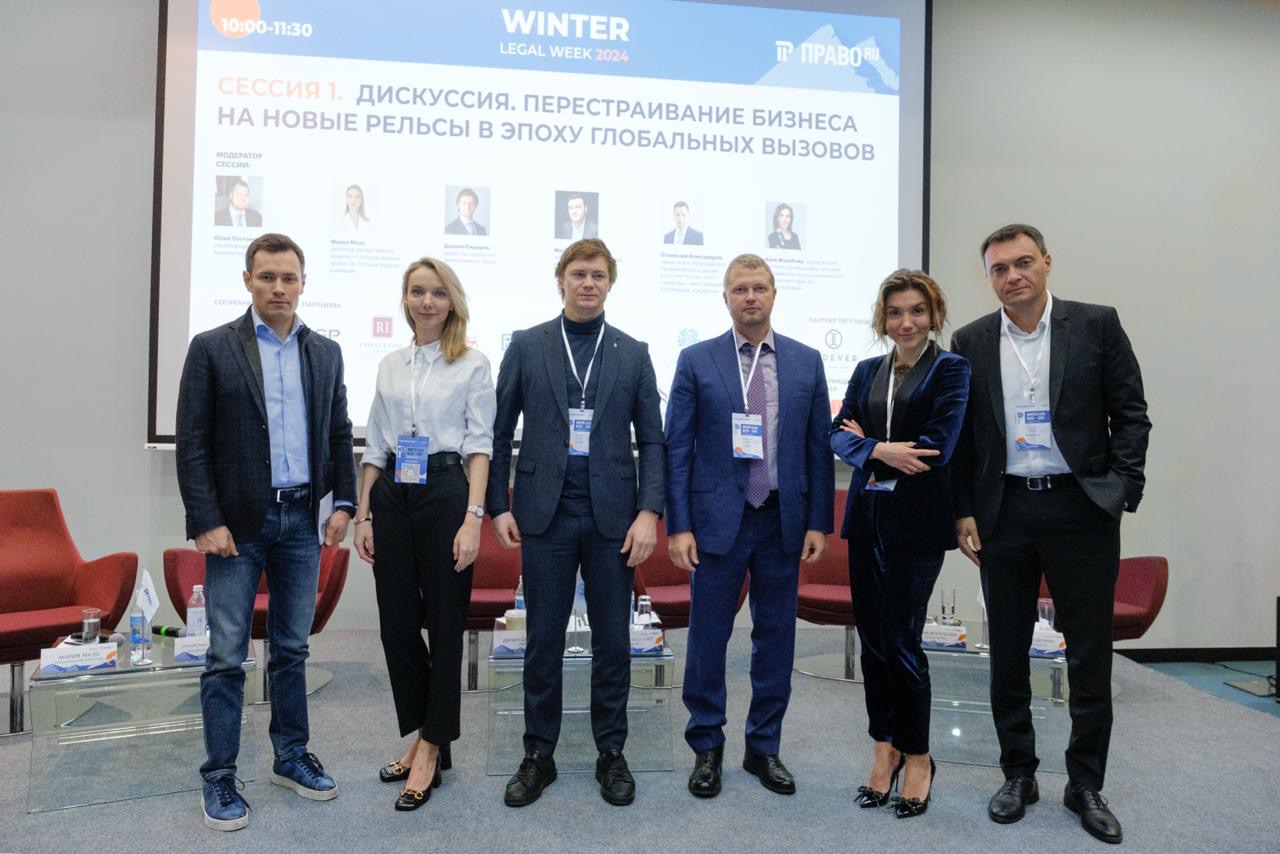
Inaugurating the Russian legal spheres calendar of events for 2024, the Winter Legal Week forum was jointly organized by the legal portal Pravo.ru and Advocates Bureau Yug.
MoreHeld from February 8th to 10th at the Radisson Hotel Rosa Khutor in Krasnaya Polyana, the event encompassed not only a professional agenda but also educational and athletic elements. Lawyers from across Russia and even abroad converged to participate.
To facilitate informal networking, attendees were invited to "Les," a glamorous camping site where they engaged in an intellectually stimulating quiz game. Teams were formed spontaneously, fostering rapid camaraderie among participants. The game, as evidenced by feedback, proved both engaging and refreshing their knowledge of cinema and music.
The following day was dedicated to the forum's professional agenda. The opening session, moderated by Yury Pustovit , Managing partner of Advocates Burea Yug, took the form of a discussion centered on "Restructuring Businesses During Global Challenges."
Yury Pustovit emphasized that the evolving business landscape necessitates innovative legal solutions, which are fortunately facilitated by legislative changes and their practical application. One of the currently sought-after mechanisms for regulating business processes is re-domiciliation, a legal method that enables companies to shift from one jurisdiction to another. While re-domiciliation is typically employed to seek jurisdictions with less burdensome tax or corporate laws, in Russia, it serves as a protective mechanism to safeguard assets and transfer them out of unfriendly countries. The number of Russian companies utilizing this method has increased tenfold since its inception.
What, then, should be done with "abandoned" companies? They can be nationalized. In Russia today, a milder approach is being taken in the form of external management, as exemplified by Danone and Baltika. It is a crucial discussion topic for the legal community, as it will facilitate striking a balance between the interests of the state and shareholders affected by government measures.
Participants in the first session also examined the challenges of opening accounts with foreign banks and the complexities involved. Certain countries require European residency or citizenship to open an account. Additionally, foreign jurisdictions subject clients to banking compliance, an internal vetting process conducted by the financial institution. Legal experts advise opening multiple accounts in different countries and banks, as financial institutions may abruptly decide to close accounts held by Russian citizens.
Amidst business turbulence, the government is extending support not only at the federal level but also regionally. Thanks to amendments in the regulatory framework, the Republic of Bashkortostan managed to implement an investment project and construct a plant for the production of post-harvest grain processing equipment in just nine months. The Russian Association of Lawyers stands ready to facilitate legislative changes and enable the government to be more responsive to business needs. The association formulates proposals received from the business community and submits them to the government commission on legislative activities. It also actively participates in the State Council's commission on small and medium-sized businesses.
In recent years, the government has emerged as a driving force in the urban development sector, embarking on a transformative journey to enhance the well-being of its citizens. In 2022, a comprehensive strategy was meticulously crafted to foster a thriving urban environment, elevate the quality of life, unlock the potential of land plots, streamline investment and construction processes, and embrace the transformative power of digitalization. This commitment was further solidified in 2023 with the enactment of several groundbreaking laws. The legislative landscape was reshaped to clearly define the scope and characteristics of auxiliary facilities, paving the way for more efficient and harmonious urban planning. The possibility of construction within protective zones of power lines was judiciously established, striking a delicate balance between development and environmental preservation. Additionally, a novel procedure was introduced to safeguard the interests of participants in shared construction projects, ensuring transparency and fairness throughout the process.
The second session of the forum, aptly named "Around the Campfire" for its profoundly resonant subject matter, ignited disputes with a foreign element, the nuances of representing foreign companies in Russian courts, and the disputes involving sanctions, specifics of issuing permits for transactions between residents and foreign companies from unfriendly countries, forecasting group lawsuits, and the liability of persons providing legal services to debtors in bankruptcy cases.
Sergey Radchenko , Partner at the Advocates Bureau Yug, shared examples of Kuban cases to illustrate how the Russian Prosecutor General's Office is filing numerous lawsuits to return assets to state ownership that were previously state-owned in the 1990s and 2000s but were later privatized and subsequently acquired by private individuals.
Radchenko's compelling examples laid bare the stark contrast between the Prosecutor General's arguments and established legal doctrine and judicial practice. The arguments in these lawsuits radically contradict both legal doctrine and judicial practice over the past 25 years, yet the courts are ruling in favor of the lawsuits. One reason for this is the initial lawsuits filed by the Prosecutor General's Office in 2018, which were aimed at combating corruption and returning criminal assets to the state treasury. Today, thanks to the accumulated case law, similar approaches are being applied not to criminal cases, but to civil law cases. This is despite the existence of civilized mechanisms and the fact that the Constitution of the Russian Federation prohibits the seizure of private property without prior market compensation.
The third session, the "Non-conference", divided into three roundtables, provided an opportunity for lawyers to share their perspectives on the development of the legal market. Many companies operating in Russia are being forced to seek other jurisdictions to grow their businesses, which means they will have to address issues related to the specific features of foreign legislation. With the departure of foreign companies, corporate lawyers must devise ways to buy out assets from foreign participants, resolve corporate conflicts, and establish new companies on the "ruins" of previous ones. As foreign companies leave, they are taking with them unique developments, software, and exclusive technologies, which has led to a redistribution of the Russian market in these areas and, consequently, created a need for state involvement in these processes through regulatory mechanisms.
The third day of the forum, dedicated to relaxation from intellectual work, was no less active. Lawyers took part in a winter slalom, divided into skiers and snowboarders. The organizers awarded prizes and gifts to the winners, and those who took third place received certificates for participation in another legal event scheduled for May 2024.
Lawyers who did not participate in the competition could spend time on the mountain slope with a glass of mulled wine while listening to a DJ set and discussing the past forum with colleagues.
20.02.24
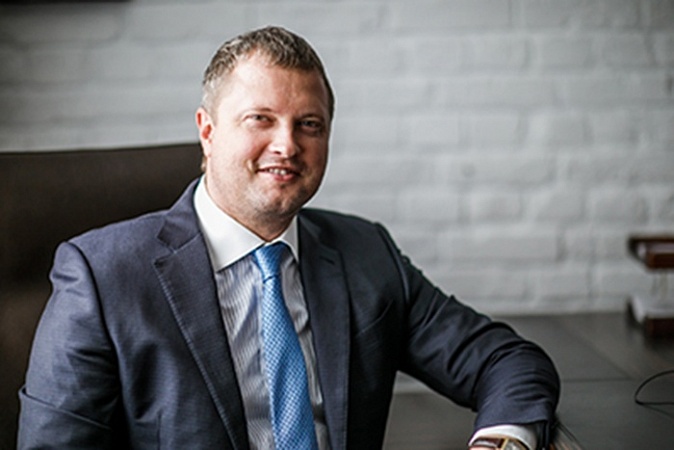
Krasnodar, February 13 – Yug Times, Elena Ivanova. 16+ The article talks about why lawyers are concerned about the possibility of the private property of businesses being seized without prior and equivalent compensation.
MoreLawyers, attorneys, and in-house counsels from every corner of Russia gathered in Sochi to take part in the Winter Legal Week 2024. There, they discussed new legal trends of the year and long-term troubles in the business sector. As usual, Yug Times was a media partner for the event. Todays interviewee shared his view on the Russian legal community - its development, priorities, and expected changes.
Yuri Pustovit , Managing Partner of the Advocates Bureau Yug.
- Mr. Pustovit, what does the Winter Legal Week Forum look like today?
- Its one of the most significant events in the legal community. And, to my great satisfaction, ABY hosts it together with our partner Pravo.ru. As usual, the Forum is the first legal event of the year 2024, and it gathers high-skilled practicing lawyers and attorneys in Krasnaya Polyana during the ski season. Among the guests, you also can find colleagues from the sector of the real economy, who enjoy the Forum. It has a packed and dynamic official program alongside informal communication and ends with a full-fledged ski race accompanied by professional judges and an awarding ceremony.
- Lets start discussing current legal issues with this years sensational events. After the marketplaces large warehouse burnt down, the issue of compensating suppliers losses arose. Im sure, it also affected suppliers from Kuban. What do the legal mechanisms advise you to do in such a situation?
- Yes, the whole country heard about the situation, however, we still dont know about all the consequences. According to public sources, the warehouse was operated without compliance with the procedures provided for by current legislation. It means that the main question is how the retailer has carried out its business activities in the warehouse. Moreover, the retailer cannot indemnify this asset, if it wasnt commissioned and lawfully registered. The retailer could take out insurance for the asset under construction against any related incidents, but theres no insurance against incidents related to commercial exploitation of the asset. I dont know if the mass media tells us all the truth about the case, but it still raises questions. Regarding damage to suppliers goods, the supply contracts usually define such risks of accidental loss of goods as obligations that pass from the supplier to the marketplace and then - to the final buyer. You also can take out insurance against these risks. Its an effective tool. Therefore, suppliers ought to submit a claim to the marketplace and then file it to the court if the marketplace refuses to settle it amicably. If suppliers have insurance, they should submit an application on loss occurrence and meticulously work together with the insurance company using legal assistance.
Indeed, the increase in the key interest rate poses a significant obstacle for businesses, rendering credit virtually inaccessible and setting the stage for higher interest rates on existing loans. In this scenario, businesses must manage their credit portfolio effectively and avoid becoming over-leveraged and unable to service their debt. Seeking the assistance of financial advisors and engaging in refinancing or restructuring negotiations with banks are prudent steps to take. The threat of bankruptcy can sometimes serve as a wake-up call for banks, but this mechanism should be employed cautiously. A thorough assessment of the risks - both civil and criminal - is necessary, along with identifying individuals who may be held vicariously liable and scrutinizing transactions that could potentially be challenged as void.
In light of recent events such as foreign companies leaving Russia and accidents occurring on public utilities networks leading to discussions about nationalization of assets in Russia and the absence of a specific law on nationalization in the country despite the apparent course towards it raises questions about the necessity of such a law and what it should delineate and define if enacted? Your opinion on the issue?
The issue you raise is indeed pressing as nationalization may replenish the state treasury in the short term but can lead to significant losses in the medium and long term. Nationalization disrupts the stability of civil circulation, undermines Russias investment attractiveness, violates the constitutional principle of the inviolability of private property without prior and equivalent compensation, damages trust in state institutions, results in court decisions that lack a legal basis, and contradicts established judicial practice of the Supreme Court of the Russian Federation. In the media landscape, there are frequent exhortations to invest in Russia, yet not ,,in the salary of Ursula von der Leyen.,, Narratives are disseminated suggesting that in the West, our monetary resources and property may be subject to confiscation. Concurrently, within Russia, a pernicious practice of asset de-privatization is taking shape. Despite the challenges Russia faces such as the ongoing special military operation and unprecedented sanctions disrupting economic and logistical chains it is essential to demonstrate to businesses and citizens that Russia is a territory of law where investments are protected and property rights are inviolable. While the state may have certain tasks to accomplish there are legal mechanisms within the current legislation that have proven its effectiveness making the adoption of a separate law unnecessary. The focus should be on the application of existing laws and practices based on them as depriving private property without prior and equivalent compensation is unacceptable and cannot be justified by any lofty goal.
Is the Sanctity of Private Property a Principle in Law? In recent times, there has been a notable surge in lawsuits filed by prosecutorial authorities challenging the ownership of substantial assets. A prominent example of this trend is the case of the former Sedins Factory in Krasnodar, where the authorities have contested the ownership of certain assets. As a rule, such lawsuits are decided in favor of the authorities. What does the legal community think about this trend?
The Sanctity of private property is a fundamental constitutional guarantee enshrined in the Constitution of the Russian Federation. The issue you have raised is a serious one, and it is systemic in nature. Similar lawsuits have flooded courts throughout Russia, and the Krasnodar Region is no exception, unfortunately. Initially, this wave of lawsuits by the Prosecutor Generals Office came as a result of sentencing in corruption-related criminal cases, and it was aimed at returning the assets of corrupt officials to the state treasury. However, a practice has since emerged in which there are no criminal cases whatsoever, yet the Prosecutor Generals Office, in such lawsuits, describes past events using language that clearly implies criminal wrongdoing. From our experience in participating in such cases, we have observed that they are often processed with astonishing speed. The defendants are not given sufficient time to present evidence in their defense, and the courts routinely reject motions to admit such evidence, without giving due consideration to the arguments presented. The courts appear to be guided solely by the position of the Prosecutor Generals Office, which naturally objects to any actions by the defendants. Moreover, the courts routinely grant all of the requests made by the Prosecutor Generals Office in these lawsuits. In effect, the defendants in such cases are deprived of their constitutional right to a fair trial. They are barely allowed to submit written objections to the claims against them. This practice has caused serious concern within the legal community, but prominent lawyers and attorneys are very cautious and reluctant to speak out publicly about it. As I mentioned earlier, the impact on the business environment is devastating. It disrupts the stability of civil transactions, destroys Russias investment climate, and undermines the faith of citizens and businesses in state institutions. Successful outcomes in these types of cases are extremely rare nationwide. It is reasonable to assume that they involve high-level agreements and compromises. In all other cases, the Prosecutor Generals Office gives the defendants absolutely no chance to defend themselves.
Is re-domiciliation a growing trend among Businesses? Is legal assistance a crucial factor? What does the judicial practice say?
Re-domiciliation is the process of changing a companys place of registration and jurisdiction. In 2018, Russia introduced legislation that created two special administrative regions (SARs) with conditions similar to those found in offshore jurisdictions. These SARs are located on Russky Island in Primorsky Region and Oktyabrsky Island in Kaliningrad Region. Since then, several companies from unfriendly countries have successfully relocated to Russia while maintaining their international status and benefits. While re-domiciliation is not yet a mass phenomenon, there has been a noticeable increase in interest in this option. However, it is a complex process that should not be undertaken without qualified legal assistance. For example, it is essential that the laws of the country where the offshore company is registered permit re-domiciliation. If the law does not allow it, it is impossible to relocate the company using a genuine re-domiciliation procedure.
Option agreements appeared in Russia in 2015, now they seem to be on the rise. What are your thoughts about this mechanism and its disadvantages?
Option agreements have been a part of the Russian business landscape for quite some time, particularly in companies with international structures and governed by English law. However, it was only after the 2015 reform of Russian civil legislation that the possibility of concluding option agreements emerged in domestic law. Initially, the uptake was slow, but recent events, such as the imposition of sanctions on Russia and the subsequent departure of several foreign companies from the country, have sparked a renewed wave of interest in these agreements. Bussines sector is used to pragmatic approach. Recognizing the significance of the Russian market, many businesses are reluctant to abandon it entirely. As a result, option agreements are being utilized to secure the possibility of reacquiring companies after a specified period. However, it is important to note that the Government Commission has imposed certain restrictions on these agreements. For instance, the maximum repurchase period is limited to two years. As with any agreement, it is crucial to carefully consider the terms and conditions, including the purchase price, under which the companies will be subject to repurchase. It is equally important to be aware of all the limitations imposed by the government on such agreements.
What are the most in-demand legal services nowadays amidst changing economic relations?
Amidst the ebb and flow of events, certain legal services remain consistently in demand, such as litigation and bankruptcy proceedings. In the wake of recent developments, the early days following the commencement of the special military operation and the imposition of sanctions witnessed a surge in activities such as registering companies in friendly jurisdictions, opening bank accounts, and acquiring real estate and other assets. Russian lawyers, in response to their clients needs, ventured into these friendly jurisdictions, establishing offices in countries like Turkey, Armenia, Uzbekistan, the UAE, and China. Time will reveal the extent of their success in competing with local legal professionals and profiting from these endeavors. However, I posit that the exportation of Russian lawyers without the concomitant exportation of Russian law and Russian courts is an exercise in futility. It is not uncommon for Russian companies to have intricate holding structures, often headquartered in jurisdictions such as the Netherlands or Cyprus. In such instances, when engaging in substantial transactions, they typically resort to Dutch or English law, demonstrating a preference for English lawyers even over their Russian counterparts. Therefore, our primary focus should be on crafting effective national legislation, an area where notable progress has been made in recent years. Subsequently, we must enhance the practical application of these laws, an aspect that still requires considerable attention. Once we have achieved these milestones, we can then embark on exporting our legal framework, along with Russian lawyers, to the international stage. There is no need to reinvent the wheel. We can draw inspiration from the exemplary model established by English lawyers, who meticulously crafted effective English law and independent English courts, ultimately propelling their legal system to global prominence.
Russian lawyers have historically been an integral part of the global legal community. Have the mechanisms become more intricate in the current climate?
The world has undergone a profound transformation over the past two years. Colleagues from unfriendly countries, with whom we regularly convened in Moscow and various Western European venues, have virtually ceased communication and collaboration. Many are reluctant to assist Russian clients, even those not subject to sanctions. Nevertheless, some English and American law firms have obtained licenses to work with Russian clients who are not on the sanctions list, and they are profiting handsomely from this. There are now challenges in recognizing and enforcing Russian court decisions in unfriendly countries, and vice versa. Additionally, there are difficulties in serving notices to parties located in unfriendly countries due to the absence of postal communication. While we continue to find solutions to these obstacles, it is undeniable that the processes have become significantly more complex and time-consuming.
You and Advocate Bureau Yug have received numerous awards for your rankings in various assessments. The research is also published quite frequently. Today, the legal services market is being evaluated by domestic analysts, as foreign ones have departed. Why are company victories in legal rankings important? Have analytical approaches changed?
Yes, we actively participate and occupy leading positions in international and Russian legal rankings. Taking part in a ranking is primarily significant for self-evaluation. It helps us understand where we stand with our peers and what we need to strive for. Moreover, when using procurement procedures, large Russian and international businesses include a requirement in their qualification criteria for lawyers and attorneys to be present in specific rankings. This does not imply that clients will automatically choose you when you appear in a ranking simply because you are listed there. However, it is a necessary set of credentials for a reputable law firm that aspires to work with prominent Russian and international businesses. Chambers & Partners and Best Lawyers, two of the most prominent international rankings, have withdrawn from Russia, effectively abandoning us in the middle of the 2022 research. We had already submitted questionnaires with projects and conducted interviews with interviewers from Russian rating agencies. Subsequently, we received notifications that there would be no rankings for our country in 2021 or subsequent years. The ranking pages, which previously displayed the top Russian lawyers and attorneys, are no longer accessible on the websites of international rating agencies. The diplomas and statuettes in our office and those of our colleagues serve as reminders of a time when this was a part of our reality. In my opinion, Pravo-300 is currently the oldest and most prestigious national ranking of Russian lawyers. Over its 15-year history, its methodology for selecting companies has been substantially refined, the criteria for inclusion in the ranking have been raised, it has gained popularity among international law firms, and the rankings prestige has increased manifold. The award ceremony for the leaders of the Pravo-300 ranking is traditionally held in December at the Carlton Hotel and resembles the Oscar award ceremony, subsequently flooding social media feeds with photos and videos of delighted nominees. Among the reputable Russian lawyer rankings, I can also mention the ranking of the Kommersant publishing house. Last year Rossiyskaya Gazeta published its first ranking of lawyers. Regarding new companies participating in the rankings, they certainly emerge, and competition intensifies each year, making it increasingly challenging for leaders to maintain their positions.
16.12.23
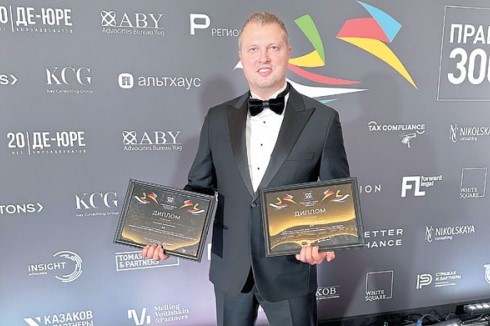
Краснодар, 14 декабря – Юг Times. 12+ Адвокатское бюро «Юг» в числе лучших юридических фирм России в практиках «Арбитражное судопроизводство: крупные споры» и «Разрешение споров в судах общей юрисдикции».
MoreНа минувшей неделе в отеле «Карлтон» состоялось вручение наград финалистам главного юридического рейтинга страны - рейтинга портала «Право-300». Это самое авторитетное исследование рынка юридических услуг, определяющее лучшие из лучших юридических фирм.
Методология отбора с каждым годом совершенствуется. Было отобрано порядка 2 тысяч анкет и опрошено более 15 тысяч респондентов. По словам ведущего аналитика рейтинга портала «Право-300», существует ряд ошибок, мешающих компаниям войти в число победителей. Например, иногда проект не подходит под заявленную номинацию или юристы предоставляют слишком мало информации по кейсу. Нередко участники допускают и другие просчеты, связанные с данными о стоимости проекта или наименованием клиента.
Адвокатское бюро «Юг» является постоянным участником рейтинга «Право-300» с момента его основания. В этом году бюро также есть чем гордиться. ABY вошло в первую группу регионального рейтинга в двух номинациях: «Арбитражное судопроизводство (high market)» и «Разрешение споров в судах общей юрисдикции».
Управляющий партнер АБ «Юг» partner Юрий Пустовит входит в состав редакционного совета еженедельника «Юг Times».
Награждение проходило в формате тематического шоу. Управляющих партнеров ведущих российских юрфирм со сцены поздравили известные артисты и музыканты. Присутствующих гостей, одетых в соответствии с дресс-кодом black tie, ждали красная ковровая дорожка и фуршет с игристым. На церемонию «Право-300» приехали представители нескольких сотен юридических компаний со всей страны.
16.12.23

7 декабря 2023 в отеле Карлтон состоялось вручение наград финалистам главного юридического рейтинга страны – рейтинга «Право-300». Это самое старое и авторитетное исследование рынка юридических услуг, определяющее лучших из лучших юридических фирм.
MoreМетодология отбора с каждым годом совершенствуется. Было отобрано порядка 2 тысяч анкет и опрошено более 15 тысяч респондентов. По словам ведущего аналитика рейтинга «Право-300» существует ряд ошибок, мешающих компаниям войти в число победителей. Например, иногда проект не подходит под заявленную номинацию, или юристы предоставляют слишком мало информации по кейсу. Нередко участники допускают и другие просчеты, связанные с данными о стоимости проекта или наименованием клиента.
Адвокатское бюро «Юг» является постоянным участником рейтинга Право-300 с момента его основания. В этом году нашему бюро также есть чем гордиться: ABY вошло в первую группу регионального рейтинга в двух номинациях - Арбитражное судопроизводство (high market) , a https://300.pravo.ru/award/2023-lidery-po-otraslam-i-praktikam-arbitraznoe-sudoproizvodstvo-regionalnyj-rejting-krupnye-spory-high-market и Разрешение споров в судах общей юрисдикции https://300.pravo.ru/award/2023-lidery-po-otraslam-i-praktikam-razresenie-sporov-v-sudah-obsej-urisdikcii-regionalnyj-rejting.
Награждение происходило в формате тематического шоу. Управляющих партнеров ведущих российских юрфирм со сцены поздравили известные артисты и музыканты. Присутствующих гостей, одетых в соответствии с дресс-кодом black tie, ждала красная ковровая дорожка и фуршет с игристым. На церемонию «Право-300» приехали представители нескольких сотен юридических компаний со всей страны.
06.12.23
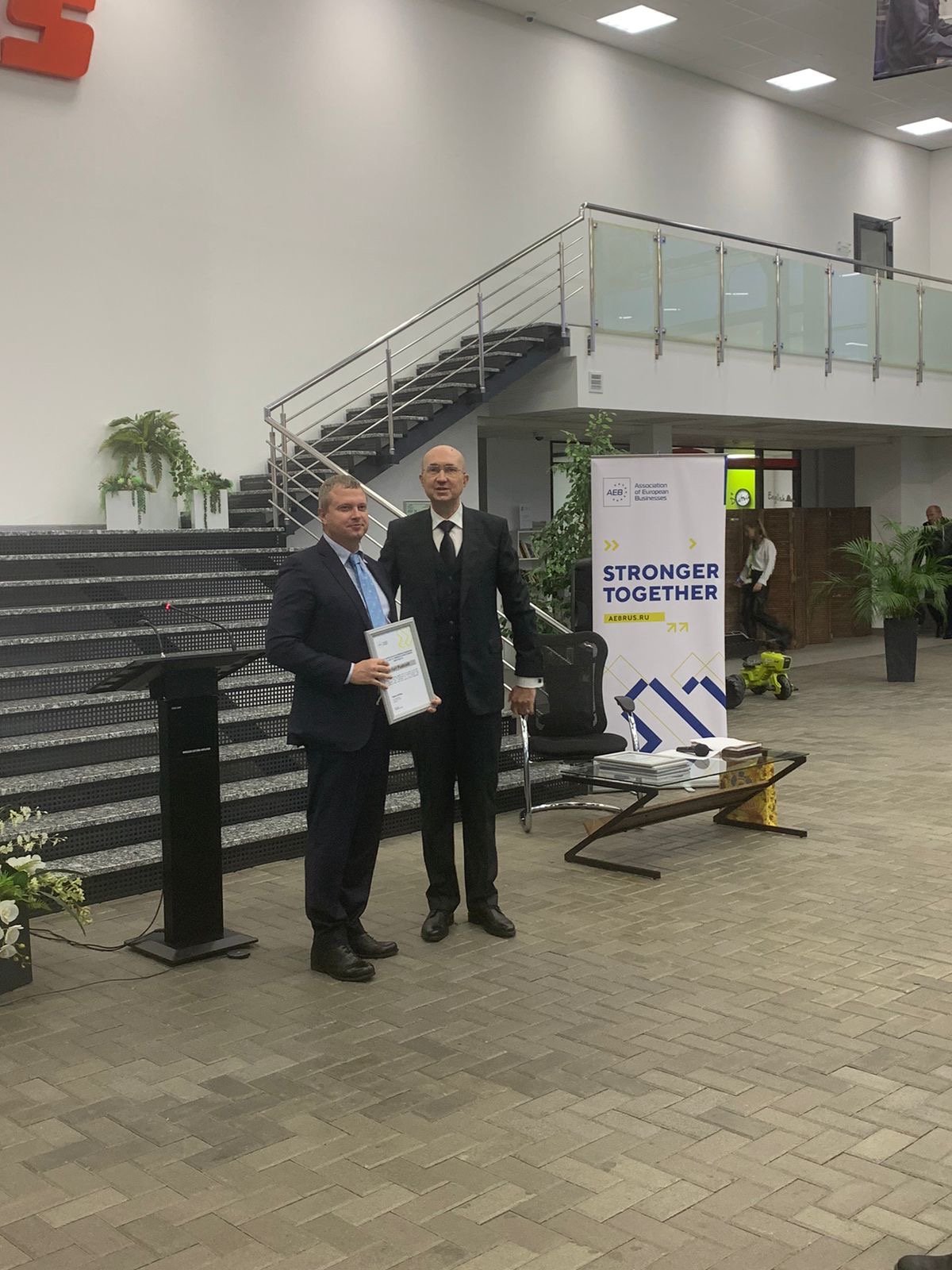
28 ноября 2023 года в Краснодаре состоялось ежегодное заседание Южного регионального комитета АЕБ. В этом году собрание было ознаменовано 20-летним юбилеем Южного регионального комитета. И у истоков его создания стояло и Адвокатское бюро «Юг».
MoreТадзио Шиллинг, генеральный директор АЕБ, отметил памятным дипломом партнер Адвокатского бюро «Юг» , являющееся членом Регионального комитета организации уже 20 лет. В наградном листе упоминается неоценимая многолетняя поддержка АЕБ, а также экспертные знания и опыт Юрий Пустовит лично. Генеральный директор АЕБ выражает надежду на долгое и плодотворное сотрудничество в последующей работе.
Площадка для проведения торжества была предоставлена заводом Клаас, также старейшим членом АЕБ. Вручал дипломы председатель Южного регионального комитета АЕБ Олег Жарко. По окончании торжественной части собравшихся ждал праздничный фуршет и дружеское общение.
06.12.23
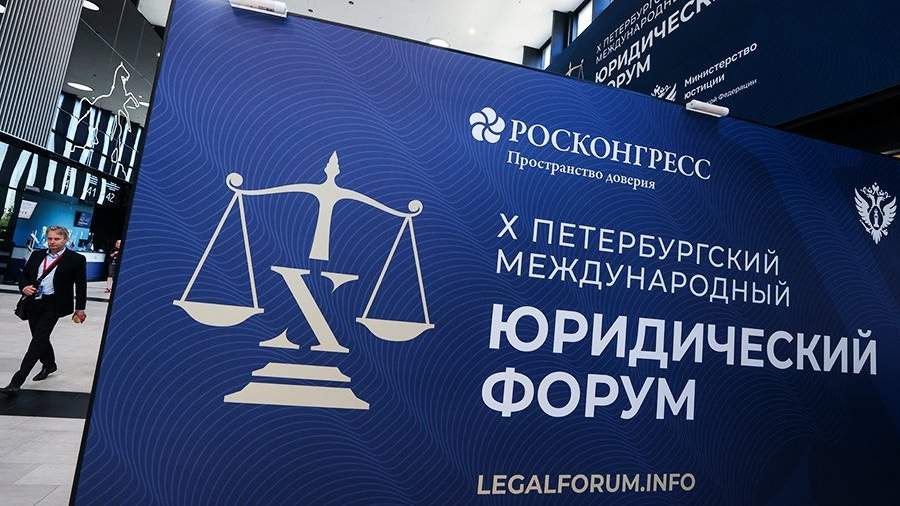
На Петербургском международном юридическом форуме 2023 года Российской газетой был представлен проект рейтинга юристов России «Рейтинг РГ».
MoreИздание планирует сделать исследование ежегодным. В отличие от уже существующих в нашей стране рейтингов данное исследование направлено на определение персональных достижений специалистов.
Согласно методологии рейтинга РГ с мая по октябрь собрала заявки, в которых юристы и адвокаты в свободной форме описывают свои достижения по одной из выбранных юридических практик. Далее редакция изучила около 1 тысячи заявок юридических компаний и адвокатов и проверила их по всем доступным источникам.
Результат попадания в рейтинг – уже признание качества работы и репутации конкретного юриста. Но все вошедшие в рейтинг были разделены по группам для более точной характеристики: в 18 номинациях (16 отраслей права и две специальные номинации) были выделены топовые специалисты данной практики – первая группа; отличные специалисты, достойные всяческой рекомендации – вторая группа; очень хорошие специалисты – третья группа; хорошие специалисты, на которых следует обратить внимание – четвертая группа; достойные номинанты, которые по масштабу проектов не смогли оказаться в предыдущих группах – пятая группа. Внутри групп номинанты располагаются по алфавиту.
С гордостью сообщаем, что управляющий партнер Адвокатского бюро «Юг» Юрий Пустовит номинирован в отрасли Арбитражное судопроизводство во второй группе, a
https://rg.ru/articles/reyting-juristov-2023/arbitrazh.html партнер ABY Сергей Радченко во второй группе отрасли Разрешение судебных споров общей юрисдикции https://rg.ru/articles/reyting-juristov-2023/spor.html.
09.11.23

Наш клиент – крупнейшая сетевая компания Юга России на основании договора о технологическом присоединении энергопринимающих устройств осуществил для ФКУ «Ространсмодернизация» мероприятия по технологическому присоединению сетей ФКУ к построенным клиентом сетям и подстанциям для энергоснабжения Крымского моста. Затем ФКУ отказалась оплачивать мероприятия со ссылкой на прекращение бюджетного финансирования проекта. Клиент поставил нам задачу расторгнуть договор технологического присоединения и взыскать все понесённые клиентом в ходе исполнения договора расходы.
MoreМы разработали для клиента правовую позицию и представляли его интересы в суде. Мы обосновали наличие трёх оснований для расторжения договора (ст. 328, 450 и 451 ГК РФ), доказали заключением судебной экспертизы, а также посредством допроса эксперта в судебном заседании, размер понесённых клиентом расходов, обосновали наличие у проекта бюджетного финансирования, а также обосновали возможность взыскать расходы несмотря на наличие у ФКУ статуса бюджетного учреждения.
Судебный процесс по делу шёл два с половиной года. В ходе рассмотрения дела судом были привлечены к участию в качестве третьих лиц Министерство Энергетики РФ, Министерство Транспорта РФ, Правительство РФ, Московская Межрегиональная транспортная прокуратура. Судебный спор был осложнен возбуждением уголовного дела в отношении неустановленного круга лиц клиента, десятками тысяч первичных документов, технологической сложностью построенного объекта, политической составляющей и необходимостью постоянно согласовывать свои действия с федеральным министерством. И вот наконец Арбитражный суд г. Москвы определением от 6.10.2023 г. по делу А40-92322/2021 утвердил мировое соглашение, по условиям которого клиент получил полное удовлетворение своих требований, а также компенсацию расходов на оплату государственной пошлины и судебную экспертизу. Денежные средства по мировому соглашению уже поступили на расчетный счет клиенту.
Данное дело является абсолютно беспрецедентным в практике отечественных судов по цене иска в спорах о расторжении договоров технологического присоединения. В деле решались очень трудные вопросы выбора основания расторжения договора, допустимости признания невозможности исполнения обязательства из-за прекращения бюджетного финансирования, применения НДС при расторжении договора и в условиях изменившейся ставки налога, допустимости взыскания расходов сетевой компании несмотря на то, что построенные ею объекты и линии остаются в её собственности.
По проекту работали управляющий партнёр Адвокатского бюро «Юг» Юрий Пустовит и партнёр бюро Сергей Радченко.
25.09.23

Клиента привлекли к участию в судебном споре о взыскании с его управляющего менеджмента и менеджмента одного из контрагентов убытков по сделкам, которые один из акционеров клиента посчитал невыгодными и недействительными спустя 8 лет с момента их заключения и исполнения.
MoreКлиент был привлечен к участию в судебном разбирательстве в качестве третьего лица на стороне управляющего менеджмента. Сумма убытков по мнению акционера клиента составляла порядка 2,5 млрд. Однако за 3 года каких-либо доказательств причинения клиенту отрицательных последствий действиями управляющих и менеджментом контрагента, в том числе посредством заключения и исполнения спорных сделок акционер доказать не смог. Своими действиями акционер поставил клиента в рисковое положение. Требование акционера создавало существенные риски для клиента в виде потери управленцев при отсутствии у клиента единоличного исполнительного органа, репутационных рисков и потери одного из важных контрагентов, урегулирования вопросов доначисления налоговой базы, а также привело бы к втягиванию клиента в бесконечную череду судебных разбирательств, что поставило бы под вопрос финансово-экономическое состояние клиента и повлекло для клиента приостановку деятельности.
Арбитражные суды трех инстанций с нашими доводами согласились, отказав акционеру в иске. Верховный Суд РФ отказал акционеру в передаче кассационной жалобы для рассмотрения в судебном заседании Судебной коллегии по экономическим спорам суда.
Интересы клиента представлял юрист Екатерина Феденко.
25.09.23

Клиента привлекли к участию в судебном споре о взыскании с лица, являвшегося исполнительным директором клиента убытков, возникших из оплаты клиентом присужденной по решению суда договорной неустойки, судебных расходов на оплату услуг представителя, а также административного штрафа. С иском в арбитражный суд обратился один из акционеров клиента.
MoreКлиент был привлечен к участию в судебном разбирательстве в качестве третьего лица. Сумма убытков по мнению акционера клиента составляла порядка 2,5 млн. руб. Однако каких-либо доказательств причинения клиенту отрицательных финансовых последствий и отсутствия обычного предпринимательского риска в исполнении клиентом обязанностей, установленных судебными актами по различным делам в виде оплаты неустойки по заемному обязательству и судебных издержек, присужденных судом в пользу акционера, а также уплату административного штрафа, акционер доказать не смог. Своими действиями акционер поставил клиента в рисковое положение. Требование акционера создавало существенные риски для клиента в виде фактического запрета клиенту на судебную защиту прав и интересов, а также на проверку посредством обращения в суд требований акционера на соблюдение законности при их предъявлении клиенту.
Арбитражный суд первой инстанции иск акционера удовлетворил в полном объеме. Клиент обратился с апелляционной жалобой в суд апелляционной инстанции, указав на отсутствие в материалах дела доказательств всех обстоятельств, предусмотренных законом для взыскания убытков с исполнительного директора клиента. Судом апелляционной инстанции апелляционная жалоба клиента была удовлетворена полностью, решение суда первой инстанции отменено, по делу принят новый судебный акт, которым акционеру клиента было отказано полностью в удовлетворении иска. Суд кассационной инстанции постановление суда апелляционной инстанции оставил без изменения, признав его законным и обоснованным. Верховный Суд РФ отказал акционеру в передаче кассационной жалобы для рассмотрения в судебном заседании Судебной коллегии по экономическим спорам суда.
Интересы клиента представлял юрист Екатерина Феденко.
25.09.23

Клиента привлекли к административной ответственности за неисполнение в срок, установленный судебным приставом, содержащихся в исполнительном листе требований неимущественного характера.
MoreКлиент обратился в суд с заявлением, в котором просил признать постановление незаконным по четырем основаниям: отсутствие надлежащего извещения о времени и месте составления протокола об административном правонарушении, протокол об административном правонарушении был составлен в отсутствие завершенной проверки законности возбуждения исполнительного производства и самого требования судебного пристава о сроке исполнения судебного акта, в действиях клиента отсутствует событие вмененного правонарушения.
Арбитражный суд Республики Башкортостан с нашими доводами согласился. Решением суда от 27.07.2023 заявление клиента было удовлетворено, суд признал постановление незаконным и отменил его полностью.
Интересы клиента представлял юрист Екатерина Феденко.
14.09.23
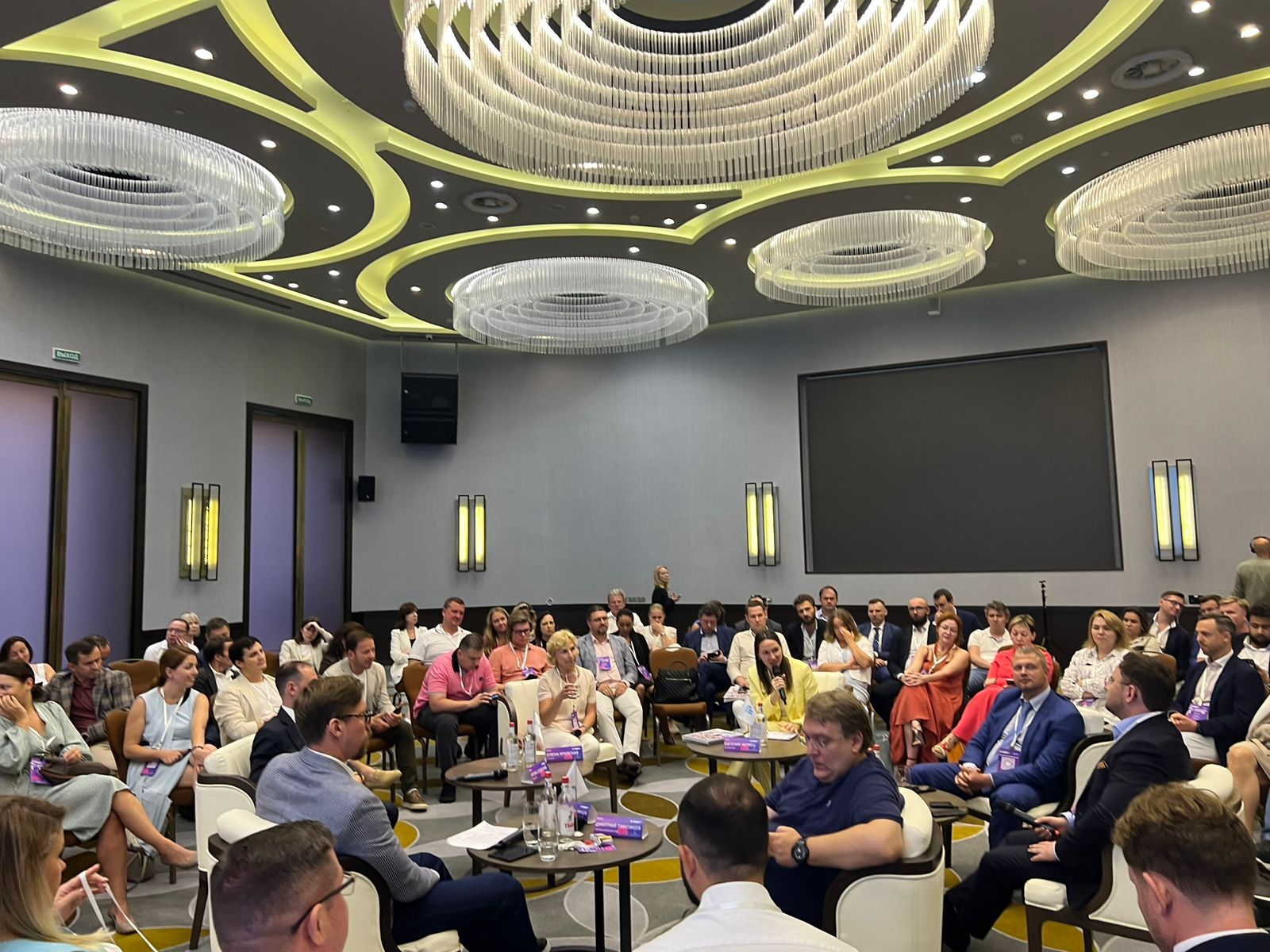
Будущее профессии и актуальные кейсы: что обсудили на Форуме юга Деловая программа мероприятия, организованного в Сочи совместно адвокатским бюро ЮГ и командой Право.ru, включила в себя пять сессий. Юристы обсуждали санкционное давление, последствия которого испытывает на себе деловая среда. Так, против иностранных компаний из недружественных стран арбитражные суды стали охотнее вводить обеспечительные меры. Но докладчики говорили не только о трендах судебной практики. Наиболее оживленной вышла дискуссия о будущем юридического мира и тех качествах, которые помогут коллегам остаться востребованными.
MoreЭксперты много говорили о санкционном давлении и его последствиях для бизнеса. Власти РФ ввели множество ограничений, чтобы усложнить уход зарубежных компаний с отечественного рынка. Иностранцам, которые хотят продать активы в России, нужно сначала добиться разрешения от правительственной комиссии. Сначала никто не знал, как правильно подавать заявление в этот орган, вспоминала Татьяна Невеева, старший партнер VERBA Legal Другая проблема — непредсказуемые сроки. Докладчик отметила, что один из ее доверителей ждет решения правкомиссии уже 14 месяцев.
Дополнительные трудности возникают и из-за этого, что чиновники постоянно добавляют новые условия, регулирующие продажу такого бизнеса. Поэтому уже достигнутые договоренности предпринимателям приходится пересматривать. Например, из-за правил, о которых стало известно только летом этого года. Среди нововведений оказался запрет покупателю заключать с продавцом-иностранцем опцион обратного выкупа на срок более двух лет. Более того, если такое соглашение все же подписано, бывший владелец должен заплатить за возврат ему бизнеса рыночную цену, причем оцениваться будет и экономическая выгода для действующего собственника.
"В подобных сделках опционы обратного выкупа многие иностранцы изначально прописывали на длительные сроки — от 10 до 15 лет. Потом эти соглашения пришлось переподписать с учетом новых требований правкомиссии."
Татьяна Невеева
Непросто приходится зарубежным организациям и в российских судах. В отношении компаний из недружественных стран активно вводят обеспечительные меры, некоторые из них довольно экзотические, заметил Степан Зайцев, директор по правовым вопросам Siemens. Так, Арбитражный суд Санкт-Петербурга и Ленинградской области удовлетворил ходатайство РЖД и обязал Siemens передать на хранение российской компании оборудование, необходимое для обслуживания «Сапсанов». Апелляция и кассация с этим согласились, а ВС отказал в передаче жалобы Siemens (дело № А56-42593/2022). По мнению Зайцева, таким подходом суд подменяет решение о присуждении вещей конкретному лицу, да еще и не мотивируя его: «Определение занимает полторы страницы без указания правовых оснований».
При этом, по статистике, арбитражные суды удовлетворяют лишь 30% просьб о наложении обеспечения. Об этом говорил партнер Nextons Роман Зайцев. Он подчеркнул, что в некоторых делах удается добиться решения о мерах лишь с третьего раза. В СОЮ кардинально другая ситуация: там зеленый свет от судей получают около 80% заявлений. Улучшить работу этого правового института могут недавние разъяснения Пленума Верховного суда. В частности, там указано, что принимаемые судом обеспечительные меры должны быть соразмерны требованиям заявителя: арестовать имущество ответчика по общим правилам можно лишь в пределах цены иска.
"ВС четко перечислил цели принятия мер и сориентировал суды на более гибкий подход в этом вопросе."
Роман Зайцев
О другой новелле рассказывал Григорий Нистратов, партнер Forward Legal Речь идет о вступившем в силу законе № 470-ФЗ, который ограничивает корпоративные права иностранных акционеров российских экономически значимых организаций. Юрист пояснил, что этот акт понадобился, чтобы преодолеть проблему управления крупными российскими компаниями, владение которых структурировано через иностранные холдинги в недружественных странах. Теперь корпоративные права «иностранцев» на доли-акции в отечественной компании прекращаются, а бенефициары-акционеры иностранного холдинга получают акции российской фирмы или компенсацию. Речь идет только об экономически значимых организациях, список которых составит правительство. Обжаловать включение в этот перечень не удастся, предупредил Нистратов.
Те, кто не хочет дожидаться госуказания, сами переводят бизнес в Россию через редомициляцию. Эта процедура интересна сразу нескольким категориям лиц, перечислил Антон Плохов, руководитель направления, A.Т. Legal : компаниям, подпавшим под санкции, бенефициарам иностранных фирм, если они ведут бизнес или владеют активами в России, а еще зарубежным организациям, которые выступают участниками юрлиц РФ. Успех такого «переезда» зависит от уровня юристов, подчеркнул эксперт: «Не надо бояться высоких цен у тех экспертов, кто уже успешно сопровождал редомициляцию». Тем более что сначала надо в принципе оценить эффективность подобной процедуры. На это обратил внимание Федор Петрик, старший консультант Tax Compliance
"Сначала консультанты анализируют налоговые обязательства в иностранной юрисдикции, включая налог на выход. Затем моделируют налоговую нагрузку в РФ, оценивая целесообразность получения расширенных налоговых льгот."
Федор Петрик
Наиболее популярный вариант «переезда» — перенести компанию в один из специальных административных районов на территории России. Но есть и альтернативный путь — закрытый паевой инвестиционный фонд (ЗПИФ). По словам директора по развитию «УК Портфельные инвестиции» Елены Часовских, ЗПИФ предоставляют льготы по налогам и другие преференции, сравнимые с использованием классических трастов в западных юрисдикциях. Поэтому воспользоваться таким институтом будет удобно как российскому бизнесу с бенефициарами из РФ, так и иностранным инвесторам в отечественные активы, которые ходят выгодно вложиться, подчеркнула докладчик: «ЗПИФы не платят налог на прибыль, поэтому ее можно несколько раз реинвестировать».
На форуме эксперты обсудили и актуальные аспекты судебной практики в самых разных отраслях. Партнер Адвокатское бюро «Юг» Сергей Радченко рассказывал о взыскании антимонопольных убытков на примере дела операторов мобильной связи против банков. Еще в 2018 году ФАС вынесла в отношении «большой четверки» сотовых компаний постановления о нарушении антимонопольного законодательства. Ведомство обнаружило, что они установили более высокие расценки на СМС-рассылку для частных банков, чем для государственных.
Антимонопольная служба потребовала устранить эти нарушения. А «Райффайзен» и «Тинькофф», опираясь на решение регулятора, попытались взыскать с оппонентов убытки, но безуспешно. Суды указали, что кредитные организации ввели платные пуш-уведомления для клиентов вместо эсэмэсок, благодаря чему даже заработали (дела № А40-14299/2021 и № А40-63512/2021).
В контексте проблемы со взысканием авансовых платежей Артем Сирота, партнер юрфирмы Sirota & Partners , предложил собственное толкование п. 3 ст. 328 ГК («Встречное исполнение обязательства»).
П. 3 ст. 328 ГК: «Ни одна из сторон обязательства, по условиям которого предусмотрено встречное исполнение, не вправе требовать по суду исполнения, не предоставив причитающегося с нее по обязательству другой стороне».
По его мнению, эта норма должна применяться, только если договором не установлена очередность исполнения обязательств. Если одна из сторон обязалась исполнить первой, то п. 3 ст. 328 ГК не применяется из-за приоритета свободы договора.
Активная роль государства ощущается в последнее время и при разбирательствах вокруг исполнения строительных госконтрактов. Летом позапрошлого года у прокуратуры расширились процессуальные полномочия в таких делах, чем госорган активно пользуется, констатировала Елена Гладышева, управляющий партнер РИ-консалтинг
"Надзорный орган забывает, что есть сроки исковой давности, а СОЮ идут у них на поводу. К счастью, в арбитражных судах пока такого нет. "
Елена Гладышева
При исполнении госконтрактов хватает и уголовных рисков. Сергей Малюкин, партнер Адвокатское бюро ZKS , выделил список действий, которые помогут минимизировать вероятность такого преследования со стороны силовиков:
Еще одну тему из уголовной сферы затронул Юлий Ровинский, партнер A-PRO Он сравнивал, что лучше — подавать гражданский иск в рамках уголовного процесса или идти в суд отдельно с деликтным требованием. У первого варианта, по его словам, немало плюсов: упрощенное доказывание, так как помогает гособвинитель, легко получить обеспечительные меры и круг ответчиков может быть шире.
"В свою очередь, есть и ощутимый минус у варианта с гражданским иском в рамках уголовного процесса, ведь рассматривание дела может затянуться на несколько лет. А решение по деликтному иску удастся получить за несколько месяцев."
Юлий Ровинский
Нашлось время и для обсуждения споров, связанных с интеллектуальной собственностью. О них рассказывала Ирина Резникова, старший партнер юрфирмы Гардиум Она сделала акцент на выводе ВС в деле № А63-6499/2021. Chanel и Christian Dior пытались взыскать с предпринимательницы Ольги Прудниковой 125 500 руб. упущенной выгоды за продажу контрафактных очков с логотипами их брендов. Три инстанции удовлетворили иск, но ВС не согласился с нижестоящими судами. «Нарушитель создает очевидно неоригинальные контрафактные товары престижных брендов и продает их совершенно иному классу потребителей, чем те, кто покупает подлинное изделие», — процитировала вывод экономколлегии Резникова.
Актуальную для всех юристов тему судебных расходов затронул Илья Жарский, управляющий партнер Veta. Он представил удобный калькулятор, который создала их команда для расчета таких сумм в самых разных делах. Отдельно эксперт отметил: среди компаний, которые обращаются в суды, есть мнение, что досудебные заключения не влияют на решение по делу, поэтому рациональнее дождаться назначения судебной экспертизы и взыскать за нее расходы в законном порядке. На самом деле, чтобы выиграть дело, можно использовать стратегию, которая заключается в подготовке нескольких досудебных экспертиз, подчеркнул Жарский: «Потраченные на них средства можно взыскать».
Вопросам банкротства по традиции тоже отвели немало времени. Заведующий Бюро адвокатов «Де-юре» Никита Филиппов говорил о том, как за последние два года серьезно расширились права контролирующих должника лиц в спорах о несостоятельности. Началось все с того, что бывшего гендиректора компании привлекли к субсидиарной ответственности спустя несколько лет после его ухода с должности. Он пытался оспорить это решение, но получил отказ. Дело дошло до Конституционного суда, который счел отсутствие права на обжалование несправедливым и несоразмерным.
"К контролирующим должника лицам наконец стали прислушиваться. Это положительная тенденция. Еще пять-семь лет назад такого не было. "
Никита Филиппов
О другой тенденции рассказывал управляющий партнер Стрижак и партнеры Максим Стрижак на примере дела «Терминал Сервиса», в рамках которого компании, получившей почти 100 млн руб. от обанкротившегося контрагента, удалось добиться отмены решений о признании сделки недействительной. Экономколлегия при рассмотрении этого спора сделала сразу несколько важных выводов: нормы статей 10 и 168 ГК должны применяться субсидиарно к нормам о кредиторском оспаривании, а кредитор должен представлять хотя бы косвенные доказательства причинения вреда конкурсной массе от спорных сделок. И еще важно, что нельзя перекладывать на ответчика обязанность доказывать обстоятельства, на которые ссылается кредитор, назвал еще один важный вывод из этого дела Стрижак.
"Таким образом, ВС отошел от прокредиторского подхода в вопросе оспаривания сделок."
Максим Стрижак
О другой недавней позиции ВС рассказал Сергей Кислов, основатель Kislov.law В деле № А40-23687/2017 о банкротстве фирмы «Фетикор» Роман Вязовец, как правопреемник бывшего учредителя компании, хотел получить стоимость своей доли в ней — 58,6 млн руб. Но ему эти деньги платить не хотели. Установив, что оставшиеся участники организации уклонялись от выплаты действительной стоимости доли, для соблюдения баланса интересов суд вправе признать требование вышедшего участника приоритетным перед конкурирующими недобросовестными кредиторами, подчеркнула экономколлегия. Таким образом, закон суров, но недобросовестность чуть суровее, заметил Кислов.
Не забыли поговорить и о трендах в субсидиарке. Елизавета Селезнева, управляющий партнер «Менси Групп» напомнила, что юристы не должны нести субсидиарную ответственность наравне с контролирующими фирму лицами. А партнер Delcredere Сергей Савосько указал на важный вывод экономколлегии из дела № А40-303933/2018: при назначении номинальных руководителей происходит перекладывание ответственности. Они принимают вину реальных нарушителей на себя, поэтому вторых сложно наказать. Значит, к субсидиарной ответственности следует солидарно привлекать и номинальных, и реальных руководителей, сделали вывод судьи ВС. Кроме того, бенефициар банкрота не руководит компанией, и он должен раскрыть личность реального директора, иначе будет отвечать единолично по всем долгам.
"Опираясь на это решение ВС, суды уже сформулировали вывод, что теневой бенефициар обязан раскрыть бенефициара поменьше. Иначе вся ответственность ложится на самого крупного известного суду бенефициара."
Сергей Савосько
О проблемах финансирования банкротной процедуры призвал задуматься Андрей Павлов, партнер юрфирмы Исполком Он раскритиковал подход судов, когда они считают неразумными траты управляющих, которые нанимают юристов для более эффективного сопровождения дел о несостоятельности. По его мнению, рано или поздно надо прийти к тому, чтобы позволить управляющему спокойно брать деньги из конкурсной массы на банкротную процедуру.
Не менее актуален вопрос о том, как минимизировать риски взыскания убытков с топ-менеджеров. Советы бизнесменам перечислила Дина Шибзухова, партнер K&P.Group :
Составляйте бизнес-план развития компании и принимайте управленческие решения на его основе.
Проверяйте контрагентов по сделке.
Готовьте отчеты о рыночной стоимости продаваемого и покупаемого имущества.
При кризисе составляйте план финансового оздоровления.
Контролируйте соблюдение требований корпоративного законодательства и действующих в компании процедур.
Аквариум-сессия о вызовах для юрбизнеса
Самой эмоциональной оказалась заключительная часть форума. Рассевшись по кругу в формате так называемой аквариум-сессии, юристы обсуждали новые для них вызовы. Один из них — выход в новые юрисдикции, чтобы помогать там старым доверителям и находить новых. Об этой тенденции сказал Юрий Пустовит, управляющий партнер Адвокатское бюро «Юг»
"Российские юрфирмы в последние годы активно открывают офисы за границей, чтобы напрямую работать с иностранными клиентами. Это необходимо и для того, чтобы у клиентов были хорошо знакомые юристы в зарубежных юрисдикциях."
Юрий Пустовит
У вице-президента группы компаний «ПИК» Дмитрия Тимофеева сразу возник вопрос к консультантам: с какой целью они открывают офисы в других странах и за кем туда идут? Управляющий партнер Vinder Law Office Артем Абрамов не растерялся и лаконично ответил из зала: «Мы идем туда за деньгами». «Доверители переориентировались на новые направления, поэтому мы пошли вслед за ними», — добавила Невеева. Более того, задачи тех же дубайских офисов за прошедший год усложнились. На этом сделал акцент Игорь Озерский, управляющий партнер K&P.Group
Теперь клиентам в Эмиратах требуются услуги по постоянному финансовому сопровождению и интеграция в бизнес-среду ОАЭ.
Игорь Озерский
При этом зарабатывать серьезные суммы заграничным подразделениям российских юрфирм пока не очень просто. Чтобы оттуда получать прибыль, должны появиться доверители из числа местных компаний, полагает Александр Панов, старший партнер VERBA Legal
Представители правовых департаментов пока скептически относятся к услугам российских консультантов в новых юрисдикциях. Елена Крупская, директор по правовым вопросам X5 Group рассказала, что они обратились к одному из ньюльфов с подобным поручением, но оказались разочарованы качеством оказанной услуги: «Пришлось пойти к местным фирмам, которые давно там на рынке». Зато юристы из РФ эффективны в качестве связующего звена между российским бизнесом и иностранными специалистами. В этом уверена управляющий партнер московского офиса Регионсервис Евгения Червец.
Российские консультанты будут работать руками местных специалистов, но мы уже там набили шишки и погрузились в местную специфику. С учетом нашего опыта мы сможем избавить от ошибок вас.
Евгения Червец
Есть люди, которые всегда точно знают чего хотят. Они не стесняются открыто говорить об этом окружающим, но делают это так вежливо, аккуратно — и при этом твердо, — что это не вызывает раздражения и не провоцирует конфликтов. Умение так себя вести называют ассертивностью, объясняет биохимик Светлана Белицкая. О важности этого качества у коллег говорил Александр Смирнов, вице-президент по правовым вопросам «Ростелекома». По его словам, ассертивность у юриста выражается в умении доносить твердо и корректно свою позицию, не подпадая под влияние окружающих обстоятельств и людей.
Вообще же, юрист должен уметь быстро эволюционировать, подчеркнула Крупская. Сейчас все мы находимся на обломках старого мира и остается открытым вопрос: кто будет создавать новый? Тот, кто обладает высоким уровнем эмоционального интеллекта, критическим мышлением и умело развивает личный бренд.
14.09.23
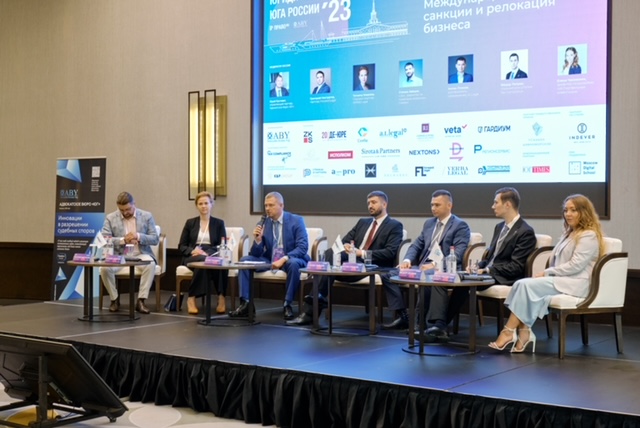
Пятнадцатый год подряд Адвокатское бюро «Юг» и правовой портал Право.ру собирают активных и значимых представителей юридической профессии на главный юридической форум региона – Юридический форум юга России. Не стал исключением и 2023 год: с 7 по 9 сентября отель Grand Karat Sochi принимал у себя собравшихся со всей страны юристов. Как это было?
MoreУчастники форума - управляющие партнеры и партнеры юридических фирм, главы юридических департаментов государственных и крупных иностранных предприятий, представители государственной власти, нотариусы и судьи - собираются вместе для того, чтобы обсудить изменения законодательства, поделиться опытом сопровождения бизнеса, поговорить об особенностях работы в условиях международной политической и экономической ситуации в мире, перенять знания в менеджменте юридической фирмы у коллег.
Программа форума, обширная и насыщенная, не случайно делится на три дня. Традиционно первый день форума помогает участникам форума познакомиться и настроиться на рабочий лад с помощью интеллектуальных игр. В этом году организаторы предложили собравшимся стать актерами интерактивного юридического театра, представив спектакль «Красная шапочка». Каждый участник события получил возможность стать сценаристом и самостоятельно определить сюжетные повороты.
Обсудить получившееся юридическое представление гости смогли за бокалом игристого с видом на закат. И завершил первый день форума ужин-сюрприз, который по традиции организаторы готовят для участников, в этом году сюрпризом стало выступление Беллы Малу, стендап-комика, резидента шоу «Женский стендап» на ТНТ.
Деловая программа второго дня, начавшись с приветственного кофе, перетекла в первую сессию «Международные санкции и релокация бизнеса», модератором которой стал управляющий партнер Адвокатского бюро «Юг» Юрий Пустовит.
В рамках сессии докладчики обсудили:
Вторая сессия, посвященная актуальным вопросам судебной практики, началась выступлением модератора Романа Зайцева, партнера Nextons, затронувшего в своей речи обзор и разъяснения Пленума ВС РФ относительно обеспечительных мер.
Партнер Адвокатского бюро «Юг» Сергей Радченко как судебный юрист выступил с докладом о практике взыскания антимонопольных убытков в 2022-2023 годах.
Также были предложены к обсуждению темы:
Третья сессия на общую тему «Банкротство: регулирование и судебная практика» проходила под модераторством Никиты Филиппова, заведующего МГКА «Бюро адвокатов «Де-юре» началась с его выступления о тенденциях в банкротстве в 2023 году.
Затем обсудили:
Четвертая сессия «Ответственность топ-менеджеров: убытки, субсидиарная, уголовная» модерировалась Сергеем Кисловым, основателем KISLOW.LAW.
В рамках сессии коллеги обсудили
Задачей пятой, заключительной сессии, так называемой аквариум-сессии, с модератором Евгенией Червец, управляющим партнером офиса Коллегии в г.Москве, КА «Регионсервис» явился практический обмен опытом выстраивания работы в настоящих условиях, юридическими ноу-хау и «лайфхаками».
Первым выступающим сессии стал управляющий партнер Адвокатского бюро «Юг» Юрий Пустовит. Он рассказал коллегам с какими новыми вызовами придется столкнуться юристам, выходя на новые рынки и налаживая деловые контакты с зарубежными партнерами.
Как отметил Юрий Пустовит, экспорт российских юристов без одновременного экспорта российского права и российского судопроизводства- задача не из простых. Выступающие поделились с собравшимися, как эффективно выстраивать отношения в эпоху перемен между бизнесом и юридическим сообществом; рассмотрели возникшие изменения в самом юридическом сообществе; подумали о том, какие навыки нужны сегодня для эффективного управления юридический командой, и какие важные «скиллы» в 2023 году хотят видеть в юристах партнеры, клиенты, акционеры, сотрудники; разобрали, как ориентироваться на рынке юридических услуг в 2023 году.
Дальнейшие дискуссии проходили в неформальной обстановке дружеского коктейля на свежем воздухе. А проводили деловую программу форума участники с бокалом игристого на современных лодках, идущих по ночному морю.
Третий день форума уже традиционно посвящен парусной регате, и это неслучайно: форум помогает не только развиваться профессионально, но и наслаждаться жизнью и поддерживать дружеские и деловые связи. Азарт, скорость, соленый ветер в лицо – вот составляющие незабываемого отдыха в компании коллег. Победители есть, но нет проигравших, ведь главное, что получает любой участник юридической регаты – общение, эмоции и позитив, позволяющий вернуться к своим рабочим задачам обогащенным новыми знаниями, энергией и вдохновением.
06.07.23
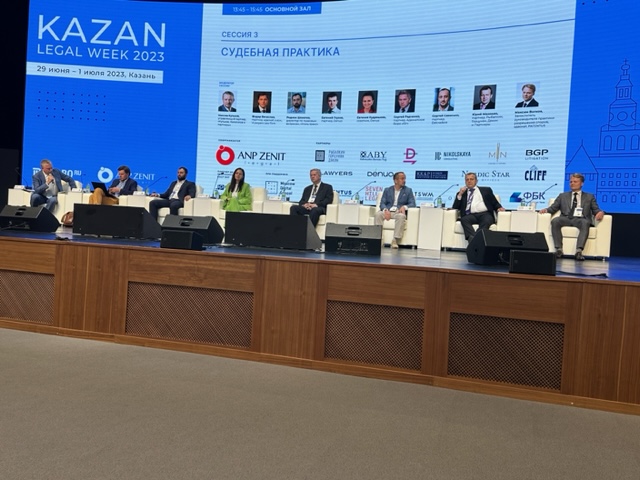
Юридический портал Право.ру и АНП Зенит при партнерстве Адвокатского бюро «Юг» собрали в Казани топ-менеджеров представителей бизнеса и юридических компаний, партнеров лидирующих юридических фирм для участия в ежегодном форуме Kazan Legal week 2023. Мероприятие проходило с 29 июня по 1 июля в IT Park Kazan имени Башира Рамеева.
MoreПервый день форума посвятили неформальному общению собравшихся и знакомству участников. Рабочая программа второго дня форума условно разделялась на сессии, связанные с особенностями юриспруденции в текущей политической и экономической ситуации в стране и в мире (Структурирование бизнеса в период санкций, Актуальные проблемы правового регулирования, Тенденции развития комплаенса в эпоху турбулентности); и узкопрофильные сессии (Судебная практика, Семья как основа ведения бизнеса, Цифровое право в 2023 году).
Помимо сессий 30 июня в рамках KAZAN LEGAL WEEK прошли круглые столы, организованные Российским Государственным Университетом Правосудия. Участникам круглых столов была предоставлена возможность обсудить вопросы, связанные с налоговым и строительным законодательством, а также корпоративными спорами.
Партнер Адвокатского бюро «Юг» Сергей Радченко, выступил на сессии Судебная практика. В своем выступлении он рассказал о том какие споры решают суды в области электроэнергетики и как по ним складывается текущая практика. Решение таких споров имеет свои особенности: законодательство об электроэнергетике - это сплав гражданского права и технических норм, по сути это отдельный корпус законов, результаты многих споров напрямую затрагивают интересы местного население, решение суда может вызвать социальную напряжённость, а значит такие споры имеют определенный политизированный окрас. Учитывая несовершенство либо даже отсутствие узкоспециализированного энергетического законодательства, его техническую и экономическую сложность, большое значение имеет судебная практика ВС РФ.
В завершающий день форума в гольф-клубе Sviyaga Hills каждый нашел занятие по душе: для гольфистов был организован турнир, для новичков - мастер класс; для гостей - насыщенная культурная программа:
• Интеллектуальная игра «Что? Где? Когда?»
• Винное казино
• Выставка ювелирного дома «Русские самоцветы»
• Фуршет и живая музыка.
Все взносы участников турнира по гольфу были направлены в Благотворительный Фонд «Во благо вместе».
06.07.23
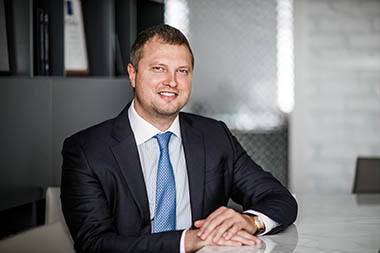
Краснодар, 5 июля – Юг Times, Елена Иванова. Преодоление запретов, декриминализация экономических преступлений снижение административного вмешательства. Что нужно предпринимательской среде?
MoreЗаконодательное поле в отношении деловой сферы постоянно претерпевает изменения. Одни новеллы помогают бизнесу лучше развиваться и формируют благоприятную среду, другие - усиливают нагрузку на него и на практике оказываются неэффективными. Многие идеи последнего времени обусловлены новой политической ситуацией, которая изменилась с началом спецоперации. Как, адаптируя законодательную базу под вызовы времени, сохранить баланс, какие проблемы все еще препятствуют формированию комфортной обстановки для экономической деятельности - в интервью «Юг Times.
Юрий Пустовит, управляющий партнер Адвокатского бюро «Юг».
-Юрий Павлович, недавно российское правительство заявило о рекордном снижении количества проверок бизнеса. В то же время краевая прокуратура рассказала об отмене тысяч плановых и внеплановых необоснованных проверок. А что чувствует сам бизнес?
- Постановлением Правительства РФ мораторий на проведение плановых проверок действительно продлен на 2023 год, за исключением объектов контроля, отнесенных к категории чрезвычайно высокого и высокого риска, опасных производственных объектов II класса опасности, гидротехнических сооружений II класса. Что касается внеплановых проверок, там работают другие механизмы, и я рад слышать, что краевая прокуратура отменила тысячи необоснованных внеплановых проверок. Тем не менее Генпрокуратурой поданы иски в отношении сотен владельцев земельных участков и объектов недвижимости на территории Черноморского побережья в Краснодарском крае, о расторжении договоров аренды, а также о сносе осуществленных построек. Многие собственники таких объектов недвижимости владели ими на протяжении десятков лет, а значит, как минимум, сроки исковой давности уже прошли. Однако это не мешает подобные иски удовлетворять. Такие иски с множественностью ответчиков нередко рассматриваются судами в одно-два заседания, что, полагаю, не позволяет разобраться в каждом конкретном случае и принять объективное и законное решение. Уважение частной собственности и стабильность гражданского оборота - это основа любой инвестиционной деятельности. Во многих СМИ, а также телеграм-каналах мы видим призывы к бизнесу инвестировать дома, а не в зарплату Урсулы фон дер Ляйен, но подобные истории, к сожалению, охлаждают патриотические устремления к вложениям внутри России.
Под давлением отчетности
- Почему контролирующие надзорные органы и ведомства с таким трудом меняют стиль работы с бизнесом, несмотря на мораторий? Какие ведомства чаще всего проверяют предпринимателей?
- Полагаю, здесь не последнее место занимает так называемая палочная система, когда выявленное и раскрытое преступление или правонарушение напрямую влияет на оценку работы определенного надзорного органа. Из нашей практики, чаще всего бизнес проверяют Министерство чрезвычайных ситуаций, Роспотребнадзор, Федеральная налоговая служба, полиция, Россельхознадзор, Ростехнадзор, Роструд.
- Какими путями бизнес может защититься от проверок?
- Лучшая защита от проверок - безупречное и прозрачное ведение бизнеса, эффективное взаимодействие с юристами компании или привлеченными адвокатами на каждом этапе ведения бизнеса. Не так давно появилась новая форма налогового контроля - налоговый мониторинг, основанный на онлайн-доступе налогового органа к учетным данным налогоплательщика. Такое взаимодействие с налоговым органом позволяет налогоплательщикам согласовывать подходы к налогообложению и консультироваться с налоговым органом о совершенных и планируемых сделках с использованием механизма мотивированного мнения.
Саму проверку как мероприятие в суде оспорить нельзя, можно обжаловать вынесенное по результатам проверки предписание об устранении выявленных нарушений либо постановление о привлечении к административной ответственности.
- Как кубанское юридическое сообщество отреагировало на скандал вокруг Ростовского суда? В чем вы видите проблему? Можно ли добиться, чтобы судьями работали только морально устойчивые люди, которые не будут принимать необоснованных решений за деньги?
- История с ростовскими судьями, а также полицейскими вызвала большой резонанс в юридическом сообществе. Я не припомню, чтобы в современной России привлекали к ответственности руководителя областного суда. Поскольку все, что мне об этом известно, - сведения из средств массовой информации, а в настоящий момент идет следствие, комментировать происходящее стоит по его завершении и вынесении приговоров.
В атмосфере ограничений
- Можно ли сказать, что бизнес уже преодолел запреты, возникшие с связи с санкциями, и выстроил работу в новых условиях? Или новые пакеты ограничений перекрывают найденные альтернативные пути?
- Чего не отнять у бизнеса, так это того, что он всегда опережает свое правовое регулирование, особенно - введенные запреты. И санкции не стали исключением. Как мы все можем убедиться, все привычные товары присутствуют в России, а значит, российский бизнес научился их завозить в страну через дружественные страны в режиме параллельного импорта. Новый, 11-й пакет санкций, как, полагаю, и последующие, в основном нацелен на перекрытие путей обхода введенных ранее санкционных ограничений, но мне верится, что и с этой задачей российский бизнес успешно справится.
- Есть ли в этом году примеры отмены санкций на компанию или бизнесмена? Как бы вы оценили вероятность таких решений в случае обращения компании с иском? От чего зависит исход?
- Юридическая работа по оспариванию санкций - довольно сложный и долгий процесс, требующий вовлечения в него группы юристов и лоббистов из разных юрисдикций, проведения корпоративных процедур. Поскольку основные решения по таким делам принимаются в недружественных нам юрисдикциях, а сам санкционный процесс больше политический, чем правовой, больших иллюзий по поводу их отмены правовыми механизмами питать не стоит. Однако не так давно появилась информация, что «Яндекс» добился отмены решения о делистинге на американской бирже NASDAQ, и это вселяет осторожный оптимизм.
Благоприятный деловой климат
- На состоявшемся недавно Петербургском международном экономическом форуме снова обсуждали декриминализацию экономических преступлений. Такая тема уже звучала несколько лет назад, и, как казалось, курс на это был взят. Однако спустя годы снова возникает проблема. С чего, по вашему мнению, начинается декриминализация в отношении бизнесменов? С законодательных изменений, или проблема лежит в иной плоскости?
- Декриминализация ряда экономических преступлений назрела очень давно, и бизнес об этом говорит каждый год на всех доступных площадках, где можно обмениваться мнениями с государством. Определенные сдвиги в этом направлении уже наметились, но это процесс долгий. Прежде всего, полагаю, должна быть политическая воля на проведение этих изменений, затем необходимо вносить изменения на законодательном уровне, а уже дальше - формировать практику. В настоящее время заниматься бизнесом в России - это уже подвиг, поэтому шаги государства навстречу бизнесу в части декриминализации экономических преступлений не могут не вызывать положительный отклик со стороны бизнеса.
Инициативы разные
- В Краснодарском крае, южном курортном регионе, много ресторанов и кафе. Насколько целесообразна с правовой точки зрения идея делать их посредниками между гражданами и фондом поддержки семей участников СВО в перечислении денег и не теряется ли принцип добровольности, ведь взносы в любой фонд осуществляются по желанию? Напомню, что пока этот закон завяз в парламентских кругах.
- Сейчас действительно обсуждается введение 1% сбора с выручки кафе и ресторанов для перечисления в фонд поддержки СВО. Я думаю, для введения этого сбора нет ни юридических, ни экономических оснований. Во-первых, данный сбор нельзя рассматривать как налог. Последний возможен только при наличии налогооблагаемой базы - некоей ценности, за обладание которой надо платить, например, прибыли или имущества. В указанном случае такой базы нет. Во-вторых, данный сбор нельзя рассматривать собственно как сбор, так как сбор, по терминологии НК РФ, это единовременная плата государству за совершение какого-либо публичного действия. Пример: госпошлина за предъявление иска в суд. В обсуждаемом сборе этого признака также нет. В-третьих, авторы этого предложения утверждают, что введение однопроцентного сбора повысит цены только на 1%. Удивительная наивность. Администрирование этого сбора, перенастройка кассы, изменение бухучета и отчетности повлечет для кафе и ресторанов дополнительные траты. Расходы будут переложены на нас - клиентов этих заведений. Как следствие, мы можем получить высокий риск того, что кафе и рестораны массово перейдут на наличный расчет и оплату переводом на карту. Если и вводить подобное в кафе и ресторанах, то более эффективным, полагаю, будет добровольное пожертвование на нужды СВО по принципу безналичных чаевых, где каждый патриотически настроенный клиент может сделать самостоятельно такое пожертвование в посильных для него размерах.
- Как вы смотрите на инициативу разрешать продажу компаний «недружественных стран» только с одобрения региональных властей?
- Я крайне отрицательно отношусь к любой необходимости получения разрешений органов государственной власти наоборот каких-либо активов. Свободный рынок со свободным оборотом товаров, работ и услуг - это высшая ценность, ограничивать которую смертельно для экономики. Однако в сложившейся сегодня ситуации, когда огромное количество денежных средств и активов России, а также частного российского бизнеса были заморожены в недружественных странах, нам приходится реагировать зеркально. Кроме того, необходимо было предотвратить массовый исход иностранного бизнеса из России и потерю рабочих мест.
Сделки с участием резидентов недружественных стран сегодня возможны исключительно по согласованию с правительственной комиссией по контролю за иностранными инвестициями. Полагаю, разрешение региональных властей будет лишь элементом согласования в получении согласия правительственной комиссии, и это разумно, ведь именно региональные власти могут в полной степени оценить последствия ухода каждого конкретного бизнеса для экономики региона и его жителей.
Ответ на риски нового времени
- Краснодар недавно подвергся атаке БПЛА, один из них упал на офисное здание. Может ли бизнес требовать возмещения убытков от повреждения имущества в таких случаях или это его издержки?
- В случае причинения вреда от падения беспилотного летательного аппарата отвечает тот, кто его запустил, либо тот, кто был обязан предотвратить падение. Первого мы не знаем, второй - Министерство обороны РФ, которое обязано нас всех защищать с помощью армии. Но подобный иск к Минобороны с высокой долей вероятности никогда и ни одним судом не будет удовлетворен. Поэтому вред от БПЛА - издержки бизнеса, которые можно минимизировать только страхованием.
- Важно ли сегодня урегулировать вопросы наследования бизнеса, учитывая, что любой владелец может быть призван? Вообще, почему возникают проблемы с наследованием бизнеса? Достаточно ли для решения вопроса документально оформленного пожелания владельца юрлица?
- Как правило, любой бизнесмен строит планы на долгие годы вперед, а осознание конечности жизни приходит неожиданно, и мало кто к этому бывает подготовлен. Современный бизнес в России имеет относительно небольшую историю, первоначальные капиталы и активы только начинают формироваться, как и культура их цивилизованной передачи наследникам. Необходимость урегулирования вопросов наследования бизнеса назрела не вчера, спецоперация лишь обострила эту необходимость. Стоит вспомнить громкие скандалы последних лет, где бывшие жены, сожительницы, внебрачные дети и партнеры по бизнесу вступают в крупные корпоративные войны после смерти основателя компании. Бизнес - очень сложная конструкция, которую непросто описать и урегулировать путем составления завещания. Простым будет завещать доли, акции, активы определенным наследникам, но как при этом сделать так, чтобы они не разорили бизнес, сохранили команду, не продали за бесценок конкуренту сразу же после вступления в наследство? Не так давно в российском праве появилась новелла - наследственный фонд, по своему содержанию это напоминает английский траст, который также изначально создавался для урегулирования вопросов наследования, но уже впоследствии стал использоваться для решения и иных корпоративных задач. Как сложится судьба активов, вошедших в российские наследственные фонды, покажет время.
- Если в период участия в спецоперации управляющий по доверенности бизнесом мобилизованного принимал неправомерные или неграмотные решения и привел бизнес к проблемам, сможет ли вернувшийся владелец отменить его решения через суд? Вообще, каким образом лучше защитить свой бизнес на период нахождения в рядах ВС?
- Неграмотные или неправомерные решения управляющего по доверенности отменить в суде невозможно, так как действия представителя по доверенности - это действия самого представляемого. Но если действиями представителя причинены убытки, представляемый может взыскать их с представителя. Если директора, члена совета директоров или члена правления призвали на военную службу, для него лучше всего свой пост покинуть. Если призван акционер АО или участник ООО, им стоит либо выдать лицу, которому они доверяют, доверенность на представление их интересов либо передать акции или долю в уставном капитале в доверительное управление.
05.07.23
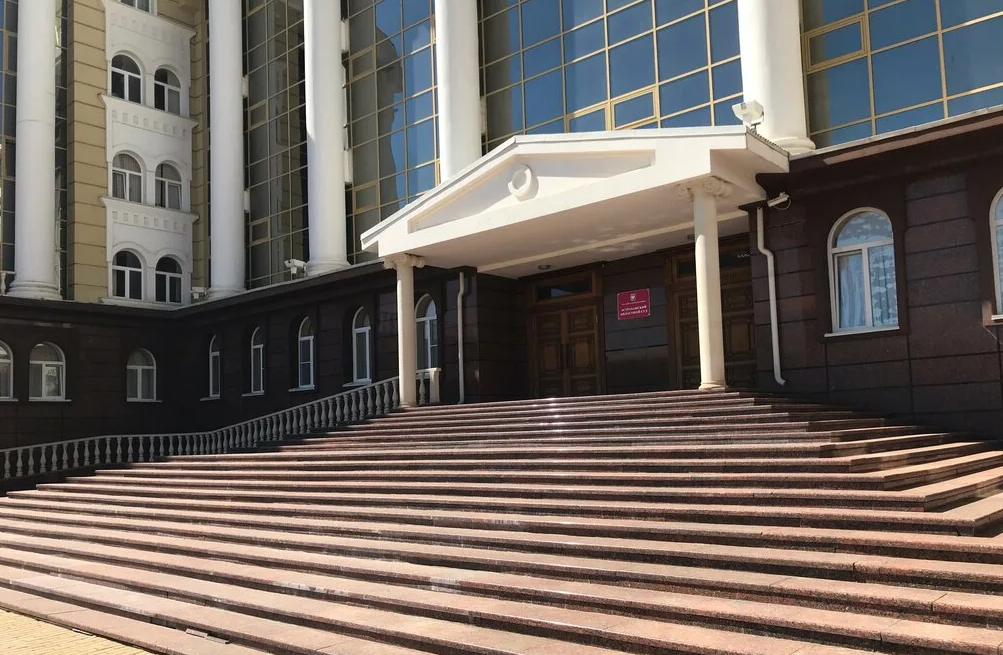
Наш клиент – крупнейшая на Юге России сетевая компания – в 2021 году обратилась в Службу по тарифам Астраханской области с тарифной заявкой, в которой просила включить в необходимую валовую выручку для расчёта нового тарифа на услуги по передаче электроэнергии ряд расходов, в том числе расходы на исполнительный аппарат, плановые расходы на амортизацию и замену приборов учёта, а также расходы на уплату процентов за банковские кредиты. Служба в этом отказала, она посчитала, что эти расходы экономически необоснованны и установил тариф значительно ниже, чем просил клиент.
MoreКлиент предъявил административный иск к Службе в Астраханский областной суд о признании постановления об установлении необходимой валовой выручки и тарифа недействующим. В иске клиент обосновал, что все указанные расходы являются обоснованными, а банковские кредиты взяты для устранения кассовых разрывов, что они потрачены на нужды филиала клиента в Астраханской области, что для принятия этих расходов есть правовые основания, предусмотренные нормативными актами в области электроэнергетики.
Решением Астраханского областного суда от 20.09.2022 по делу № 3а-127/2022 иск удовлетворён частично: суд включил в состав расходов затраты на исполнительный аппарат, расходы на амортизацию и компенсацию корректировки НВВ на основе фактических данных за 2020 год. На решение суда клиент подал апелляционную жалобу. По результатам её рассмотрения Третий апелляционный суд общей юрисдикции включил в состав НВВ плановые расходы на замену приборов учёта в размере 18 378 290 руб., а также плановые расходы на 2022 год по уплате банковских процентов в размере 758 053 230 руб. и фактические расходы 2020 года по уплате банковских процентов в размере 531 598 930 руб.
На эти судебные акты Служба по тарифам Астраханской области и Федеральная антимонопольная служба РФ подали кассационные жалобы.
Юристами Адвокатского бюро «Юг» подготовлен отзыв на эти жалобы, а также приняли участие в судебном заседании кассационного суда.
Определением Четвёртого кассационного суд общей юрисдикции от 27.06.2023 г. вынесенные по делу судебные акты оставлены в силе.
Интересы доверителя в Четвёртом кассационном суде общей юрисдикции представлял управляющий партнер Юрий Пустовит и партнёр Сергей Радченко.
09.06.23
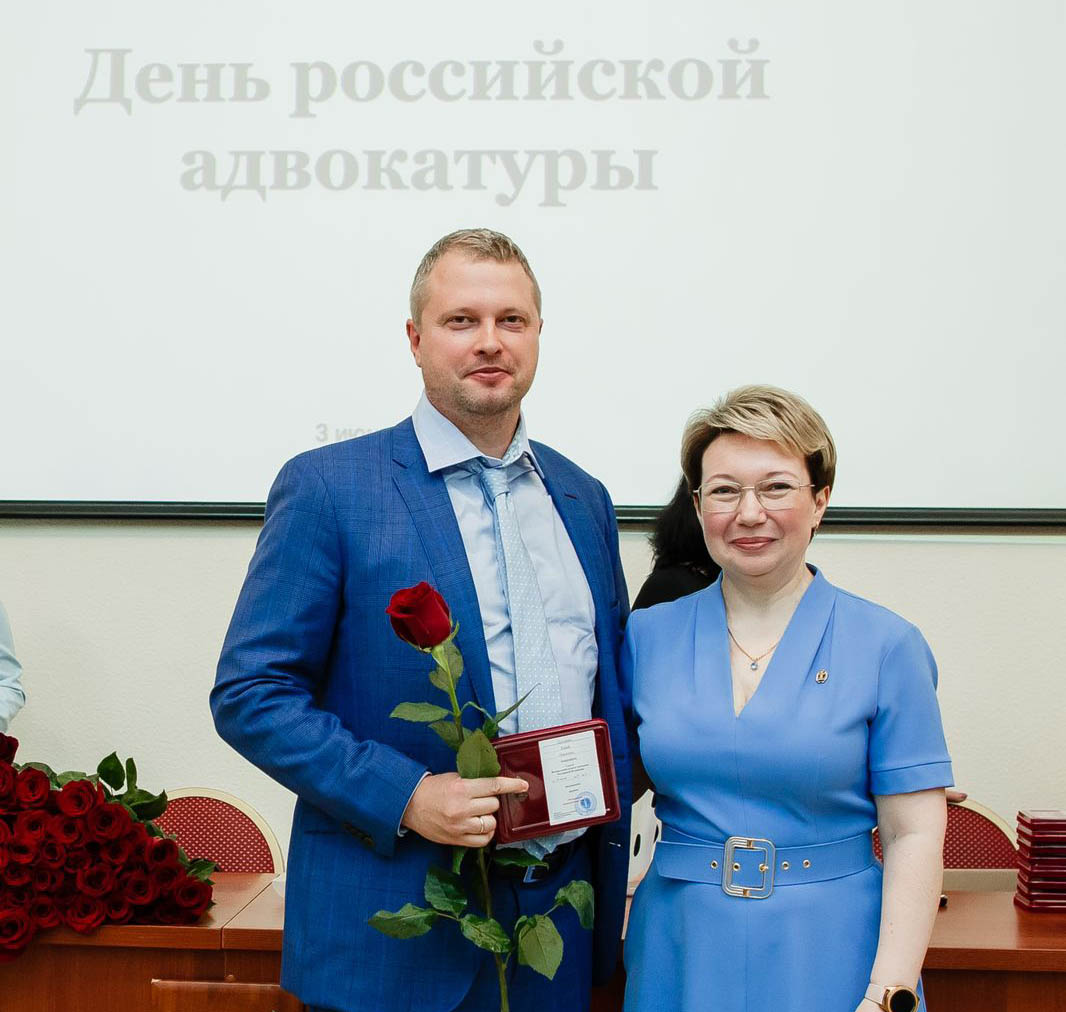
3 июня 2023 года в г. Краснодаре состоялось торжественное мероприятие, посвященное празднованию Дня Российской Адвокатуры. На нем представителям профессии были вручены награды Федеральной палаты адвокатов, Ассоциации адвокатских палат ЮФО и СКФО им. Д. Баранова, Адвокатской палаты Краснодарского края.
MoreРешением Совета Федеральной палаты адвокатов управляющий партнер Адвокатского бюро «Юг» Юрий Пустовит награжден высшей наградой российской адвокатуры - орденом «За верность адвокатскому долгу». Орден «За верность адвокатскому долгу» присуждается адвокатам, имеющим непрерывный стаж профессиональной деятельности не менее 20 лет, за высокое профессиональное мастерство при защите прав, свобод и законных интересов доверителей, большой вклад в развитие российской адвокатуры, осуществление научной деятельности, направленной на повышение эффективности работы в адвокатуре, укрепление международного сотрудничества в области развития адвокатуры.
30.05.23

В наше бюро обратилась крупная международная сеть магазинов одежды и аксессуаров с магазинами в торговых центрах г. Краснодара. На момент обращения в бюро имелись три вступивших в законную силу решения районного суда, денежные средства были уже списаны со счетов нашего доверителя по инкассовым поручениям.
MoreВ каждом деле потребителями-истцами была реализована одна и та же схема: потребитель приобретает джинсы и рубашку в магазине, обнаруживает недостаток товара – неустойчивость краски на одежде, якобы этими предметами одежды окрашиваются детали салона автомобиля потребителя. По указанным делам истцами, помимо требований о взыскании стоимости товаров, неустойки, штрафа, были заявлены и требования о взыскании убытков, возникших вследствие повреждения салона автомобиля, значительных денежным сумм - суммарные денежные требования по каждому из трех дел более миллиона рублей при довольно скромных тратах истцов на приобретение рубашки и джинсов у доверителя.
В ходе рассмотрения дел судом первой инстанции были допущены грубейшие процессуальные нарушения: наш доверитель не был надлежащим образом извещен о судебных заседаниях, о состоявшихся решениях и о самом наличии судебных дел наш клиент узнал лишь, когда истцы предъявили в банк исполнительные листы для списания взысканных судом денежных средств. По всем трем делам решения были вынесены судом спустя 10 дней с момента регистрации исковых заявлений. Помимо этого, судом не было назначено проведение судебных экспертиз, в основу же решений были положены крайне сомнительные заключения специалистов, которые истцы проводили за свой счет до обращения в суд. Также истцами, каждый из которых впоследствии утверждал, что никак не связан с остальными, был применен судебный туризм в один из районов Краснодарского края – временная регистрация по месту нахождения с целью искусственного создания подсудности дела.
В ходе рассмотрения дел в Краснодарском краевом суде, Четвертом кассационном суде общей юрисдикции мы смогли добиться перехода к рассмотрению дел по правилам первой инстанции, назначения судебных экспертиз, в результате ни по одному из трех дел потребители не смогли предоставить предметы одежды и автомобили для проведения экспертных осмотров. Наши оппоненты, путем злоупотребления процессуальными правами, всячески пытались затягивать процесс и перенести проведение экспертиз в предложенных ими экспертных организациях. Нам удалось добиться отмены решений районного суда, вынесения новых решений об отказе в удовлетворении исковых требований в полном объеме по всем трем делам, поворота исполнения решений, а также фактического возврата ранее взысканных денежных сумм нашему клиенту. Таким образом, новая схема потребительского экстремизма была разрушена профессиональной работой юристов Адвокатского бюро «Юг» и не прижилась в судах Краснодарского края.
Интересы клиента в суде представляли партнер Сергей Радченко, а также юрист Захар Хребтов.
24.05.23

До 2015 года наш доверитель являлся директором и участником в крупном предприятии, занимающемся буровыми работами. В ходе деятельности предприятия в Европе было приобретено дорогостоящее оборудование. Спустя несколько лет между участниками предприятия возник корпоративный конфликт.
MoreВ отношении нашего доверителя было возбуждено банкротное дело и предъявлено, среди прочего, требование о взыскании убытков, возникших вследствие приобретения бурового оборудования по завышенной цене в период исполнения им обязанностей директора. После прекращения банкротного дела требование было переуступлено физическому лицу, новый же кредитор обратился с иском о взыскании убытков в суд общей юрисдикции.
Мы добились передачи дела по подсудности в арбитражный суд. В ходе рассмотрения дела в арбитражном суде смогли обосновать недоказанность убытков, добились применения судом срока исковой давности, отмены обеспечительных мер по иску. Суд отказал истцу в удовлетворении исковых требований в полном объеме.
Интересы доверителя в суде представлял юрист Захар Хребтов.
16.05.23

Юридический рынок России развивается, трансформируется в соответствии с текущей ситуацией, пополняется новыми участниками. Именно поэтому юридический портал Право.ру проводит ежегодные исследования с целью определения лидеров и выявления новых достойных игроков.
MoreНекоторые сферы права настолько обширны, что со временем стали требовать отдельной оценки. Сегодня 11 мая 2023 вышел рейтинг литигации за 2022 год. Принимая во внимание разницу между масштабом работы, клиентами, численностью персонала, а также другие аспекты работы столичных и региональных юридических компаний, рейтинг был разделен на федеральный и региональный. Участники обоих рейтингов поделены на группы в зависимости от средней суммы иска.
Адвокатское бюро «Юг», являющееся участником всех рейтингов Право.ру с самого их основания, вновь вошло в топ региональных лидеров, заняв место в 1 группе.
Ознакомиться с результатами можно по ссылке: Региональные лидеры среди литигаторов
10.05.23
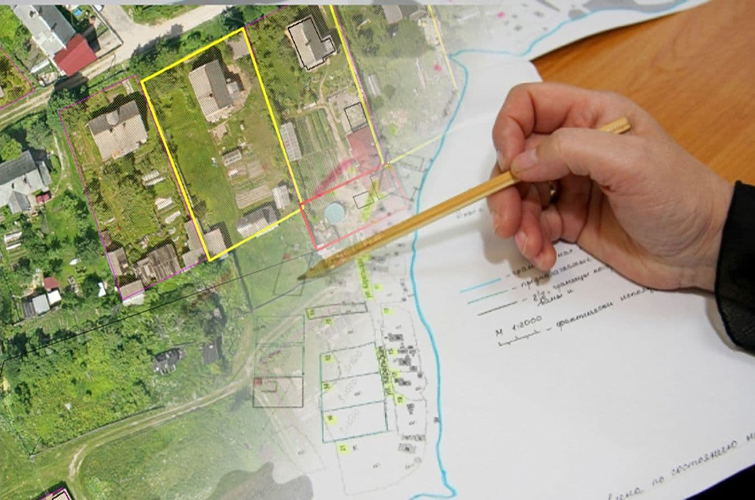
Наш клиент – собственник земельного участка в Хостинском районе г. Сочи в 2019 году с целью строительства жилого дома с 2019 году трижды направлял в администрацию Сочи уведомлении о планируемом строительстве дома и трижды получал отказ в его согласовании.
MoreВ 2020 – 2021 году клиент построил на земельном участке трёхэтажный дом и в порядке «дачной амнистии» зарегистрировал на него право собственности. В 2022 году администрация Сочи провела проверку и, установив, что строительство согласовано не было обратилась в суд с иском о сносе дома как самовольной постройки. Так как наш доверитель как член сборной России по парусному спору, участвовал в это время в международных соревнованиях, то извещений от суда о начале дела он не получил.
Суд рассмотрел дело в одно заседание и вынес заочное решение, которым иск администрации удовлетворил.
Мы подали заявление об отмене заочного решения со ссылкой на то, что наш доверитель законно зарегистрировал право собственности на дом на основании ч. 12 ст. 70 ФЗ «О государственной регистрации недвижимости», а также на то, что администрация не доказала ни одного предусмотренного ст. 222 ГК РФ признака самовольной постройки. Однако суд первой инстанции посчитал наши доводы не заслуживающими внимания.
Мы подали апелляционную жалобу на решение в Краснодарский краевой суд. Определением Краснодарского краевого суда от 4.05.2023 г. вынесенное по делу заочное решение отменено, в иске отказано.
Интересы доверителя в Краснодарском краевом суде представлял адвокат, партнёр Адвокатского бюро «Юг» Сергей Радченко.
14.04.23

Мероприятие - Winter Legal Week 2023, Сочи, Красная Поляна, Radisson Rosa Khutor. Выступление Сергея Радченко
More13.04.23

Миноритарный участник общества длительное время работал директором сельскохозяйственного предприятия. После назначения нового руководителя он перешел на должность заместителя на условиях срочного трудового договора. По истечении срока трудовой договор был прекращен.
MoreНе согласившись с увольнением, работник обратился в суд с требованиями о признании срочного трудового договора заключенным на неопределенный срок и восстановлении на работе.
В ходе рассмотрения дела мы доказали, что трудовой договор заключен на определенный срок на законных основаниях, а доказательства вынужденного заключения срочного договора отсутствуют. Мы указали суду, что работник является участником общества, активно участвует в управлении, получает прибыль. В силу занимаемой должности и квалификации работник, заключая срочный трудовой договор осознавал последствия его срочного характера и то, что он будет прекращен по истечении его срока. При этом предыдущая трудовая деятельность на предприятии в должности директора не дает основания считать трудовой договор заключенным на неопределенный срок.
Несмотря на отрицательное заключение уполномоченного органа в сфере труда, суд сделал вывод о соблюдении работодателем порядка увольнения.
В результате решением Крымского районного суда от 04.04.2023 в иске отказано.
Интересы доверителя представлял юрист Алексей Демехин.
09.03.23
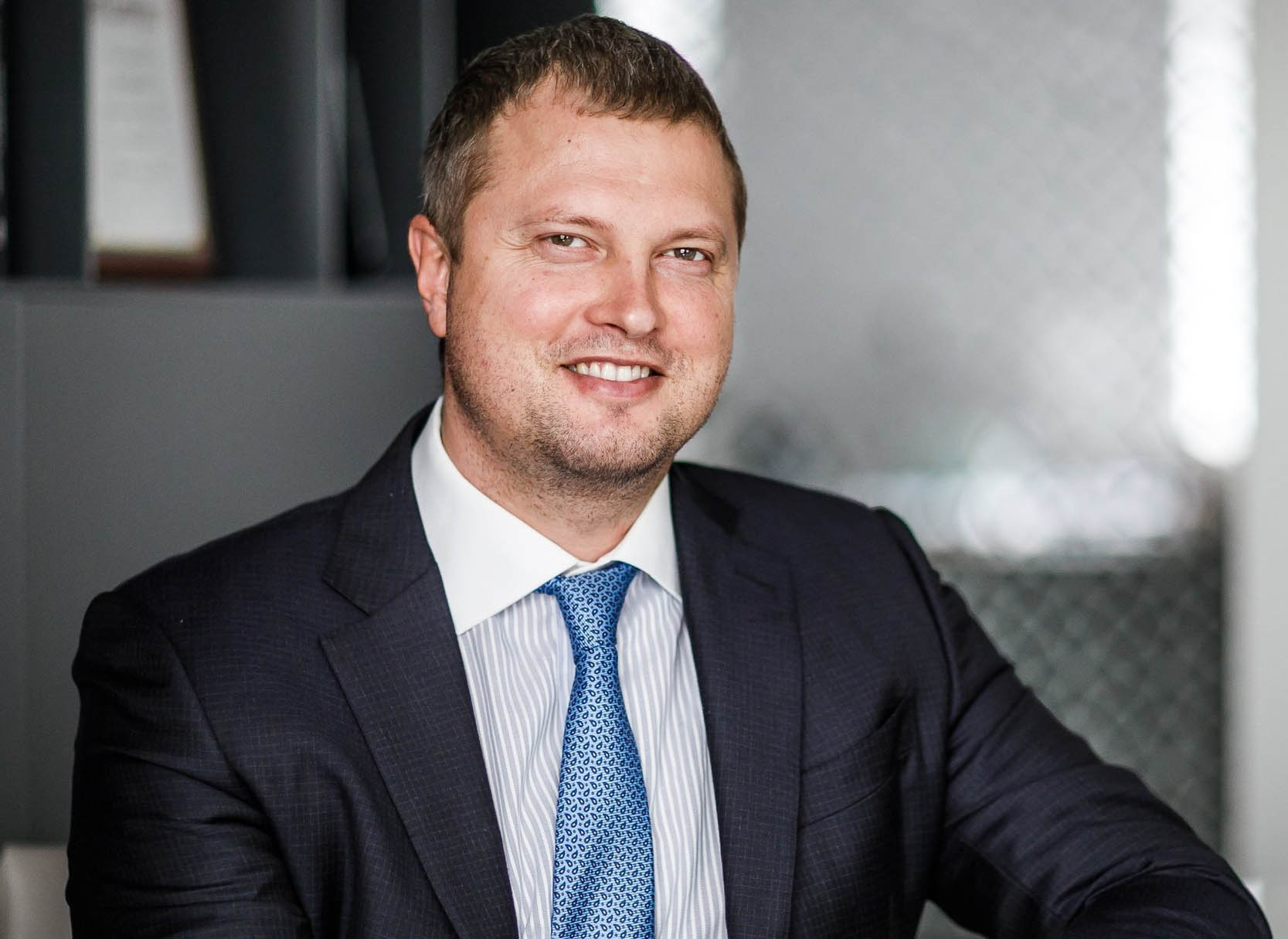
Рейтинг «Право-300» уже четвертый год подряд публикует индивидуальные рекомендации юристов после выхода результатов основного исследования. В этом году в рекомендованные попали 1812 топовых юридических консультантов, включая представителей из новых российских юрфирм, которые были созданы после ухода с рынка международных компаний.
MoreУправляющий партнер Юрий Пустовит, партнер Сергей Радченко отмечены в рейтинге в 1 группе среди лучших юристов в области арбитражного судопроизводства (крупные споры- high market), а также разрешения споров в судах общей юрисдикции.
Ссылка на рейтинг: Рейтинг компаний на рынке юридических услуг ПРАВО-300 (pravo.ru)
16.02.23
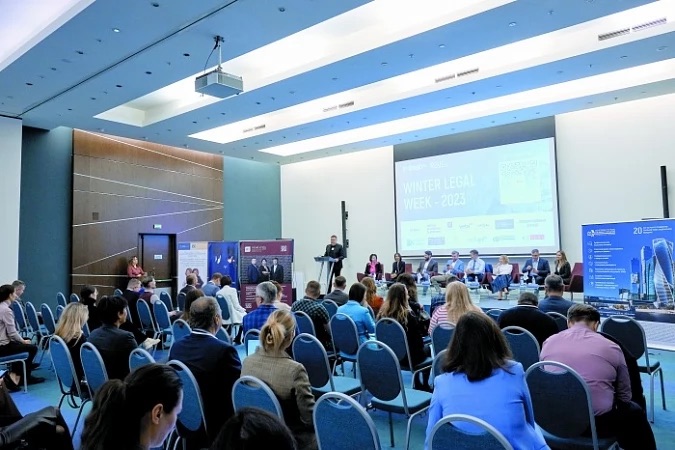
Краснодар, 14 февраля – Юг Times, Ирина Сизова. 16+ Перед какими правовыми вызовами встали российские бизнесмены в 2023 году? Юридическая система России столкнулась с целым рядом вызовов, возникших из-за существующей геополитической ситуации и введения огромного числа санкций.
MoreПути выхода, уже принятые решения и необходимые в будущем обсуждали в горах Сочи. Winter Legal Week («Зимняя неделя права») вновь прошла на курорте «Роза Хутор». Ее организаторы - портал «Право.ру» и Адвокатское бюро «Юг» информационным партнером стал еженедельник «Юг Times».
- Мероприятие Winter Legal Week стало логичным развитием Юридического форума Юга России, который традиционно проходит в Сочи. Представители профессионального сообщества ощущают необходимость собираться чаще для обсуждения острых вопросов. И зимой мы делаем это в горах, чтобы раскрыть коллегам из российских регионов потенциал Большого Сочи. В этом году участниками Winter Legal Week стали более 130 специалистов юридической сферы. Они приехали из Москвы, Санкт-Петербурга, Ростова-на-Дону, Новосибирска и других городов. У нас есть даже участники из Великобритании и Израиля, так что форум приобрел международный статус, - отметил управляющий партнер Адвокатского бюро «Юг» Юрий Пустовит.
В течение трех дней профессионалы обсуждали острые вопросы, но главный - какие правовые проблемы стоят перед бизнесом в 2023 году и как их преодолеть. Основной вывод: самое важное в наше время - быть креативным и искать нестандартные пути решения. И, естественно, они находятся. Один из наиболее известных - релокация. В текущей экономической и политической ситуации это один из вариантов сохранения и развития бизнеса для российских предпринимателей, которым нужны дополнительные возможности проведения банковских операций и формирования логистических цепочек, обеспечивающих международное взаимодействие.
- К вопросу релокации необходимо подходить комплексно. Нельзя принимать решения только на основе существования налоговых преференций. Именно это стало одной из важных ошибок первых релоцированных. Кроме того, у многих компаний не были проработаны финансовые модели и нагрузки, схемы взаимодействия с партнерами, логистика. Как показала практика, в первые месяцы не надо было никуда «бежать», следовало тщательно оценить все возможные моменты. При выборе юрисдикции для релокации необходимо обращать внимание на стоимость и сроки открытия компании и счета, налоговую нагрузку, логистические цепочки, особенность товаров относительно конечного потребителя, необходимость поездок в другие страны. Самые интересные варианты для релокации компаний сегодня - Сербия и Киргизия. Это дружественные страны для России с отсутствием языкового барьера, возможностями открытия счета в любой валюте и получения ВНЖ при открытии компании, - отметила управляющий партнер международной консалтинговой компании FINCOM group Анна Кровякова.
Благоприятная среда
Так, среди преимуществ регистрации компании в Сербии можно отметить одну из самых низких в Европе ставок налогообложения. При этом нерезиденты облагаются налогом только на доход, полученный в этой стране, которая соответствует международным стандартам бухгалтерского учета. Тем, кто рассматривает для релокации территорию Киргизии как производственную или торговую площадку, стоит учитывать наличие здесь пяти свободных экономических зон. Среди преимуществ страны - отсутствие налога на ввезенное сырье, минимальные проверки со стороны надзорных органов и закрытая охраняемая территория. Регистрация компании в Киргизии позволяет избежать двойного налогообложения, налог на прибыль составляет 10 процентов, НДС - 12, а налог с продаж - 1-5%, в зависимости от вида деятельности. К тому же страна имеет очень выгодное расположение между СНГ и АТЭС, что обеспечивает выход на новые рынки.
- В текущей ситуации бизнес и его клиенты оказались на распутье - куда идти? Оставаться в недружественных странах, переходить в дружественные или посмотреть инструменты в России, которые можно встроить в структуру бизнеса? Среди нестандартных корпоративных инструментов можно отметить ЗПИФы - закрытые паевые инвестиционные фонды. Что сегодня представляет собой такой рынок? Это более 5000 фондов, из них свыше 2000 - действующие. Рынок составляет 6,4 триллиона рублей, при этом пять триллионов - комбинированные ЗПИФ и СЧА ПИФ, 2,7 триллиона рублей включают российские акции, облигации, инвестиционные паи, векселя и доли ООО в составе ЗПИФ. Это инструменты, которые позволяют структурировать рынки. Фонды - единственная категория, чтобы инвестировать в абсолютно разные активы. В составе могут быть корпоративные структуры, долговые инструменты, основные средства, производственные площадки, недвижимость и любые активы, кроме налички, - рассказала директор по развитию «УК Портфельные инвестиции» Елена Часовских. Компания входит в группу «Регион».
С помощью этого инструмента можно решать целый ряд задач. Прежде всего - налогообложения. ЗПИФ не является плательщиком налога на прибыль по операциям и сделкам с имуществом фонда. Важное качество ЗПИФ – конфиденциальность: в ЕГРЮЛ и ЕГРН не раскрываются данные о владельцах паев, а общества в составе фонда включаются в группу лиц управляющей компании. При этом пайщик оставляет за собой возможность контроля путем участия в общем собрании по ключевым вопросам или в инвестиционном комитете по вопросам одобрения сделок. Также присутствует регуляторный контроль со стороны Центрального банка и специализированного депозитария. ЗПИФ позволяет организовать обособление активов, включая их трансформацию в ценную бумагу - пай. Паи имеют свободное обращение и независимость от ситуации с пайщиком или управляющей компании, возможен выдел имущества в натуре. Именно ЗПИФ могут стать одним из инструментов, которые дают возможности защиты от потенциальных санкций, релокации с сохранением бизнеса в России, разделения российского и зарубежного бизнеса или сохранения бизнеса в нашей стране иностранным владельцем.
Избежать санкций
Одним из актуальных вопросов, которые в текущей ситуации встают перед российским бизнесом, является интеллектуальное право. В связи с введенными санкциями с российскими заказчиками прекратили работать многие западные компании. Ограничения распространяются на пользовательское программное обеспечение и не пользовательское оборудование. При этом попасть под вторичные американские санкции могут компании любой юрисдикции, ведь практически все подобные продукты содержат 25% процентов американских компонентов или были изготовлены с применением технологий США. Как итог российским компаниям стали недоступны обновления программного обеспечения, приобретение новых лицензий и поддержка. Бизнес столкнулся с необходимостью выстраивать собственные компетенции по поддержке программного обеспечения, а также искать российские аналоги. В то же время сегодня госорганам и госзаказчикам запрещено использовать иностранное программное обеспечение на объектах критической информационной инфраструктуры.
- Самое сложное, с чем мы столкнулись, - правообладатели, с которыми работали долгие годы, могут в одну минуту прекратить общение и дальше не выходить на связь. В итоге ты хотел бы решить все вопросы, но просто не понимаешь, как это сделать. Какой выход из ситуации? Наверное, один и очень хороший для страны - развитие собственного программного обеспечения, оборудования и технологий, - отметила директор департамента управления правовыми рисками, блока по корпоративным и правовым вопросам МТС Анна Войцехович.
Замещение импорта
Понятно, что разработка собственных программных продуктов - дело небыстрое. Даже несмотря на то, что в стране уже есть отечественные аналоги, не уступающие западным, проблем много. Среди них - бессрочные договоры на лицензии, которые российским законодательством ограничены сроком на пять лет, невозможность передачи продуктов третьим лицам, включая компании, существующие в одной группе, лицензии на оборудование и недоступность способов получения обновлений. Как промежуточный итог внедрения параллельного импорта появилась возможность закупки некоторых продуктов. Однако правообладателям из недружественных стран не будет выплачиваться компенсация за их использование. В России введены требования об открытии «счетов О», которые будут использоваться для расчетов с контрагентами из недружественных юрисдикций. Платежи станут возможны после утверждения их специальной госкомиссией. Но все же вопросов остается больше, чем ответов.
Много их и в отрасли разрешения споров между российскими и западными компаниями в арбитражных судах. Так, в российском законодательстве сегодня действуют две поправки - 248.1 и 248.2.
- Эти статьи Арбитражно-процессуального кодекса позволяют аннулировать арбитражную оговорку, которая предусматривает рассмотрение споров за рубежом, в зарубежных юрисдикциях, в связи с тем, что компания находится под санкциями либо не может нанять консультантов и перенести рассмотрение этих споров в Россию и вынести ограничительные меры. Если спор уже инициирован за пределами РФ в недружественной стране, можно вынести судебный акт о запрете либо о продолжении этого спора в юрисдикции недружественной страны, - пояснил управляющий партнер Адвокатского бюро «Юг» Юрий Пустовит.
Как отметил партнер АБ «Юг» Сергей Радченко, после 2020 года по статье 248.1 было проведено 54 дела, в 25 из них признана исключительная компетенция, по статье 248.2, запрещающей рассмотрение дела в зарубежной юрисдикции, - 13, восемь из которых удовлетворено.
- Одним из ярких примеров не просто применения статьи, но реализации решения суда стал иск «Царьград Медиа» к компании Google после блокировки аккаунта на канале в Youtube. В итоге было принято решение о компенсации в пользу «Царьграда» в районе одного миллиарда рублей. Его удалось реализовать только потому, что на тот момент у компании Google оставались активы в России, - заметил Сергей Радченко.
Основной проблемой применения правил в новой реальности становится именно их исполнение зарубежными ответчиками. В итоге бизнес задумывается, стоит ли вообще затевать споры, которые требуют достаточно много времени и ресурсов.
- Стоит ли начинать в текущих условиях разбирательство за рубежом? Для этого нужно прежде всего ответить на ряд вопросов. Есть ли препятствия к разбирательству за рубежом, существуют ли у ответчика активы в России, которые могут быть переданы в пользу взыскателя, возможно ли исполнить решение суда в юрисдикциях местонахождения активов, есть ли иные основания к отказу в признании решения суда в соответствующей юрисдикции? - заявил партнер Melling, Voitishkin & Partners Антон Мальцев.
Взаимная лояльность
Стоит отметить, что сейчас 44 страны мира имеют договор о признании судебных решений с Россией. Среди них - Болгария, Кипр, Аргентина, Италия, Литва, Латвия, Эстония, Польша, Испания и в том числе Украина. Признание решения российских судов возможно и без соответствующего договора. Например, в 2022 году суд Лиможа во Франции признал решение Красногорского районного суда, в марте 2022 года подобное решение было вынесено и в Верховном суде Нью-Йорка.
- Одним из наиболее очевидных решений является исполнение судебных решений, вынесенных российским судом, в юрисдикции дружественной страны. Например, такое правило начало действовать в Турции, несмотря на отсутствие договора, по принципу «опережающей взаимности». Турецкая судебная система не имеет негативной практики непризнания ее решений в России, предполагается, что решения турецких судов будут также исполнены в нашей стране. Можно привести примеры исков, которые были поданы в суды Санкт-Петербурга и Ленинградской области, а их решение было исполнено в Турции, - подчеркнул Антон Мальцев.
Общий вывод участников Winter Legal Week: несмотря на все сложности, отстаивать свои права в международных судах все-таки стоит. Во многом здесь речь идет не только о финансовых затратах, но и о репутационной составляющей, о праве работать на зарубежных рынках. При этом международные арбитры в профессиональном сообществе заявили, что при разрешении споров они не будут смотреть на санкции и ограничения, а постараются объективно рассматривать спор. Подтверждения этому уже есть. Например, опыт госкорпорации «Росатом».
- Мы не столкнулись с пристрастностью в отношении нашей компании, есть практика, когда зарубежные коллеги в международных судах выносят решение в нашу пользу, если видят сильную позицию. Основная проблема сегодня - отказ зарубежных консультантов в исполнении договоров и барьеры, которые существуют при их найме. Например, мы столкнулись с прекращением коммуникации и юридической поддержки при реализации EPC-контракта профильными консультантами. Одним из решений видим изменение подхода и креативность в формировании команды - привлечение российских консультантов с усилением международными специалистами, наем барристеров как самозанятых, максимальное вовлечение inhouse-команды. При подборе специалистов важен стал мониторинг публичной активности компаний и частных лиц. Как ни странно, но наиболее лояльными к российским делам оказались американские юридические компании, - отметила главный юрист департамента по правовой и корпоративной работе АО «Русатом Энерго Интернешнл» Ольга Монченко.
Процесс обоюдный
Подводя итог обсуждения правовых вызовов, которые сегодня стоят перед российским бизнесом, управляющий партнер Адвокатского бюро «Юг» Юрий Пустовит отметил, что внесение поправок в российское законодательство не сможет решить всех вопросов.
- Проблема касается не только внутренних вопросов, но и взаимодействия с внешними рынками и западными странами, которые данное сотрудничество либо прекратили, либо поставили на паузу. За прошедший год найдены определенные пути решения, но они не до конца эффективны. Думаю, работа продолжится. Надеемся, что обстановка будет разряжаться и мы возвратимся к нормальным отношениям с западными странами, - подчеркнул Юрий Пустовит.
Завершилась трехдневная Winter Legal Week в горах Сочи соревнованиями по горнолыжному спорту для участников мероприятия. Именно такое необычное сочетание деловой части и культурной программы с неформальным общением делает форумы, организованные «Право.ру» и Адвокатским бюро «Юг», очень популярными у профессионального юридического сообщества.
Видеосюжет на yugtimes.com
16.01.23

Наш клиент – крупнейшая на Юге России сетевая компания – в 2020 году обратилась в Службу по тарифам Астраханской области с тарифной заявкой, в которой просила включить в необходимую валовую выручку для расчёта нового тарифа на услуги по передаче электроэнергии ряда расходов, самыми крупными из которых были расходы на уплату процентов за банковские кредиты. Служба в этом отказала, она посчитала, что эти расходы экономически не обоснованы и установил тариф значительно ниже, чем просил клиент.
MoreМы предъявили административный иск к Службе в Астраханский областной суд о признании постановления об установлении необходимой валовой выручки и тарифа недействующим. В иске мы обосновали, что банковские кредиты взяты для устранения кассовых разрывов, что они потрачены на нужды филиала клиента в Астраханской области, что для принятия этих расходов есть правовые основания, предусмотренные нормативными актами в области электроэнергетики.
Решением Астраханского областного суда от 26.04.2022 и апелляционным определением судебной коллегии по административным делам Третьего апелляционного суда общей юрисдикции от 31.08.2022 клиенту во включении в тариф процентов за кредиты отказано. Мы подали кассационную жалобу.
Определением Четвёртого кассационного суд общей юрисдикции от 29.12.2022 г. вынесенные по делу изменены, из их мотивировочной части исключён вывод об экономической необоснованности и документальной неподтвержденности плановых расходов на 2021 год по статье «Проценты за кредит (расходы по обслуживанию заёмных средств)» в размере 824 037 000 руб., а также корректировки неподконтрольных расходов исходя из фактических значений за 2019 год по статье «Проценты за кредит (расходы по обслуживанию заёмных средств)» в размере 663 339 240 руб.
Интересы доверителя в Четвёртом кассационном суде общей юрисдикции представлял управляющий партнер Юрий Пустовит и партнер Сергей Радченко.
12.01.23
С 9 января 2023 года Сергей Радченко, старший юрист судебно-арбитражной практики, назначен партнером Адвокатского бюро «Юг».
MoreСергей Радченко работает в бюро с 2010 года и прошел путь от старшего юриста до партнера, он является признанным экспертом в области разрешения корпоративных споров, споров в сфере электроэнергетики. Сергей имеет научную степень кандидата юридических наук, рекомендован ведущими рейтинговыми агентствами Право-300, ИД КоммерсантЪ, Best Lawyers, которые отмечают его глубокие аналитические способности, умение находить нестандартные решения, знания региональной специфики. За время своей карьеры в бюро Сергей представлял российских и международных клиентов в крупных прецедентных спорах в области электроэнергетики, корпоративных конфликтах, включая Верховный суд РФ. Свободно владеет английским языком.
«Судебно-арбитражная практика является ключевой в нашем бюро. Количество дел, суммы исков и сложность дел растут с каждым годом, что является вызовом для меня, как партнера Адвокатского бюро «Юг», нацеленного на достижение результата в интересах клиента. Уверен, что с моим назначением партнером бюро, мы сможем максимально эффективно работать для наших клиентов и развивать бизнес бюро», - Сергей Радченко, партнер, руководитель судебно-арбитражной практики Адвокатского бюро «Юг».
«Сергей является известным юристом на юридическом рынке России, так что я считаю излишним перечисление всех его достоинств. Отмечу лишь, что я доволен развитием наших отношений, вижу результат, которого он добивается в пользу наших клиентов, поэтому присоединение к партнерству нашего бюро - это закономерный этап развития, который поможет в большей мере раскрыть Сергею его потенциал в интересах наших клиентов», - Юрий Пустовит, управляющий партнер Адвокатского бюро «Юг».
Адвокатское бюро «Юг» основано 29 сентября 1995 года для оказания комплексных юридических услуг на высоком профессиональном уровне национальному и международному бизнесу по вопросам российского права.
 Make an appointment!
You can easily schedule an appointment with ABY lawyers. You should choose the topic and 2 the most suitable dates and time for the meeting. Please, also provide your contact details. We will confirm the dates and arrange the meeting.
Ask a question!
You can send a message directly to ABY lawyers via “Q&A” section. We will provide you with qualified legal service on the issue. Please, fill out the form, and we will contact you as soon as possible!
Advocates Bureau Yug